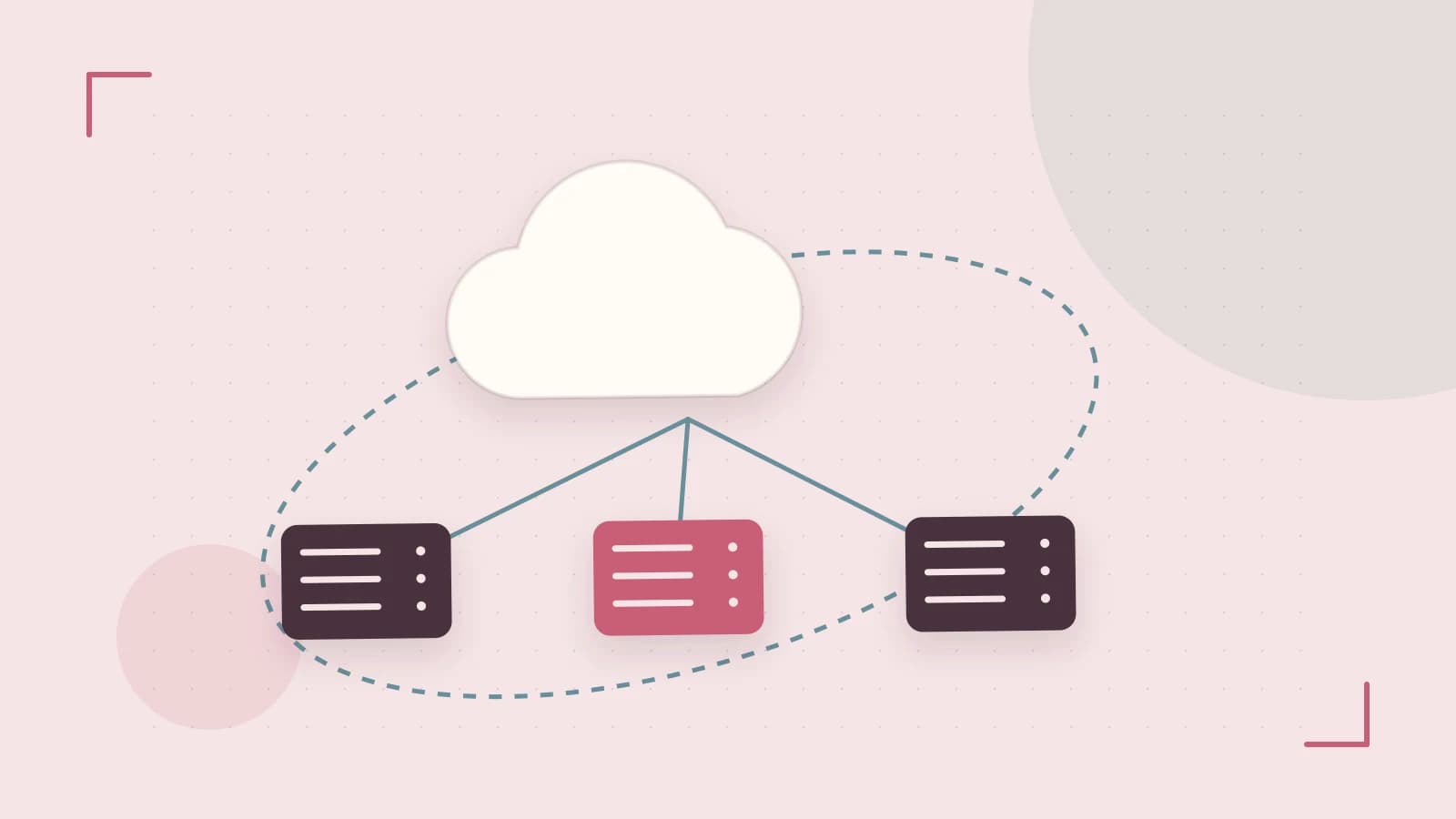
Managing State at Scale: When to Use Akka Cluster Sharding
Stop building manual routing tables for distributed state. Learn how Akka Cluster Sharding automates entity distribution and memory management through passivation.
25 Jan 2026, 09:42 UTC
ReadMeFeed / Community knowledge
Practical guides, fresh perspectives and ideas worth trying.
Stop building manual routing tables for distributed state. Learn how Akka Cluster Sharding automates entity distribution and memory management through passivation.
Hibernate offset-limit pagination uses setFirstResult and setMaxResults on a Query, but requires ORDER BY, a separate count query, and careful handling of fetch joins. Large offsets are slow; use keyset pagination for deep pages.
Filament admin tables paginate server-side, but bulk actions span all pages. Learn to scope, verify, and bound the work.
When a team splits an OpenAPI 3.0 spec into modules with $ref, CI validation can fail silently. Learn a reliable validation pattern and how to avoid common resolution pitfalls.
Designated initializers let you assign struct fields by name, preventing errors when the layout changes. Learn how to use them, their benefits, trade‑offs, and a clear example that shows zero‑initialization and nested struct support.
Create a Handlebars helper that safely escapes HTML in Node.js, register it, test it, and troubleshoot common pitfalls—no raw tags, no triple braces, just clean output.
Practical guidance on configuring Dynatrace automatic service detection with minimal footprint, proper trust boundaries, and operational verification steps.
Learn how PixiJS v7’s Texture.fromImage and BaseTexture caching boost sprite rendering performance. Discover cross‑origin handling, sprite batching, and practical trade‑offs for large‑scale graphics.
Learn how Elm’s Html.Events gives you compile‑time safe click handlers, exhaustive update checking, and how to avoid namespace clashes.
Spark broadcast joins avoid shuffling the large side of a join when one dataset fits in memory. This post walks through the configuration, a concrete example, and how to verify the improvement.
Clarity view functions let you read contract storage without gas. Learn how to declare, call, and verify them, plus common pitfalls and limits.
Ballerina's sum-type error model and native fault-tolerance constructs make errors explicit in the type system and encode retry, timeout, and circuit-breaker policies into service bindings, shaping resilient trust boundaries and failure domains.
Turbo's content-addressable pipeline caching can cut monorepo CI time, but only if you understand exactly what goes into the task hash and when remote caching stops paying off.
Tailwind's arbitrary value syntax lets you inject custom colors, spacing, and sizes directly in markup, enabling responsive designs without config changes.
Vue 3's ref and reactive APIs solve different reactivity problems. Learn how to choose between them, verify dependency tracking, and avoid lost proxies.
Standard attachInterrupt() only reaches two pins on an ATmega328P. Pin change interrupts let any port pin wake the CPU, but they require direct register access and careful port-level handling.
Step-by-step diagnostic guide to identify and fix unnecessary Compose recompositions causing UI jank, with a symptom table, ordered verification checks, targeted fixes, and escalation criteria.
Alloy XML compiles to native UI views, but deep hierarchies and SDK version shifts can alter layout behavior. This article outlines verification steps, performance trade-offs, and when to choose classic Titanium XML instead.
When Confluence page restrictions clash with space permissions users may gain unintended access. This post explains the inheritance model how to verify restrictions and a practical example for tightening control.
When Karma tests hang or report Disconnected, the cause is usually a missing Chrome binary, mismatched launcher config, or CI-specific sandbox flags. This guide walks through diagnosis and fixes.
Learn how to pick Auto Layout constraints for Figma components so they resize predictably without manual repositioning.
Sulu's block system lets developers define reusable, type-safe components while editors compose pages by drag-and-drop. Learn how to register custom blocks, restrict types per zone, and avoid common pitfalls like cache misses and translation gaps.
Stop using the Eraser tool for compositions. Learn how GIMP Layer Masks provide a non‑destructive way to hide pixels using grayscale values for professional blending.
Decide whether Akka Cluster Sharding fits your stateful actor service, with configuration, an Order entity example, and operational trade-offs.
Step-by-step guide to adding EF Core 8 migrations in a .NET 8 class library, covering DbContext setup, CLI commands, runtime application, and idempotent script generation for CI/CD.
When a p5.js sketch lives inside a real website, global mode’s name collisions and automatic canvas placement become a nightmare. This guide explains why instance mode is the practical solution, shows how to instantiate a sketch, and walks through bundler‑friendly examples and verification steps.
Learn how to use PixiJS cacheAsBitmap to collapse complex container hierarchies into single draw calls, improving GPU performance for static UI and backgrounds.
Decide whether to use Splunk's HTTP Event Collector or Universal Forwarder for data ingestion. Compare pros, cons, and trade‑offs, then see a step‑by‑step implementation example with verification steps.
XML Schema validation is the first line of defense against malformed data. This post walks through why, when, and how to validate XML against an XSD, shows a concrete example in Java, discusses performance trade‑offs, and gives clear next‑steps for production use.
Learn how SurrealDB Live Queries push database changes directly to clients, letting you drop a separate message broker for simple real‑time features.
Stop duplicating state between your API and frontend. Learn how Phoenix LiveView uses server-side processes and WebSockets to handle real-time UI with minimal JavaScript.
CoffeeScript class inheritance is a compile-time abstraction over JavaScript prototypes. Learn how extends and super lower to different output in 1.x vs 2.x, and how to verify the emitted JavaScript.
A decision guide for SpiceDB cursor pagination: compare bounded queries, cursor iteration, and schema tuning, then implement a validated client loop.
Doctrine flush() with no UPDATE? Check if your entity is managed, inspect the UnitOfWork change set, and verify mapping and transaction boundaries.
Repeated 'failed retrieving file' warnings during pacman -Syu often trace to ParallelDownloads set too high for your mirror. This guide shows how to diagnose and tune it.
Extract an interface from a C# class in JetBrains Rider using Refactor This, then verify with dotnet build.
Use Alpine.js x-model.debounce to delay reactive state updates until a user stops typing, reducing work on search and filter inputs.
A practical guide to evaluating Yarn Plug’n’Play, from dependency resolution changes to CI pipeline adjustments and failure‑mode mitigation.
Inline Hooks let Okta call your service during user lifecycle events. This note covers design, trust boundaries, failure modes, and checks before enabling one in production.
SurrealDB prepared statements bind parameters with $variable syntax, preventing injection and enabling server-side query plan caching.
Blazor WebAssembly apps can ship too much code upfront. Lazy-loading feature assemblies with <LazyLoad> reduces initial bundle size and speeds first paint, at the cost of extra network requests.
PrimeNG DataTable’s lazy-loading setup is straightforward once you match the `onLazyLoad` event to the right query parameters and shape your backend response correctly.
AngularJS 1.5+ introduced component architecture and one‑way data binding. Learn how to use <code>.component()</code> and <code><</code> bindings to build maintainable, testable apps, with a concrete example and migration tips.
Learn to eliminate HTML duplication using Pug's template inheritance (extends/block) and mixins for modular UI development.
When Swiper’s loop: true is enabled, the library clones slides and shifts indices. This article explains how the cloning works, how to read the realIndex, and why pagination and navigation need special handling.
Learn how React Router v6.4+ loaders and actions eliminate data waterfalls in SPAs, enable parallel fetching, and provide automatic re‑validation. Follow a practical migration checklist to upgrade your routing layer today.
Learn how Vuetify 3’s CSS‑variable theme system lets you toggle dark and light modes, create custom palettes, and keep every component in sync with minimal effort.
Learn how Cassandra Lightweight Transactions use Paxos to provide linearizable compare-and-set on a single partition, with a concrete UPDATE example, latency numbers, common pitfalls, and verification steps you can run on a 3‑node cluster.
F# Type Providers let you generate strongly‑typed models from live JSON, CSV, or SQL schemas at compile time. This article explains the architectural trade‑offs, how to treat schema sources as trusted code, CI checks to guard against drift, and when to shift to runtime validation.
Modern CMake’s target‑based API replaces global include/definition commands with per‑target visibility keywords (PUBLIC/PRIVATE/INTERFACE). Learn how to propagate compile options correctly, avoid legacy pitfalls, and verify propagation with a concrete example.