Architecture note on adopting Emacs Org-mode as a team knowledge base: requirements, minimal viable structure, trust boundaries, operational checks, failure modes, and triggers for redesign. Includes concrete .dir-locals.el configuration and CI verification steps.
MergeTree performance for time-series data depends on partitioning and compression choices made at CREATE TABLE. This post walks through a practical schema for HTTP logs, shows how to tier ZSTD and LZ4 codecs, and explains how to verify partition pruning with EXPLAIN.
Vault's Transit engine moves encryption keys out of your application code. Here's how it works, where it shines (key rotation without rewrites, convergent encryption for lookups), and the operational trade-offs—latency, key loss risk, and data residency—that decide whether it belongs in your stack.
Replace require strings with Solidity custom errors to cut revert gas costs and get structured, decodable failure data. Works from 0.8.4 onward; requires ABI publishing for explorer support.
Decide whether to put Angular state in the global NgRx Store, a component-scoped ComponentStore, or signalStore based on sharing needs and update frequency.
Stop tracking X and Y manually. Learn how to use PVector in Processing to create smooth, physics-based steering behaviors using normalization and magnitude limiting.
Learn how to use Apache mod_proxy to decouple frontend clients from backend servers, enabling SSL termination and preserving client identity with X-Forwarded-For headers.
Diagnose and fix common Axios interceptor issues, including silent request drops, undefined responses, and infinite 401 refresh loops with a structured diagnostic guide.
Stop bloating your Blazor apps. Learn how to strategically mix Static SSR, Interactive Server, and WebAssembly render modes in .NET 8 to balance SEO and performance.
Deciding between the Default and Everything installation profiles in Kali Linux impacts disk space, update speed, and attack surface. Learn how to use modular meta-packages for a leaner, professional setup.
Explore how Polygon zkEVM achieves EVM equivalence through STARK-to-SNARK recursion and SMPT state representation, and how it impacts contract deployment.
Reduce CPU overhead in Processing by caching static geometry in PGraphics offscreen buffers. Learn how to implement invalidation flags and choose the right renderer for stable frame rates.
Choose strict mode set -euo pipefail with EXIT and ERR traps for production bash scripts to fail fast on errors and guarantee cleanup of temporary resources.
A concise architecture note for Heroku Review Apps covering requirements, minimal pipeline design, trust boundaries, operational checks, failure modes and when to change the design.
Learn how PostgreSQL’s JSONB expression indexes can cut nested JSON query times from seconds to milliseconds. A practical guide with examples, trade‑offs, and next‑step actions.
When PHP apps start up, Composer’s default autoloader can add latency. The <code>--optimize-autoloader</code> flag pre‑builds a classmap, cutting file lookups and speeding the first request. Learn how it works, when to use it, and how to verify the gains.
APT pinning in Ubuntu lets you control which repository versions get installed. Learn how to set priorities, lock specific packages, and avoid common pitfalls with a step‑by‑step guide.
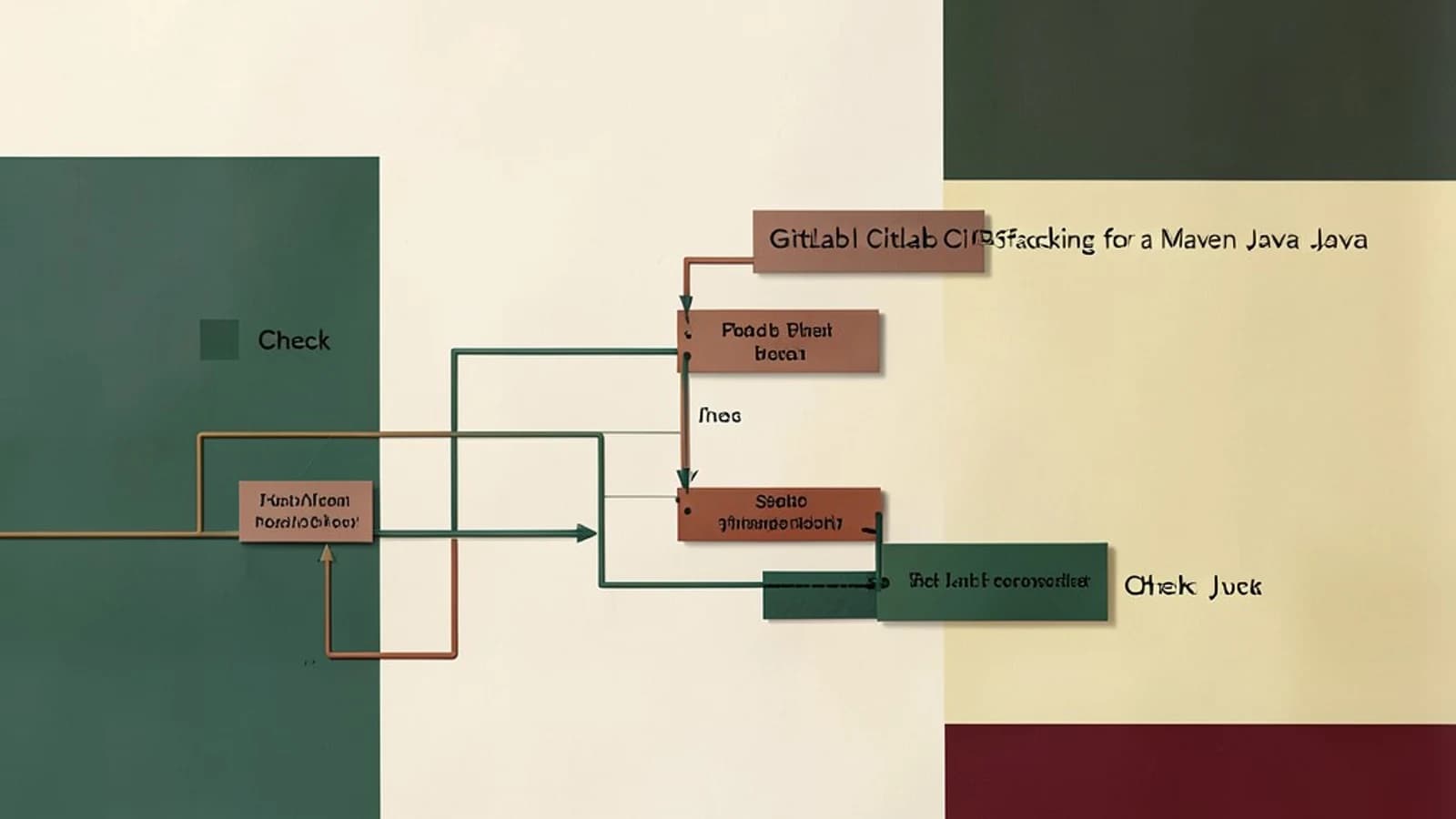
Configure GitLab CI/CD caching for a Maven Java project to reuse dependencies across jobs. This guide walks through prerequisites, cache key design, .gitlab‑ci.yml setup, verification steps, and recovery options.
Choosing between scheduled and ad-hoc tasks in Moodle 4.x is critical for site performance. Learn when to use cron-based periodic tasks versus queue-based event tasks to avoid blocking your system.
Learn how to configure online i‑vector speaker adaptation for Kaldi nnet3‑chain models, see a minimal decoding configuration, and avoid common mismatches that hurt accuracy.
Learn how to prevent slow consumer issues in NATS by implementing JetStream Pull Consumers with explicit acknowledgments for reliable, at-least-once delivery.
Learn why Ti.UI.ListView is the preferred choice for large datasets in Titanium SDK 8+, and how to implement declarative templates to avoid scroll jank and memory leaks.
Rust enforces memory safety at compile time through ownership, borrowing, and lifetimes—eliminating the need for a garbage collector while preventing data races and dangling pointers.
A practical approach to pulling large Behance project sets with /v2/projects/search, using pagination links, throttling, and verification checks to avoid drift and rate limits.
Large write‑heavy tables cause slow inserts, full scans, and long vacuums. PostgreSQL’s declarative partitioning splits a table into smaller pieces, enabling partition pruning, targeted maintenance, and faster queries. This post walks through a concrete example and highlights trade‑offs.
Use Packer HCL2 dynamic blocks to generate parallel multi‑region AMI builders from a single source definition, and add variable validation to catch bad AMI IDs before any cloud API call.
Create immutable data classes with Dart’s const constructors, enforce compile‑time safety, and benchmark memory savings. Follow this step‑by‑step guide to canonicalize objects, avoid side‑effects, and recover from constraint violations.
Use Bun’s built‑in test runner to replace Jest or Vitest without configuration. Discover how it auto‑detects tests, provides Jest‑style globals, supports snapshots, watch mode, and coverage, and learn migration caveats and performance gains.
Learn how Ember’s @tracked decorator replaces observers, how the dirty‑bit mechanism keeps updates granular, and what common pitfalls to avoid. A hands‑on guide with code, migration steps, and testing tips.
Ubuntu’s Hardware Enablement stack lets you stay on a single LTS release while running newer kernels and drivers. Learn when to choose GA vs. HWE, how to install the HWE metapackage, and trade‑offs you should consider.
Learn how Vue Storefront uses the Backend-for-Frontend (BFF) pattern to normalize disparate e-commerce data sources into a consistent API for the frontend.
Stop wasting bandwidth on global broadcasts. Learn how to use Socket.IO Rooms to scope real-time events to specific users and scale across multiple servers using the Redis Adapter.
Learn how to encapsulate shared CI/CD logic using CircleCI Orbs to eliminate configuration drift across multiple repositories while maintaining security boundaries.
Learn how Appwrite’s Realtime subscription feature lets you push database changes instantly to clients, with setup steps, a live example, and key trade‑offs.
Transient props in styled-components let you pass styling-only values without leaking them to the DOM. Learn how the $ prefix works, when to use it, and how to avoid common mistakes.
New Relic's Java agent vs OpenTelemetry for Spring Boot: a practical decision framework covering auto-instrumentation, Infinite Tracing, metric alerting, and migration path.
A task guide to Azure VNet Peering: verify non-overlapping address spaces, create both sides of the handshake with Azure CLI, test private IP reachability, and recover from stuck or misconfigured links.
Learn how Carbon manages memory interoperability with C++ using value and pointer semantics to achieve zero-overhead performance without sacrificing safety.
Learn why Rocky Linux uses XFS for high-performance storage, how to handle online expansion via LVM, and the critical limitation regarding file system shrinking.
Write stalls in RocksDB often mean Level 0 SST files have grown past the stop-writes trigger. This guide shows how to recognize the condition, check L0 count versus triggers, verify compaction resources, and apply targeted fixes without manual file deletion.