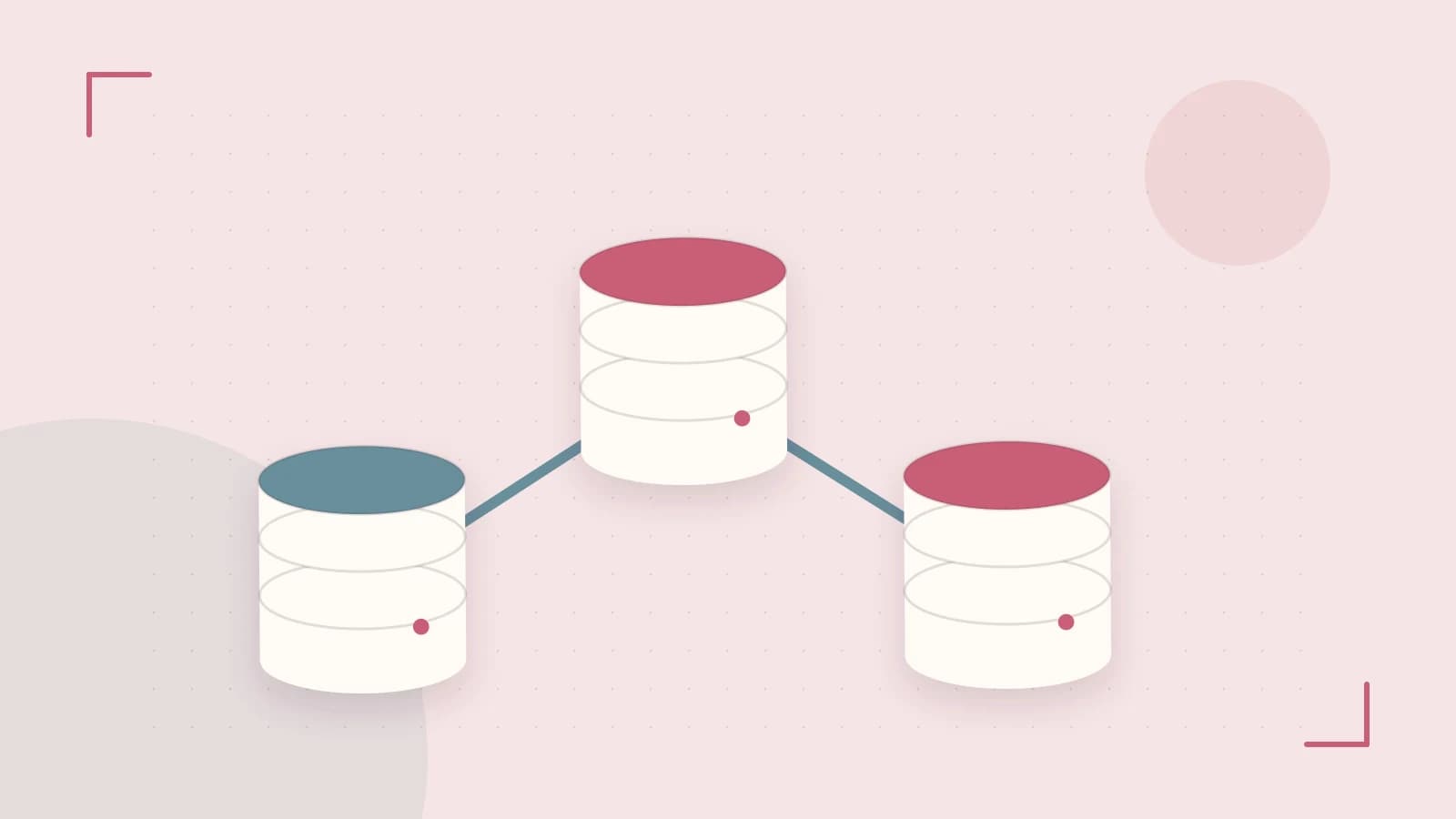
Maven's dependencyManagement centralizes transitive dependency versions in multi-module builds. Learn how it works, see a worked example, and understand its limits.
Vite's SSR mode reuses your client source for Node rendering, but it requires a server entry, careful dependency externalization, and guards against browser globals. Here is how to wire it up and what breaks.
When GitLab CI/CD jobs stay pending or running without logs, the Runner registration or executor is usually the problem. Use these ordered checks to isolate the fault and restore pipeline throughput.
Kibana Lens turns drag-and-drop charts into Elasticsearch DSL. Learn a practical verification workflow, sampling limits, and when another editor is the better choice.
Learn how to add Redis-backed action caching to Moleculer microservices, reduce database load, and handle staleness and Redis outages without guesswork.
Choose between ShotGrid native webhooks and API polling for CI/CD triggers. Compare latency, delivery guarantees, and maintenance trade-offs, then implement signature-verified webhook handling or a rate-limit-aware polling loop.
A technical architecture note for Titanium SDK developers on implementing reliable SQLite storage, including bootstrap logic, schema migrations, and failure mitigation.
Decide between MatTable and native HTML tables in Angular Material. This guide compares performance, implementation overhead, and provides a concrete DataSource example.
Stop over-fetching OneDrive data. Learn how to use ETag-based conditional requests in Microsoft Graph to reduce API noise, avoid 429 throttling, and implement efficient incremental syncs.
Learn how to choose between SQLite and embedded etcd for K3s clusters, including implementation steps for edge devices and high-availability production environments.
Jekyll pagination is opt-in and path-sensitive. Learn how `paginate`, `paginate_path`, and Liquid navigation variables interact—and how to verify archive pages before deploying.
NixOS isn't a package manager with a config file—it's a system where the config file *is* the system. Stop fighting the imperative urge to mutate /etc and start declaring outcomes.
Enable Gentoo's buildpkg FEATURE to generate binary packages during compilation, then reuse them across identical-architecture systems to eliminate redundant builds. Includes configuration, a worked example with vim, and the critical trade-offs around USE flag consistency and disk usage.
Dart's sound null safety makes types non‑nullable by default, catching null‑dereference bugs at compile time. Shows enabling in pubspec.yaml, non‑nullable and late variables, dart migrate usage, and pitfalls like unsafe ! and late init errors.
Logstash's Dead Letter Queue captures events that outputs reject—mapping errors, schema mismatches, 4xx responses—so they can be inspected and replayed instead of silently dropped. Enable it per pipeline, rotate segments, and add a file-watcher for alerting.
When a hot helper lives in another source file, traditional separate compilation keeps it as a call. LLVM’s ThinLTO lets you inline it at link time without the compile‑time cost of headers. This blog walks through the problem, the LTO mechanism, a concrete test case, and the practical trade‑offs.
IFTTT's Webhooks service is the escape hatch for systems that only speak HTTP. Here's how the inbound trigger and outbound request fit together, and where the model breaks down.
Use sync.Once for one-time, idempotent Go initialization and avoid it for retryable work. See how it serializes concurrent Do calls, a verifiable config pattern, and the panic and non-idempotent pitfalls.
A diagnostic guide to finding and fixing N+1 queries in Yii 2 list pages, covering eager loading with with(), DataProvider pagination, and index checks.
Learn how jQuery’s <code>.on()</code> method lets you bind events to dynamic elements efficiently. This guide covers the problem, delegation mechanics, a step‑by‑step example, trade‑offs, and actionable steps for your projects.
A decision guide to picking a Proxmox VE storage backend for VM images: how ZFS, LVM-thin, and Ceph RBD differ, plus a corrected ZFS mirror setup and validation steps.
Glitch restarts your Node.js process on save and reloads the preview pane automatically. Here's what that means in practice, with an Express example and the limits to plan for.
Decide whether to enable Firefox’s Total Cookie Protection. Compare privacy, functionality, and performance in a clear table, then walk through enabling the feature and validating cookie isolation with Developer Tools.
Decide where Vscodium pulls extensions from: keep the default Open VSX, point at Microsoft’s marketplace, run a self‑hosted Open VSX, or sideload VSIX files. Compare options, trade‑offs, and show how to configure and validate the choice.
Diagnostic guide for RStudio R Markdown knit failures caused by missing or mismatched pandoc. Covers recognizable errors, cause table, ordered checks, fixes tied to findings, and escalation criteria.
Learn how to stay within Apex DML and heap limits by batching records, using savepoints, and choosing between Batch Apex and Queueable for large data jobs.
Hyper-V Replica provides asynchronous VM replication for disaster recovery without SAN or clustering. This post covers prerequisites, configuration choices, a SQL VM example, and the RPO and bandwidth trade-offs to plan for.
Explains the requirements, minimal design, trust boundaries, operational checks, failure modes, and redesign triggers for Premiere Pro Dynamic Link caching and version compatibility.
Learn how Kotlin’s structured concurrency eliminates common async pitfalls by tying coroutine lifecycles to scopes, with a concrete example of parallel network calls and guidance on dispatcher selection.
Learn how Linux Mint’s mintUpdate simplifies update management, configures automatic security patches, and helps you diagnose repository problems with clear, practical steps.
Julia's multiple dispatch is an extensibility decision: new types can extend an existing generic function without editing it. Here's the worked example, plus the ambiguity and type-stability bill that comes with it.
Client-side clustering in Mapbox GL JS is a source option, not a layer trick. The three-layer pattern, click-to-expand zoom, clusterProperties aggregates, and when vector tiles are the better call.
A diagnostic order of operations for BrowserStack Local tunnels that start but never route: cheap egress and proxy checks first, credential and identifier collisions second, escalation criteria last.
Expo Router's real advantage isn't the folder convention — it's that static route analysis turns your route table into a build-time artifact that drives deep links, typed params, and bundle splitting.
Publications push live updates but cost scales with subscribers and observed documents; Methods are snapshots that scale per call. How to pick one per view, with a mirrored implementation and a validation path.
Learn how Go’s Sema component flags variable shadowing, see a minimal example, understand its limits, and verify the feature with go vet and staticcheck.
Learn how Deno’s permission system lets you safely read a config file, request runtime permissions, and balance security with developer friction. A step‑by‑step example and trade‑offs are included.
Expose an internal webhook receiver with Ngrok using a reserved domain and Traffic Policy. This architecture note covers requirements, minimal design, trust boundaries, operational checks, failure modes, and when a different ingress is needed.
A decision guide for passing infrastructure outputs between Pulumi stacks, comparing Stack References with config, external secrets, and GitOps, plus a TypeScript implementation pattern.
Stop relying on manual null checks and try-catch blocks. Learn how to use JSON Schema to validate API payloads at the boundary, ensuring only clean data reaches your business logic.
Learn how to slash VVIS compile times and reduce runtime overdraw in the Source Engine by strategically converting decorative world brushes to func_detail.
A concise look at the six review queues, their reputation gates, daily limits, audit mechanics, and aging rules, with a worked example of handling a Close Vote task.
Add business context like tenantId to New Relic APM traces using the agent's request-scoped addCustomAttribute API. Covers worked examples, propagation, cardinality limits, common mistakes, and verification steps.