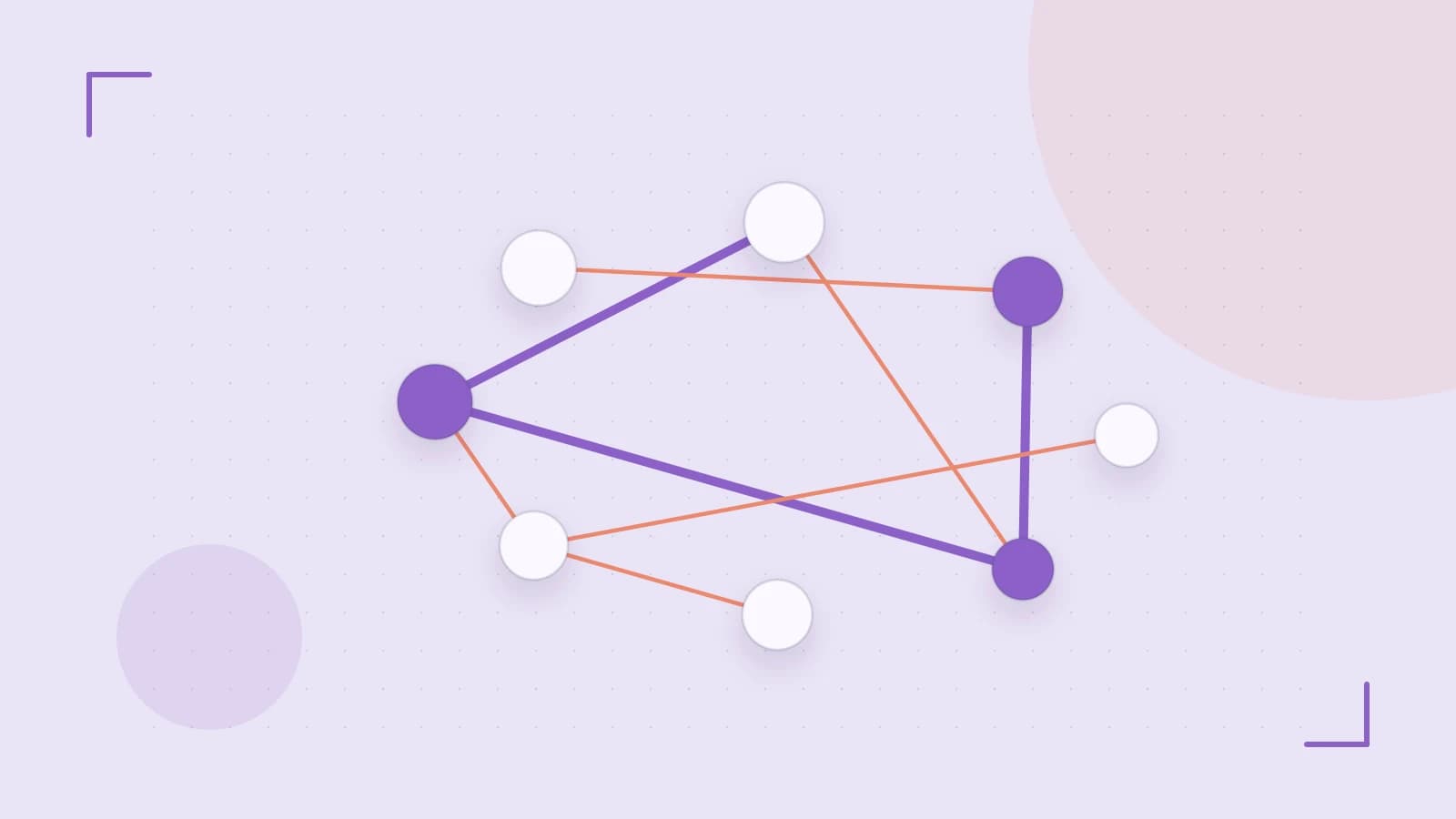
Socket.IO rooms let you group sockets under a name and emit to that group with io.to(room).emit, enabling targeted one-to-many messaging without external state. Rooms are process-local by default and require a Redis adapter to work across multiple Node.js instances.
A blank preview or stalled install in StackBlitz usually means the WebContainer runtime failed to boot, not that your code is broken. Classify the failure by stage, then apply the matching fix.
Firebird's MVCC cleanup is capped by the Oldest Active Transaction. Here's how idle transactions inflate the file, how to find the pinning attachment with MON$ tables, and how to verify with gstat.
CircleCI’s cache key and persist_to_workspace can slash rebuild times, but deterministic key design and the 150 MB workspace limit catch out even experienced teams.
Learn how Gardener’s Shoot custom resource provisions, updates, and deletes Kubernetes clusters, with a concrete upgrade example and practical limits to watch.
Configure Envoy outlier detection to automatically eject unhealthy upstream hosts based on 5xx errors and latency, verify ejection via admin stats, and tune recovery options.
The term Detaspace appears across multiple sources without a single confirmed platform; verification of the exact product and spelling is required before any technical content.
Meteor’s pub/sub with Minimongo gives server-authoritative real-time updates without polling, but requires narrow publications and careful handling of client cache and server state.
This guide shows how to wire, configure, and program the Nano’s 10‑bit ADC for reliable analog sampling in battery‑powered sensor nodes, covering hardware, firmware, validation, and fault recovery.
A decision guide for choosing between Wolfram Language Integrate and the Wolfram|Alpha API for symbolic integration, with a comparison table, local validation, and a hybrid fallback pattern.
Wiring ros2_control into Gazebo lets you command simulated manipulators with standard ROS 2 controllers. This post walks through the plugin architecture, a minimal two-link arm example, version compatibility, and the three most common misconfiguration traps.
Learn how React 18's automatic batching and the useTransition hook can keep your UI smooth when filtering thousands of items, with a concrete code example and trade‑offs to consider.
Learn how Terramate’s change‑detection driven <code>--only-changed</code> flag lets CI run Terraform only on affected stacks, cutting plan/apply time in large monorepos.
In Tauri 2.x, treat Rust commands as a validated API boundary rather than a generic file bridge. A worked note-saver example shows path canonicalization, error mapping, and capability caveats.
A decision guide for picking one Matplotlib backend per Spyder console—Inline, interactive Qt, or headless Agg—based on interactivity, reproducibility, and remote use.
Nuxt routeRules let you assign different rendering strategies to individual routes via glob patterns in nuxt.config, enabling hybrid rendering within one app.
Mutable date objects create hidden bugs in billing and scheduling code. Here is how CarbonImmutable returns new instances instead of mutating shared references, plus a practical migration path.
Per-column-family write buffers multiply in multi-CF RocksDB deployments. A shared WriteBufferManager bounds aggregate memtable memory, but sizing it requires balancing flush frequency against OOM risk.
Learn how to reliably enumerate complete NetBox REST API result sets using limit/offset pagination, including prerequisites, a focused procedure, validation checks, and recovery steps for concurrent data changes.
SQL*Loader works for nightly vendor CSVs, but schema changes mean editing control files and inspecting rejected rows outside SQL. External tables turn the file into a read-only table, making the load a single INSERT statement with transactional control.
DetachedInstanceError means the object lost its Session and the attribute was never loaded. Use inspect() to confirm, then fix session scope or loading strategy.
Teleport Database Access replaces long-lived database passwords with short-lived mTLS certificates issued after RBAC label matching. See a worked PostgreSQL role and agent configuration, plus limits and verification steps.
React-Bootstrap's Accordion offers two state models. Choose defaultActiveKey for static lists and activeKey when FAQs must sync with URLs or external filters.
Talos Linux has no SSH and no shell, so node changes go through talosctl and versioned machine config. A worked patch example, verification steps, and the trade-offs.
Choose Poetry dependency groups for internal tooling and extras for consumer-facing optional features. Compare the trade-offs, see a concrete pyproject.toml layout, and validate the result.
S3 Object Lambda Access Points run a Lambda function on every GET, so one canonical object can serve many derived views. Here's the request path, a worked downscaling example, and when precomputing wins.
invalid_grant from a public OAuth client usually traces to token state, a lost PKCE verifier, or config mismatch. A diagnostic order for separating the two grants and fixing each finding.
Stop fighting with global state management. Learn how Remix uses nested routing and server-side loaders to eliminate data waterfalls and keep your UI in sync automatically.
Learn how to add a Couchbase secondary index that turns expensive full‑bucket scans into fast index‑only lookups, with a concrete example, verification steps, and trade‑offs.
Match Nomad job type to workload lifecycle: service for resilient, health‑checked long‑running apps; batch for one‑shot tasks unless you explicitly enable rescheduling. Includes concrete specs, CLI verification steps, and failure‑mode analysis.
Step‑by‑step guide to diagnose and fix OpenGL Framebuffer Object completeness errors such as GL_FRAMEBUFFER_UNDEFINED, GL_FRAMEBUFFER_INCOMPLETE_ATTACHMENT, GL_FRAMEBUFFER_INCOMPLETE_MISSING_ATTACHMENT, and GL_FRAMEBUFFER_UNSUPPORTED.
Learn how Sourcetree’s line‑ and hunk‑level staging lets you commit only the lines you want, turning a messy file into focused, review‑friendly commits.
Learn how ApplicationSet reduces boilerplate when you need many similar Argo CD Applications, with a concrete example, trade‑offs, and steps to verify the setup.
Scala 3 separates the implicit keyword into given and using, making context dependencies explicit, type-safe, and easy to thread through application layers.
Learn how to efficiently aggregate large datasets with pandas’ groupby‑agg pattern, including preparation, execution, validation, and safe rollback steps.
Engineers evaluating new frameworks need reliable ways to discover supported features and assess compatibility. This blog offers a conservative, research-aware approach to evaluating Karatelabs without speculative claims.