Choosing an Authentication Method for Teleport: Local, OIDC, or SAML
Guide to choosing Teleport auth method: compare local, OIDC, SAML; show GitHub OIDC setup and verification steps.
05 Jul 2026, 08:04 UTC
ReadMeFeed / Community knowledge
Practical guides, fresh perspectives and ideas worth trying.
Guide to choosing Teleport auth method: compare local, OIDC, SAML; show GitHub OIDC setup and verification steps.
Learn how to eliminate duplicated schema definitions in OpenAPI by using the components section and $ref, with a concrete example and practical verification steps.
Learn how Angular's ChangeDetectionStrategy.OnPush cuts unnecessary change detection cycles by updating views only when input references change or events fire, with a concrete component example and common pitfalls.
Learn how Adobe XD Component States let you prototype hover, pressed, and disabled UI variations inside a single component, reducing file clutter and simplifying updates.
Architecture note for a Tomcat Valve: requirements, minimal design, trust boundaries, operational checks, failure modes, and triggers for redesign.
Guide to fixing silent audio in OpenAL by checking context binding, source/listener positions, buffer format, source state, and error polling.
Deciding between Plotly Express and Graph Objects is a balance of speed and control. Learn when to use high-level wrappers for tidy data and when to drop down to low-level traces for complex engineering.
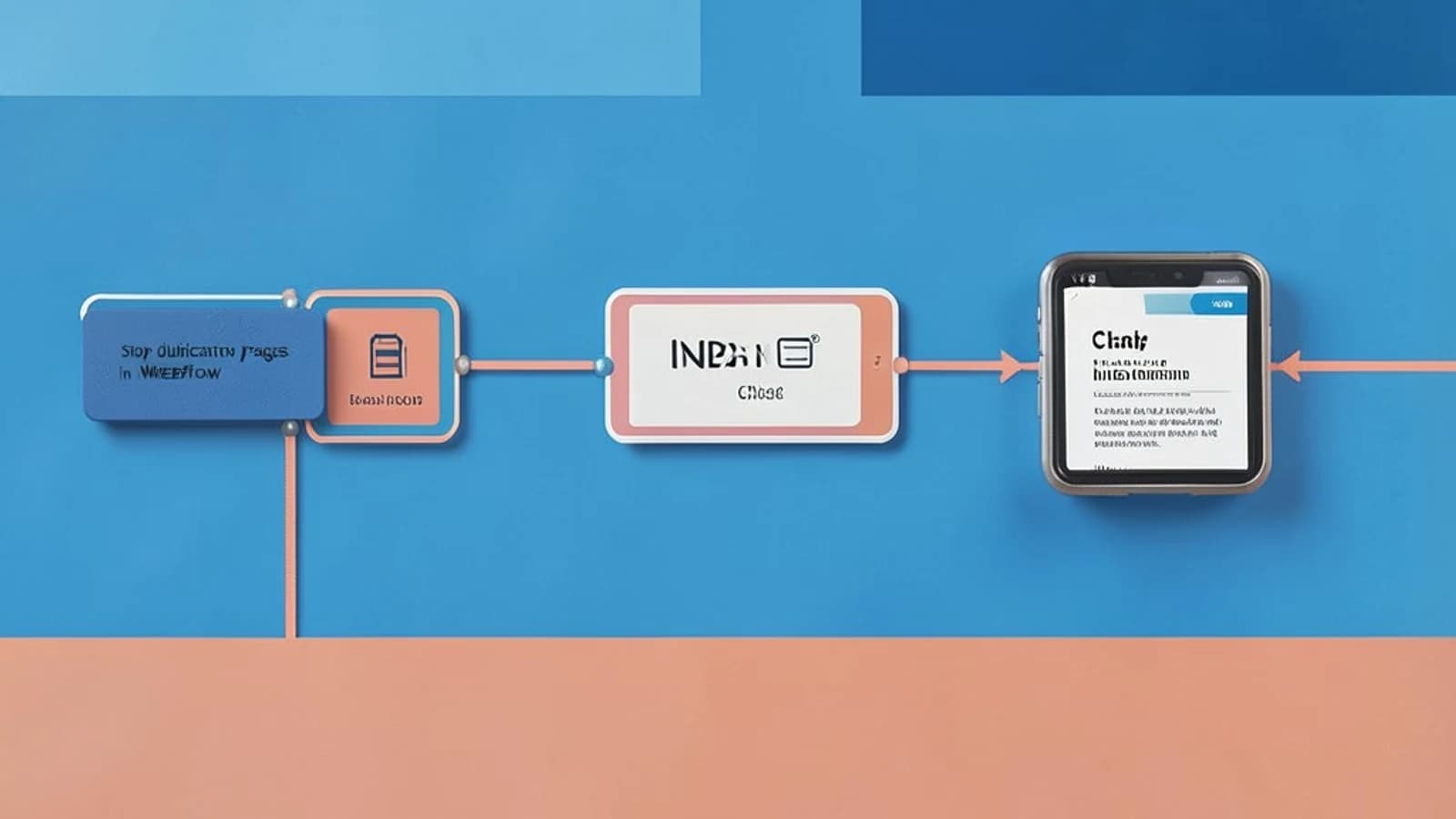
Stop duplicating pages in Webflow. Learn how to use CMS Collections and Reference Fields to build a scalable, relational content architecture that updates globally.
Learn how to implement OAuth 2.0 with PKCE to secure public clients like SPAs and mobile apps, eliminating the need for insecure client secrets.
Bower's flat dependency tree prevents multiple versions of a library from coexisting. Learn how to use the 'resolve' property in bower.json to handle version conflicts in legacy projects.
Learn how to use NW.js to merge Node.js and Chromium contexts, allowing direct system access from the DOM without IPC overhead.
Learn how Firestore's offline persistence combined with real-time listeners lets your app stay responsive even when the network drops, and how to detect when data is locally cached versus server-confirmed.
Learn how to use Photoshop Smart Objects to prevent pixel degradation during scaling and maintain editable filters through non-destructive editing workflows.
Learn how to implement Vertex Buffer Objects (VBOs) in OpenGL to move vertex data to GPU memory, reducing CPU overhead and eliminating PCI‑e bottlenecks.
Learn how to enable, write, and verify 128‑bit SIMD in WebAssembly to get 2‑4× speed‑ups for kernels like image convolution, while understanding the fallback behavior and debugging limits.
Guidance on designing a minimal Nomad dispatch setup, covering requirements, boundaries, checks, and failure modes.
Learn when to use CL_MEM_COPY versus CL_MEM_USE_HOST_PTR in OpenCL to eliminate PCIe bottlenecks and implement zero-copy memory transfers on integrated GPUs.
Learn how to prevent resource leaks in Python using the Context Management protocol and the 'with' statement for deterministic cleanup of files, sockets, and database connections.
Learn how SDL_TEXTUREACCESS_STREAMING lets you write pixels directly into GPU‑owned memory each frame, reducing copy overhead for video or procedural textures.
Learn how to add -WhatIf and -Confirm support to PowerShell scripts by turning them into advanced functions with [CmdletBinding()] and $PSCmdlet.ShouldProcess.
A diagnostic guide to fixing 'Module not found' and resolution errors in Storybook, covering path aliases, case-sensitivity in CI, and provider configuration.
Learn how to create a mass‑update bulk action that safely modifies multiple Eloquent records inside a Filament admin table, with considerations for performance, authorization, and verification.
Guide to selecting the implicit Newton‑Raphson or explicit Runge‑Kutta transient solver in NPSS, with constraints, trade‑offs, implementation snippets, and validation steps.
Learn why library authors should choose core-js-pure over standard core-js to prevent global prototype pollution and ensure compatibility across different JavaScript environments.
Design a secure, reproducible NuGet restore process using mirrors, trust boundaries, and locked-mode verification to prevent supply chain risks in CI pipelines.
Learn how Apache Spark’s Adaptive Query Execution detects skew and runtime size to switch joins, split partitions, and reduce shuffle work—complete with enablement steps, a worked example, and verification tips.
Learn how to decide between reach and impressions optimisation in Facebook Ads, see a compact comparison, and validate your choice with API calls and metrics.
See how Elm’s Model‑View‑Update pattern eliminates runtime surprises and gives you a clear path to testable, maintainable UI code.
A concise architecture note for Nuxt 3 SSR: requirements, minimal pages/ + useAsyncData design, trust boundaries, operational checks, and when to change the design.
Learn how to use Turbo Frames to eliminate full-page reloads and implement targeted DOM updates without the complexity of a full JSON API.
Learn how to use @property and @synthesize in Objective-C to reduce boilerplate, manage memory with ARC, and implement custom state validation.
Learn how Memcached’s CAS operation prevents lost updates when multiple clients increment a shared counter, with a worked example, trade‑offs, and verification steps.
Configure Portainer to use LDAP authentication and map LDAP groups to Portainer roles for team-based access control.
Stop writing boilerplate entities. Learn how to use Sulu's XML-driven content types to auto-generate database schemas and admin interfaces.
Shows how to configure Passport.js with the Local strategy, keep session data minimal, define trust boundaries, and add operational checks for secure Node.js authentication.
Learn how to set page‑level view and edit restrictions in Confluence, see a step‑by‑step example, and understand the trade‑offs of granular permissions.
Identify why RabbitMQ publisher confirms stall, diagnose queue, memory, network, or client issues, and apply targeted fixes with verification steps.
Learn how to configure and use PyCharm's SSH Interpreter to edit code locally while running it on a remote machine, with a concrete debugging example and practical verification steps.
Explore the core requirements, minimal design, trust boundaries, operational checks, failure modes, and design‑change triggers for qTest's requirement traceability matrix.
A technical guide on using pnpm's workspace: protocol to eliminate dependency duplication and ensure deterministic internal linking in monorepos.
Learn how to replace heavy mutexes with C11 atomic types to build high-performance, thread-safe counters using lock-free synchronization and memory ordering.
Follow a step‑by‑step checklist to fix PhpStorm Xdebug breakpoints that are ignored during debugging sessions.
Learn how PixiJS ParticleContainer batches thousands of sprites sharing a texture into a single draw call, cutting CPU overhead for effects like rain or snow.
Decide whether to enable Sequelize's paranoid mode, understand its impact on deletes, foreign keys, and indexes, and see a minimal code example that shows soft delete and restore.
Learn how Phoenix LiveView eliminates the need for complex client-side state management by keeping UI logic on the server and pushing minimal HTML diffs via WebSockets.
Learn how to enable PrimeNG DataTable virtual scrolling to keep DOM size constant and improve scroll performance with large datasets.
A step‑by‑step diagnostic guide for troubleshooting 'Insufficient Data' or 'Invalid Data' errors in Minitab Capability Analysis, with checks, fixes, and escalation paths.
Learn how to use React.lazy and Suspense with React Router v6 to split your JavaScript bundles, reducing initial load times and improving TTI.
Learn how to create a TTL index, verify it works, and avoid common pitfalls when letting MongoDB delete old data automatically.
Learn how RubyMine’s integrated RSpec support simplifies test execution, debugging, and configuration. Follow a step‑by‑step example with a Calculator class, discover run‑config options, and weigh the trade‑offs for large test suites.