Set up Grunt's watch task with LiveReload to auto-refresh the browser on source changes. This guide covers a working Gruntfile, the required middleware, and common pitfalls like infinite loops and missing script injection.
PureScript’s Foreign Function Interface (FFI) lets you call JavaScript directly. This article walks through a real example, highlights common pitfalls, and shows how to keep your code safe and maintainable.
Moleculer ships timeout, retry, circuit‑breaker and bulkhead middlewares that compose declaratively via a policy object—eliminating the need for external resilience libraries. Understand the execution order, state sync, and cancellation wiring.
A decision guide for handling Homebrew keg‑only formulae (OpenSSL, Python, LLVM) on macOS 13+ and Linuxbrew: compare default isolation, force‑linking, pkg‑config integration, and explicit environment variables with a ready‑to‑use CI build snippet and validation commands.
Learn how to use Modx Revolution’s TV caching to boost page speed while avoiding stale data. Follow our step‑by‑step example, trade‑off analysis, and checklist to make caching decisions that keep your site fast and accurate.
Learn how to load glTF 2.0 models in Three.js with optional Draco compression. Step‑by‑step setup, runtime checks, and graceful fallback for browsers that can’t handle Draco. A practical guide to faster, smaller 3D assets.
Streamlit 1.18 split caching into st.cache_data (serializable returns) and st.cache_resource (singleton objects). Covers when to use each, TTL/LRU eviction, widget pitfalls, mutation risks, and distributed deployment patterns with a semantic search example.
Godot signals decouple nodes, but misuse creates silent bugs. This architecture note covers the minimal event-bus design, trust boundaries, editor/runtime verification, thread safety, and when to replace signals with direct calls or RPCs.
Maven Wrapper pins the build tool version in your repository so every developer and CI agent runs the exact same Maven — no system install, no version drift, one-line upgrades.
A diagnostic guide for GCC 7–13 Link-Time Optimization failures: recognize undefined reference and multiple definition errors, trace root causes through symbol visibility, ODR flag mismatches, and mixed LTO/non-LTO objects, then apply targeted fixes with version-aware commands.
Learn how Kibana’s Data Views replace legacy index patterns, simplify dynamic index selection, and keep dashboards consistent across large Elasticsearch clusters. Includes a step‑by‑step example and trade‑off analysis.
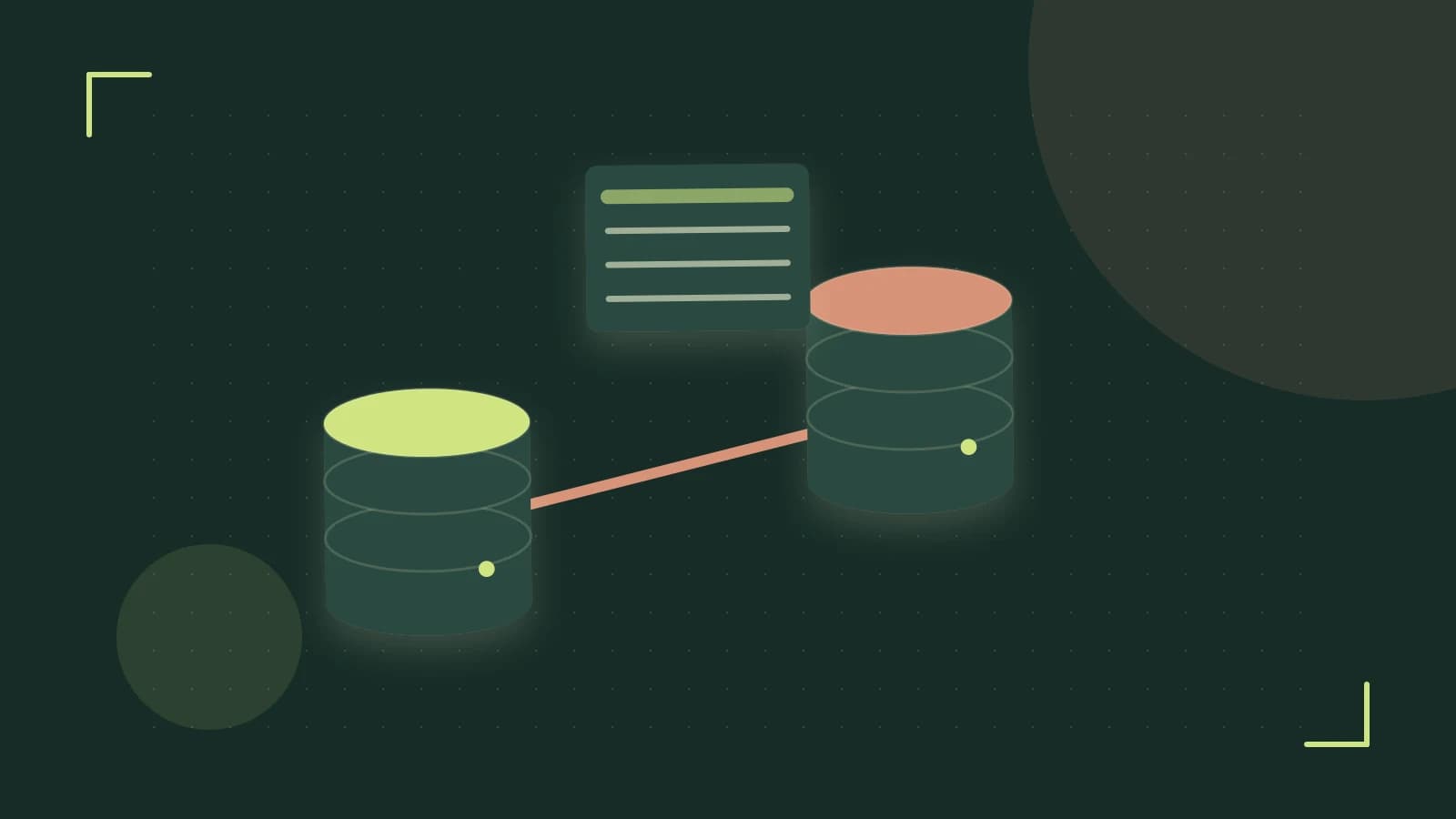
Build a fault‑tolerant microservice database on DigitalOcean Managed PostgreSQL. This guide covers the smallest viable architecture, private networking, daily backups, automatic failover, and operational checks to keep the service online.
Learn how Ansible’s AWS dynamic inventory eliminates static host files, automatically discovers EC2 instances, and lets you filter, group, and run playbooks against a live cloud environment.
Learn how to configure, use, and troubleshoot environment variables in Discloud for Discord bot deployments, with limits, code examples, and common pitfalls.
NixOS system generations give you atomic, bootloader-integrated rollbacks. A kernel update breaks Wi-Fi? Reboot, pick the previous generation, run nixos-rebuild switch --rollback. Done. But generations consume disk space and don't touch user data — here's how to manage both.
A decision guide for choosing between Aerospike Data-in-Memory and Hybrid Memory storage engines, covering persistence, latency, capacity, strong consistency, and operational constraints with concrete configuration examples and validation commands.
Gentoo’s USE flags let you toggle optional features per package. This guide walks through disabling X11 support in FFmpeg, explains flag locations, shows the impact on dependencies, and discusses trade‑offs like build time and maintenance.
When a systemd service stops immediately with ExitCode 1 or 255, the culprit is often a mis‑configured unit file. This guide walks through the symptoms, common causes, a step‑by‑step diagnostic checklist, and proven fixes so you can restore service uptime quickly.
A diagnostic guide for Cairo's silent vector-to-raster fallback in PDF/PostScript output: detect pixelation and file-size bloat, use CAIRO_DEBUG=fallback to trace causes, and apply fixes—remove translucent groups, avoid mesh gradients, or raise fallback resolution—before escalating.
Locking the full dependency tree with package-lock.json and using npm ci in CI eliminates version drift and makes JavaScript builds reproducible across machines.
An architecture note on Laravel Jetstream's Team Management: requirements, minimal design using built‑in traits, trust boundaries around the current_team_id session, operational checks, failure modes, and triggers that would push you to a richer permission system or multi‑database tenancy.
Discover how Haxe macros let you eliminate boilerplate code—like getters, setters, and serializers—without adding runtime overhead. Learn a concrete example, trade‑offs, and how to get started.
A step‑by‑step diagnostic guide for Liquibase checksum validation failures, covering MD5 vs SHA‑256 mismatches, encoding drift, manual DB edits, version upgrades, and duplicate changesets, with ordered checks, targeted fixes, and escalation thresholds.
LLVM’s LoopVectorize pass can turn a scalar loop into SIMD code automatically, but only when the analysis deems it safe. This guide walks through the decision process, shows a real example, and explains how to confirm the vectorization on your target.
When Vagrant synced folders fail to mount or write, the cause depends on the provider. This guide offers a diagnostic table, ordered checks, and provider-specific fixes for VirtualBox, NFS, SMB, and rsync.
Jasmine's async testing evolved from done() callbacks to native async/await. This post covers version-specific behavior, a practical migration pattern using promisify, clock mocking differences, and the readability vs. debugging trade-off.
A decision guide comparing Durable Objects, KV, D1, and external databases for consistent state in Cloudflare Workers with trade-offs, constraints, and a concrete implementation pattern.
Collapse duplicate IFTTT applets with Filter Code. Use sandboxed JavaScript to branch a webhook to different Slack actions by severity, gate by business hours, and avoid silent timeouts.
Learn how Mithril’s lightweight virtual‑DOM diffing keeps dynamic lists snappy, with a practical example, trade‑offs, and actionable tips for real‑world apps.
A step‑by‑step guide to building a lightweight Fortran 2008 coarray module that splits a large array across images, with clear requirements, trust boundaries, operational checks, failure modes, and when redesign is needed.
Pass complex sObject state between async steps, reset governor limits per job, and track progress via AsyncApexJob -- a Queueable chaining guide for Salesforce.
Compare full, modular, and plugin-based Lodash imports. Learn how to configure lodash-es with Vite, Webpack, or Rollup for tree-shaking and verify the production bundle.
Learn how Maya’s Set Driven Key lets a single slider control an arm’s rotation with custom curves, outperforming constraints for non‑linear motion. Follow a step‑by‑step example, trade‑offs, and best practices to add SDK to your rigs.
When a Zustand selector stops re‑rendering, the culprit is often a selector error, faulty equality, or direct state mutation. Follow this step‑by‑step diagnostic guide to find and fix the problem quickly.
Centralize data integrity in FeathersJS with validation and transformation hooks. Learn how to use Joi in a before hook, hash passwords, and keep services clean and consistent across REST and sockets.
Decide whether to use eager, lazy, or hybrid loading for StencilJS components. Compare constraints, trade‑offs, and see a concrete example that validates on‑demand loading while keeping SSR and legacy browsers happy.
Learn how to use Grafana’s Join by Field transformation to merge Prometheus metrics and Loki logs in a single panel, with a concrete example, trade‑offs, and performance tips.
A practical guide to creating, running, and verifying database migrations in CakePHP 4.x using the built-in Phinx integration, with rollback procedures and team workflow rules.
DBeaver's ER Diagram works live and offline from migration scripts, with force-directed and hierarchical layouts, filtering, and PlantUML/Mermaid exports for version-controlled docs. Includes a Flyway-to-Markdown pipeline and real-world limits on layout persistence, large schemas, and implicit FKs.
Lumen's trimmed kernel skips session, cookie, and CSRF middleware by default — a deliberate choice for stateless APIs. This post examines the performance impact, shows clustered rate limiting with Redis, and outlines trade-offs of a maintenance-mode micro-framework.
Architecture note on WebGPU's async buffer mapping and staging buffer pattern: minimal design for safe CPU‑GPU data transfer, trust boundaries, operational checks, failure modes, and when to switch to ring buffers or writeBuffer fallbacks.
Expo's OTA update feature lets you ship JavaScript fixes directly to devices, bypassing store review. This guide covers setup, a worked example, and key limitations.
Stop OutOfMemoryErrors in Java by implementing proper database pagination. Learn the difference between offset and keyset pagination and avoid the common Hibernate join-fetch trap.
Learn how to architect systems using CentOS Stream, focusing on its role as an upstream buffer for RHEL and how to manage the risks of a rolling-release model.
Learn how to handle large datasets in Grails GORM by comparing offset-based pagination with keyset pagination to prevent database latency and memory exhaustion.
Stop relying on a single backend IP. Learn how to use NGINX upstream blocks to distribute traffic, handle server failure, and optimize resource use with weight and least_conn.