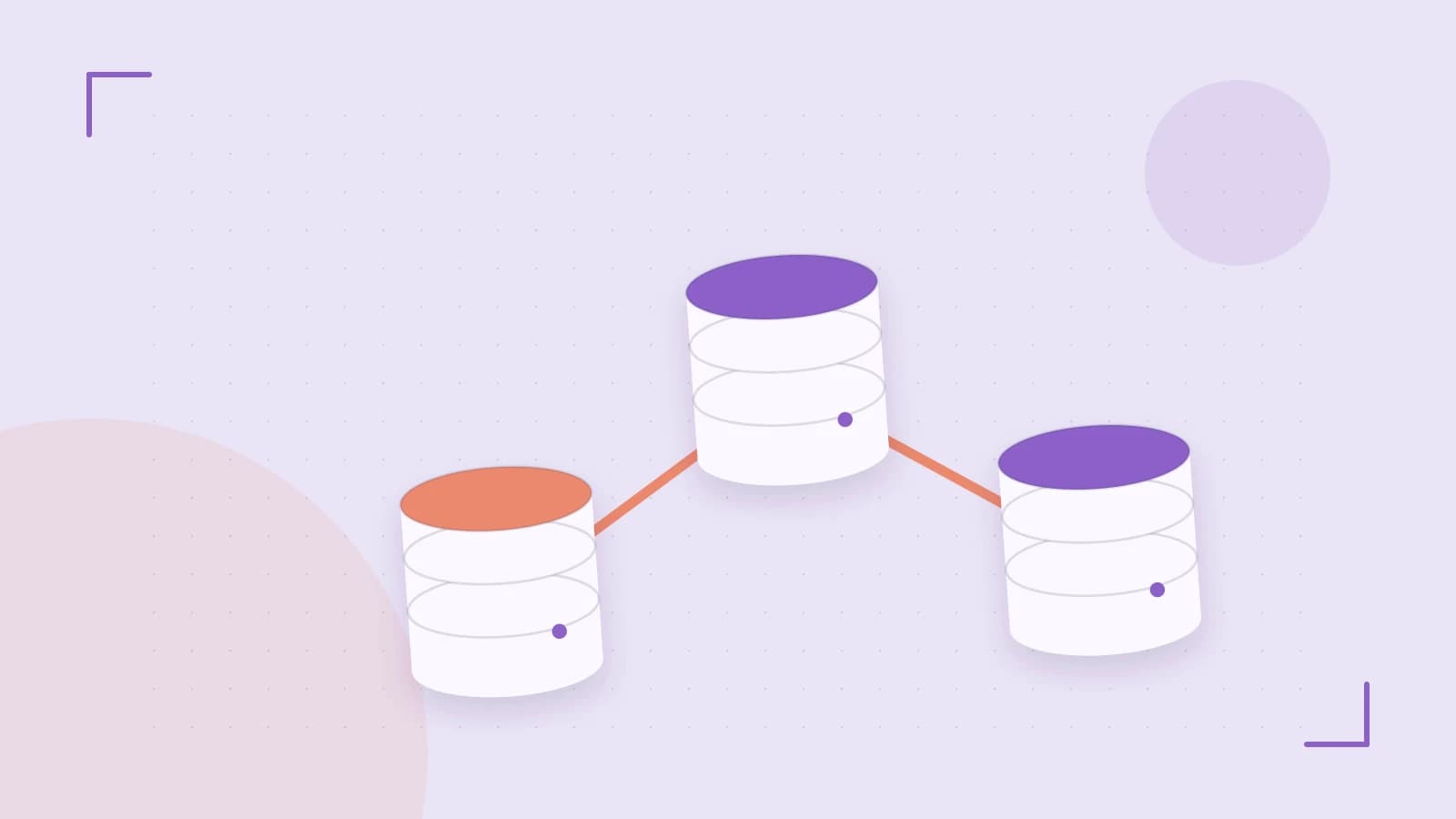
Stop guessing how legacy tables relate. Learn how to use DBeaver's Virtual Foreign Keys to map undocumented databases and generate ER diagrams without modifying production schemas.
YunoHost isolates apps with one Unix user and one subdomain each. This note maps where that boundary is real, where it is weak, and how to verify it with ordinary Linux tools.
Expo OTA updates allow developers to push JavaScript bundle changes instantly, bypassing the traditional app-store review cycle. Learn how it works, how to enable/disable it, and the trade-offs involved.
When YugabyteDB returns SQLState 40001 during concurrent updates, it’s a sign of write‑write conflicts under optimistic concurrency control. This guide walks through the recognizable condition, root cause, diagnostic steps, fixes, and escalation criteria to help you resolve and prevent these errors.
Livewire’s built‑in pagination lets you keep the UI in sync with the URL, support back/forward navigation, and reset state on data changes. Learn how to use it, avoid clashes, and verify it works.
Learn how to use the Yii2 Gii tool to automate the creation of Models, Controllers, and CRUD interfaces, reducing boilerplate and accelerating development.
Learn how Vitess uses VReplication to perform online resharding, moving data between MySQL shards without downtime using binlog streaming and a structured cutover process.
Learn how to implement Yarn Workspaces to manage multiple packages in a single repository, optimize dependency hoisting, and link local packages without manual publishing.
Learn how to use the Laminas ServiceManager and Factories to remove hard-coded dependencies from your PHP application, improving testability and decoupling.
Stop loading entire datasets into the JVM. Learn how to use Hibernate's setFirstResult and setMaxResults to implement database-level pagination and avoid memory spikes.
Learn how to implement XML validation against an XSD using Java's JAXP API, including security configurations to prevent XXE attacks and performance tips for large files.
Stop OutOfMemoryErrors in Grails by moving pagination from the JVM to the database. Learn how to use GORM's paginate method and PagedResult for efficient data retrieval.
Learn how to eliminate state synchronization bugs in ClojureScript using the re-frame pattern's unidirectional data flow, centralized DB, and optimized subscriptions.
Learn how the Xcode build system uses Directed Acyclic Graphs (DAGs) to manage dependencies and how to prevent non-deterministic builds through explicit input/output declarations.
Centralize Xamarin.Forms navigation with Shell URI routing. Register routes in AppShell.xaml, bind query parameters with QueryProperty, and use GoToAsync for consistent deep linking and back stack control across Android and iOS.
IntelliJ IDEA’s Live Templates let you insert code snippets via abbreviations. This guide shows how to create, use, and share templates for Java getters, explaining contexts, placeholders, and performance trade‑offs.
Learn how to architect structured content in WordPress using Custom Post Types (CPTs), including implementation patterns, performance limitations of the EAV model, and when to migrate to custom tables.
A decision guide for WooCommerce stores choosing between legacy post-based orders and High Performance Order Storage, with a compact option comparison, trade-offs, and a concrete validation workflow.
Learn when to use Associations versus Datasets in Wolfram Language to optimize for lookup speed or relational analysis, including a guide on transitioning from ingestion to analysis.
Learn how Delphi generics provide type‑safe collections and algorithms with zero runtime overhead, see a reusable cache example, and verify specialization via the map file.
Guide to choosing full‑disk encryption for Windows 8 laptops, comparing BitLocker, VeraCrypt, and Symantec Endpoint Encryption, with implementation steps and validation checks.
Learn how to shift intensive HTML5 canvas drawing to a background worker with OffscreenCanvas, keeping the main thread free for user interactions and delivering smooth, high‑frame‑rate graphics.
An architectural deep dive into Windows 11's WSL2, explaining the utility VM, the 9P protocol for cross-OS file access, and how to manage memory boundaries via .wslconfig.
Stop guessing why your Android UI is clipping or lagging. Learn how to use the Layout Inspector's 3D mode and Component Tree to debug nested hierarchies and overdraw in real-time.
Learn how to integrate WebStorm's debugger with Chrome to set breakpoints directly in TypeScript source files using source maps and the Chrome DevTools Protocol.
Apple's Unified Logging (os.Logger) replaces NSLog and print with leveled, privacy-redacting, low-overhead diagnostics. Here's how to adopt it in Swift and pull logs off a real device.
An architecture note on webpack 5's persistent filesystem cache: when rebuild frequency justifies it, the smallest safe configuration, why the cache directory is untrusted disposable state, and how to verify invalidation actually works.
Stop re-running cells every time someone asks "what if the threshold were different?" ipywidgets turns a static notebook analysis into an interactive parameter explorer with a few lines of Python — if you respect its live-kernel limits.
How Weblate's Automatic translation add-on works, a safe bootstrap configuration that never overwrites human translations, and the limits teams hit with machine translation at scale.
Grunt's declarative Gruntfile still solves real asset-pipeline problems cheaply. A worked concat/uglify/watch example, honest I/O trade-offs, and a keep-or-migrate decision framework.
Deciding between Uniform and Storage buffers in WebGPU is a balance of speed vs. capacity. Learn when to use the constant cache for performance and when to scale with storage buffers.
Learn how Gitter uses VCS-linked identity and OAuth to reduce onboarding friction and synchronize community access with GitHub and GitLab organizations.
Learn how to choose between Webflow CMS Collections and Static Pages. This guide compares template-based scaling versus granular layout control for content-heavy sites.
Stop choosing between storage crashes and missing traces. Learn how Jaeger's Adaptive Sampling dynamically adjusts trace rates to balance observability with operational costs.
Learn how to choose between Remote and Injected providers in web3.js to balance fast data loading with secure transaction signing using a hybrid architecture.
Linear memory is WebAssembly’s isolated byte array. This guide shows how to create, grow, and access it from JavaScript, pass pointers for strings, test limits, and avoid common pitfalls.
Learn how to use GCC's Link-Time Optimization (-flto) to enable cross-module inlining and dead-code elimination, reducing binary size and improving performance.
An architecture note on where Vyper's @nonreentrant lock belongs: which functions need it, why checks-effects-interactions is still required, and how to verify the lock with a hostile receiver contract.
Stop the cycle of random bot restarts. Learn how to properly configure discloud.config to align your RAM limits with your runtime and avoid OOM crashes.
Matplotlib's constrained_layout engine ends the trial-and-error of tight_layout and subplots_adjust. Here's how it works, a 2x2 example, and when not to use it.
Stop the performance decay of large datasets. Learn why Hibernate's setFirstResult can crash your app and how to implement Keyset Pagination for constant-time data retrieval.
Stop relying solely on the OOM Killer. Learn how to use Linux cgroups v2 memory.low, memory.high, and memory.max to create a tiered resource strategy that throttles instead of crashes.
Learn how Vue Teleport moves a component's rendered DOM to a different target while preserving its reactivity, with a worked example, limits, and verification steps.
Jetstream's Teams feature gives Laravel apps a session-tracked current team. Here's how to enforce tenant isolation with policies and global scopes — and where the defaults fall short.
Learn how to architect and implement vSphere DRS for automated workload balancing, including networking requirements, trust boundaries, and failure mode analysis.
Learn how to use Liquibase Contexts to separate development seed data from production performance tuning, preventing environment pollution and configuration drift.