Learn how to build a 2‑D navigation mesh in Godot 4.0 with NavigationServer2D, set up agents, handle dynamic obstacles, debug paths, and implement fallback behavior in a concise, step‑by‑step guide.
Move from print‑debugging to interactive inspection in Spyder with the Variable Explorer and cell‑based script execution. Learn a practical example, trade‑offs, and how to avoid common pitfalls.
Learn how Nuxt 3’s file‑based routing automatically lazy‑loads dynamic routes and how to pair them with server API routes to keep initial JavaScript small while fetching data on demand.
Pagination keeps Rails controllers from loading entire tables into memory. Compare offset pagination with LIMIT/OFFSET to cursor pagination using a stable key, and see how to slice ActiveRecord safely.
A diagnostic guide for Codeac Diff Highlight not displaying pull request changes: recognizable symptoms, a cause table, ordered checks, fixes, and escalation criteria.
Use Agg before importing pyplot, close figures explicitly, and declare fonts to generate charts reliably in headless containers and long-running services.
Learn how to define persistent state in Cairo contracts using the storage trait, avoid common pitfalls, and verify state changes with a simple counter example.
Poetry's dependency groups let you keep one lock file while installing only the packages a given environment needs. Learn how --only, --with, and --without work across Poetry 1.x and 2.x.
A decision guide for choosing Laravel Jetstream’s Livewire or Inertia.js stack, covering constraints, a comparison table, trade‑offs, and a step‑by‑step install‑and‑validate walkthrough.
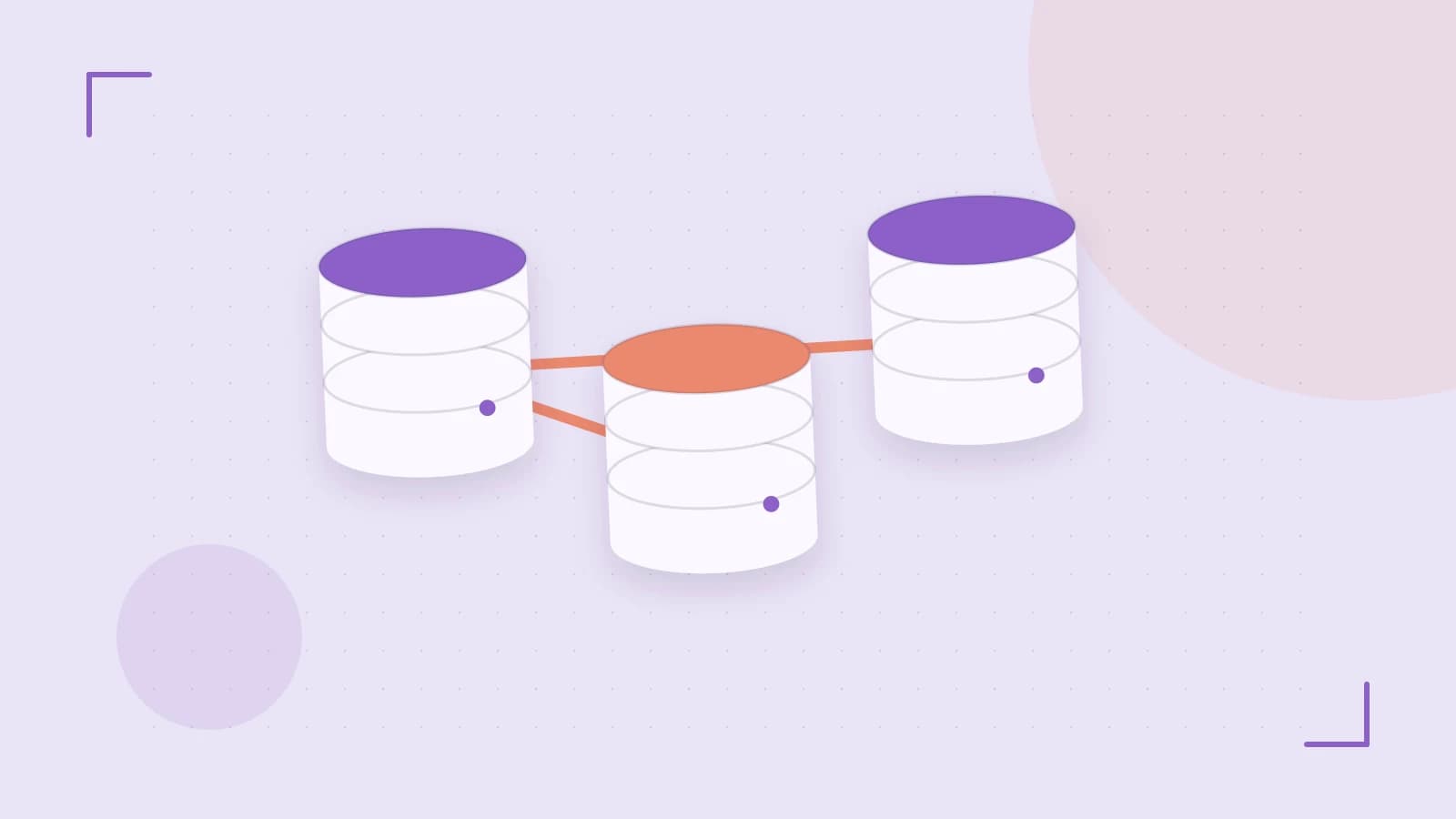
Offset pagination via laminas-db TableGateway is the smallest suitable design for bounded, read-mostly list endpoints with unique indexed ordering. Learn the trust boundaries, operational checks, and failure modes that determine when to switch to keyset pagination or read replicas.
Operational Slack alerts become unreadable as plain text. Block Kit lets you define structured messages with JSON blocks and interactive elements, separating presentation from backend logic for more reliable ops communication.
PKCE binds the OAuth 2.0 authorization code flow to a client-generated verifier so public clients can redeem codes safely. Includes a Bash example, server validation steps, and limitations.
Learn how CLion’s SSH remote development works, the minimal architecture, trust boundaries, operational checks, and when to rethink the design. A practical guide for engineers.
Framework7’s built‑in router lets you build a lightweight SPA with declarative routes, guard callbacks and lifecycle events. This guide shows the minimal architecture, data isolation, operational checks, failure modes, and when to redesign for larger apps.
When UI designers resize icons, raster scaling blurs edges. Photoshop Smart Objects let you resize, filter, and duplicate icons non‑destructively, keeping the source crisp and all instances in sync. Learn to set up a smart‑object library, run an example, and see the file‑size trade‑off.
Repeated string columns waste RAM and slow down aggregations. Converting them to pandas Categorical stores unique values once and uses integer codes, cutting memory and speeding up groupby.
Learn how Zustand's persist middleware automatically saves and restores state with localStorage, the serialization rules that apply, and how to avoid quota and corruption pitfalls.
Step‑by‑step guide to enable ARM64 Memory Tagging Extension, compile a test program with -fsanitize=memtag, and verify that memory safety faults are reported via synchronous tag‑check exceptions.
How to design background job processing in Drupal using the Queue API: minimal worker setup, trust boundaries, operational checks, and when to move to an external broker.
Learn how OCaml’s Generalized Algebraic Data Types let you encode type‑level invariants in a DSL, with a concrete example, trade‑offs, and a step‑by‑step guide to getting started.
Racket's #lang lets you build a custom language that compiles to ordinary Racket, giving you domain‑specific syntax without runtime overhead. Learn how to create a minimal DSL, inspect its expansion, and weigh the trade‑offs.
Use ephemeral replies for private responses and deferReply for work longer than Discord's acknowledgement window, then edit or follow up in discord.js v14.
Fire-and-forget publishing hides broker rejections. Publisher confirms let a producer wait for basic.ack or basic.nack per message, reducing silent loss at the cost of tracking outstanding publishes.
A diagnostic guide for recognizing and mitigating cache stampede in a Memcached-backed read path. Covers correlated miss and DB spikes, lease and early recompute checks, and escalation criteria.
Learn how qTest's Jira integration keeps test cases and defects in sync, reduces manual work, and improves traceability. The guide covers setup, a concrete example, trade-offs, and practical next steps.
Learn how to bridge the gap between Python logic and the browser DOM using PyScript and Pyodide's FFI to create interactive, data-driven web interfaces.
Use Podman’s generate systemd to turn a rootless container into a systemd user service that starts at boot, restarts on failure, and logs to the journal. Learn how to enable linger, generate the unit, and handle networking limits.
Learn how to use AWK associative arrays to aggregate data and count frequencies in text files efficiently without the overhead of sorting large datasets.
Decide when to use Ballerina’s streaming API versus loading files into memory. Compare memory usage, complexity, and performance, then see sample code and how to validate each approach.
Learn how to diagnose and fix Cypress tests that fail consistently despite having retries enabled, focusing on async race conditions, DOM instability, and network mocking.
Learn how to use RxJS shareReplay to eliminate redundant HTTP requests and implement efficient client-side caching with a focus on the critical refCount configuration.
Use SSH port forwarding to reach internal services without exposing them. Local, remote and dynamic forwarding options, with a concrete database tunnel example and verification steps.
Automate RHEL setups with subscription‑manager: register, attach pools, enable repos, and install packages in one idempotent script. Learn trade‑offs, limitations, and how to integrate this into CI/CD pipelines.
Stop GPU starvation by building a tf.data pipeline that caches, interleaves, maps in parallel, and prefetches. Learn how to set up the pipeline, avoid common pitfalls, and verify performance gains with TensorFlow’s profiler.