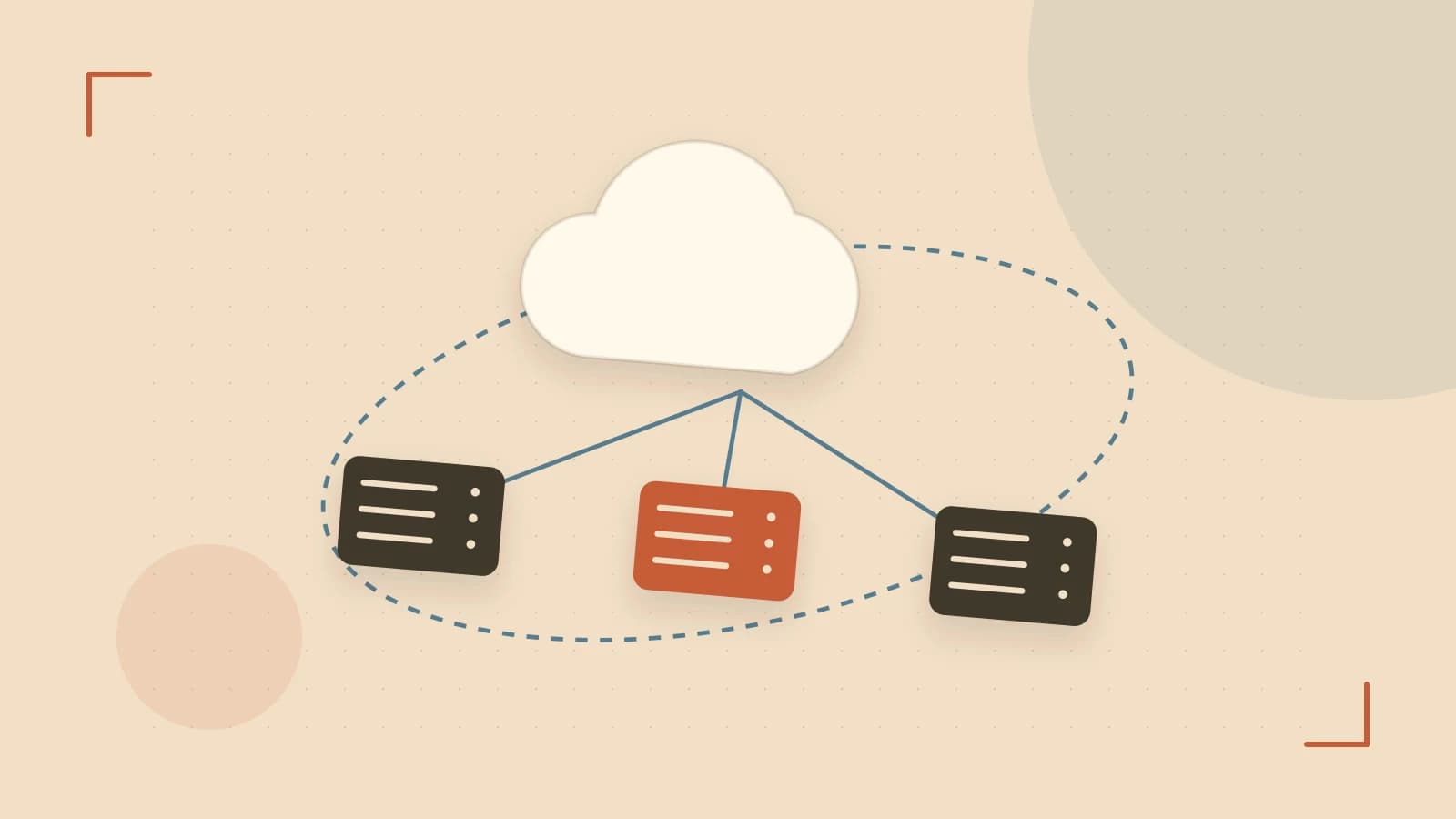
A crash can erase events waiting in Logstash's default in-memory queue. Persistent Queues move that buffer to disk. This architecture note covers the smallest safe configuration, trust boundaries, operational checks, and failure modes.
A diagnostic guide for Gentoo systems that fail to boot after a kernel update because of a missing or corrupted initramfs, with ordered checks and fixes.
Sass @use and @forward replace fragile @import globals with explicit namespaces and controlled public APIs. Learn how to structure theme tokens and avoid collisions.
Vaadin Flow's @Push lets the server update the UI instantly, but silent transport fallbacks and CSP rules can break it. Here is how to enable it safely and verify the connection.
Live migration in Harvester is a storage and capacity decision before it is a UI action. Learn the Longhorn prerequisites, KubeVirt migration checks, and a repeatable node-maintenance runbook.
Hermes compiles JavaScript to bytecode ahead of time, cutting React Native startup and memory. Here is how to enable it, verify it is active, and know when it will break your app.
npm workspaces let you manage interdependent packages in one repository by declaring them in a root package.json, hoisting shared dependencies, and symlinking local packages automatically.
ThinLTO link errors like undefined __llvm_tltsymbol usually mean compile and link settings diverged. This guide walks through ordered checks, fixes, and escalation criteria for large C++ builds.
Enable Jasmine random ordering to expose hidden inter-spec dependencies, capture the failing seed, and replay the exact order for deterministic debugging.
Filament tables paginate at the database level, but scale depends on shaping the query with modifyQueryUsing and persistQueryFilters to keep LIMIT/OFFSET and indexed WHERE clauses.
Cloudflare Tunnel replaces inbound firewall exceptions with an outbound-only daemon. This post examines the architecture, a version-controlled replica setup, and the operational trade-offs before you commit.
A practical architecture note on Neovim's built-in LSP client: process model, trust boundaries, operational health checks, and failure modes for multi-project workflows.
Standard Haskell ADTs treat every expression node the same, so type errors hide until runtime. GADTs index constructors by return type, letting the compiler reject invalid DSL operations before you run the program.
IFTTT works as a delayed, loosely typed fan-out router for low-volume events—not as a synchronous API. This guide compares Webhooks triggers, Webhooks actions, and direct API calls, then shows how to validate delivery without assuming exactly-once semantics.
In a Glitch Node.js project, keep secrets in .env and durable files under .data. This guide covers the mechanism, restart and remix boundaries, and when to switch to external storage.
SDL_GameController replaces per-vendor joystick remapping with a normalized button and axis model. Here is how the mapping database works, where it breaks, and how to verify your setup.
Next.js App Router ISR can keep content-heavy pages fast without going fully dynamic, but it requires explicit opt-in and tolerates a bounded staleness window.
Decide between native quarterly/semi-annual PI intervals and custom date ranges in Jira Align based on capacity sync, reporting stability and Jira Software integration.
A decision guide for Kotlin structured concurrency: when to use coroutineScope for fail-fast aggregation, supervisorScope for independent tasks, and why GlobalScope leaks work.
Stop using .reduce() to build objects from maps. Learn how to implement the ES2020 Object.fromEntries polyfill via CoreJS to ensure cross-browser compatibility without bloating your bundle.
Decide the right SELinux mode for your Fedora system. Compare Enforcing, Permissive, and Disabled, understand trade‑offs, and follow a step‑by‑step guide to switch and validate your choice.
A concise architecture note showing how a single FeathersJS service with JWT before‑hooks and whitelist‑based after‑hooks satisfies CRUD, role‑based access, and emits only whitelisted fields over Socket.io, with failure handling and scaling tips.
Decide between @capacitor-community/push and @capacitor-fcm/fcm for Ionic push notifications. Compare features, trade‑offs, and see a step‑by‑step implementation of the community push plugin with validation steps.
Broadcast joins eliminate shuffling for small tables in Spark. This post explains how to enable them, shows a concrete example, and discusses memory limits and performance trade‑offs for developers.
Learn how Realm’s live objects auto‑update across threads, how to subscribe to changes with notification tokens, and the practical steps to verify and avoid common pitfalls.
Discover how to eliminate repetitive vendor prefixes in your stylesheets by using Stylus transparent mixins, keeping source code clean while still supporting older browsers.
Learn how to configure Gulp’s file‑watching feature to automatically recompile Sass on file changes, with error handling, verification steps, and optional live reload.
Learn how to diagnose why Grafana alert rules show 'No data' or fail to send notifications, with a step‑by‑step checklist for datasource health, query validity, timing, contact points, and silencing.
Learn how to enable Sulu’s Headless API, expose JSON content for React/Vue frontends, and keep the Sulu admin UI while addressing the need to re‑implement Twig‑based presentation logic.
Dataspell’s built‑in DataFrame viewer lets you sort, filter, and inspect pandas tables directly in notebook output, with caveats for large data and styling.
PrimeNG DataTable’s lazy loading turns the UI into a thin client that asks the server for a slice of data. This guide explains the event contract, backend expectations, a concrete Angular example, and common pitfalls to avoid.
Learn how Solidity custom errors replace expensive string reverts, reduce gas, and stay decodable by tooling. Includes a practical example, verification steps, and trade‑off discussion.
Learn how to use DBeaver's Export Data wizard to move large datasets to CSV or SQL without triggering OutOfMemory errors by optimizing fetch sizes and dialects.
OpenAPI’s operationId gives each endpoint a unique, language‑agnostic name. It powers deterministic SDK methods, eases refactoring, and aligns server code with the spec. This post shows how to implement, test, and avoid common pitfalls.
Choose the right Livewire pagination strategy: built‑in vs. manual AJAX. A decision guide with constraints, trade‑offs, a comparison table, and concrete code examples to help you implement or validate pagination in your Laravel app.
SurrealDB lets you replace costly JOINs with lightweight record links and graph operators. Learn how to model relationships, fetch linked data in one query, and avoid over‑fetching pitfalls with a practical example.
See how CoffeeScript’s class syntax compiles to JavaScript’s prototypal inheritance, what the generated code looks like, and how to debug it effectively.
Problem: Keeping a systemd‑free Artix Linux while installing familiar Arch software. When you boot an Artix ISO you already have a chosen init system (OpenRC, runit, s6, or dinit) as PID 1.
HTMX OOB swapping fails when the response markup does not update the target element. This guide lists common causes, step‑by‑step diagnostics, fixes, and verification methods.
Mocha’s parallel test execution (v8+) speeds up suites by distributing test files across isolated worker processes. This architecture note outlines the requirements, minimal design, trust boundaries, operational checks, failure modes, and when a redesign would be needed.
Decide whether to keep Eleventy’s built‑in marked parser or switch to the markdown‑it plugin. This guide compares the two options, explains trade‑offs, and walks through a concrete implementation and validation steps.
Prisma’s nested write feature lets you atomically create or update a parent record and its children in a single call. Learn how it improves developer ergonomics, guarantees transaction safety, and what trade‑offs to watch for when inserting large batches.