Nim 2.0's ARC/ORC memory management gives you deterministic deallocation without GC pauses. This blog covers ownership semantics, cycle collection, migration friction, and a worked cyclic-list example—plus the trade-offs you'll hit in production.
Unify Datadog traces, metrics, and logs under one service identity using the reserved env, service, and version tags — with env-var setup, log injection, and verification steps.
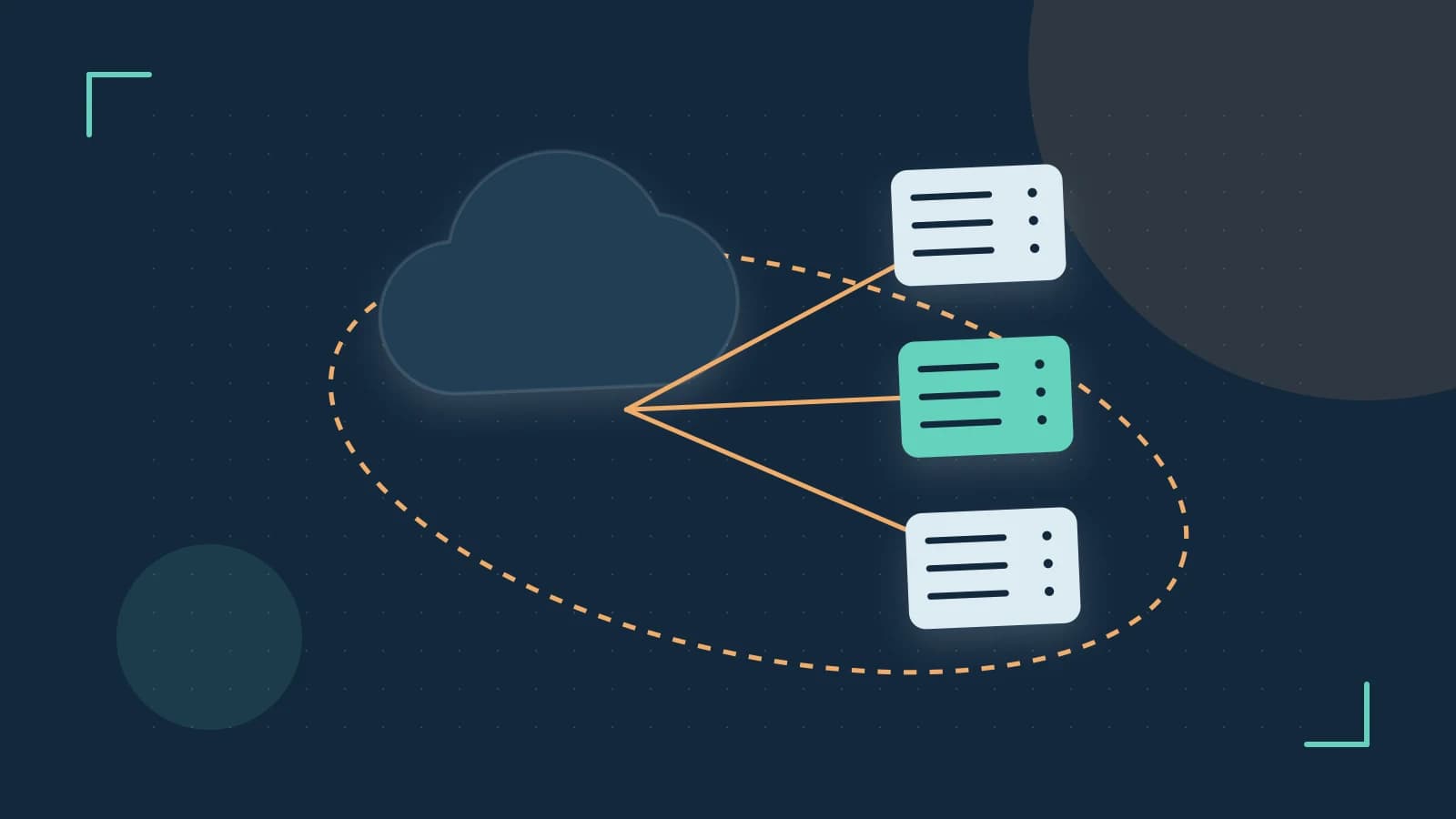
An architecture note for running parallel Selenium tests on BrowserStack Automate: the smallest orchestrator (queue, capped worker pool, session registry), data-isolation boundaries, operational checks, and failure modes.
volatile forces real loads and stores for hardware registers and ISR-shared flags — but it gives you no atomicity, no ordering, and no thread safety. Here's how to use it correctly and verify the codegen.
PixiJS batches sprites that share a texture into a single WebGL draw call — but filters, masks, blend modes, and interleaved textures silently split batches. Here's how batching works, what breaks it, and how to verify it with real draw-call counts.
Firebird Global Temporary Tables give each connection private, automatically discarded row storage. A worked example shows PRESERVE ROWS vs DELETE ROWS semantics, limits, and isolation checks.
Players rubber-band but ping looks fine? Learn to read net_graph choke, loss, sv, and var on a Source engine server to isolate whether the cause is client rates, server tick instability, or the network path.
Learn how to scope a Deta Space app to use Deta Base as its only persistent store, covering requirements, trust boundaries, operational checks, and failure modes.
In ClickHouse, the ORDER BY clause determines how data is physically sorted on disk. Get the column order wrong, and queries that should take milliseconds can stretch into minutes because the engine can't skip irrelevant data blocks.
Learn how V8’s pointer compression reduces heap memory, when it is enabled by default, and what trade‑offs to expect in real‑world JavaScript workloads.
Runit on Artix Linux trades systemd's feature breadth for transparent, filesystem-based service supervision. Here's how it works, a cron example, and where it falls short.
Gazebo Classic 11 is end-of-life. This guide compares Classic with modern Gazebo (gz-sim) across architecture, physics, ROS integration, and migration cost, then shows a concrete validation path.
Enable AutoSSL in WHM to auto-issue and renew free DV certificates for every hosted domain: prerequisites, setup, per-user control, verification with curl and logs, and fixes for the most common DCV failures.
RubyMine's Rails-aware rename refactoring propagates column renames across models, migrations, views, and SQL strings — but metaprogramming and database constraints escape it. Here's how to use it safely.
Meteor's publication/subscription model keeps client caches in sync by streaming MongoDB cursor diffs over DDP. This guide explains the mergebox, shows a worked active-tasks example, and covers parameterized pubs, field projections, reactive joins, and mergebox scaling limits.
How to put Apache 2.4 in front of a backend app server with ProxyPass and ProxyPassReverse — including trailing-slash pitfalls, timeout tuning, forwarded headers, and the limits of mod_proxy_balancer.
Use Terramate's Git-based change detection to plan and apply only the Terraform stacks affected by a change, with dependency-ordered execution, verification steps, and recovery guidance.
Solidity custom errors (0.8.4+) give you typed, ABI-decodable, gas-cheaper failures than revert strings. Here's the syntax, a worked Foundry test, and the real trade-offs.
Large AngularJS 1.x lists lag because every digest re-evaluates thousands of watchers. One-time binding (::) deregisters watchers for static data — here's how it works, a worked ng-repeat example, and the staleness trade-off.
Quasar v2's mode-based CLI builds SPA, SSR, PWA, Capacitor, Electron, and BEX from one codebase. This guide shows how to isolate platform-specific dependencies (like SSR-only sharp) using build-time QUASAR_MODE guards and runtime Platform.is checks, with worked config examples and common pitfalls.
Blazor's streaming rendering and enhanced navigation in .NET 8 make server-rendered pages feel like an SPA — progressive HTML delivery, preserved scroll and state, no full reloads. Here's how they work and where the edges are.
A diagnostic checklist for Ory Kratos self-service login failing with invalid_credentials: read the debug logs, verify the identity and schema identifiers, check the password hasher config, and rule out cookie domain issues.
Declarative partitioning in PostgreSQL pays off when your queries and retention policy share a key. A worked example shows how to verify partition pruning and replace slow DELETEs with instant DROPs.
Choosing between Carbon's four built-in themes and custom token overrides for a light/dark React app: a comparison of effort, risk, and accessibility, plus a working Theme component setup and validation steps.
Explains how Rexx's NUMERIC DIGITS and FUZZ provide exact decimal arithmetic for financial calculations, covering requirements, trust boundaries, checks, failure modes, and when to reconsider the design.
Set up a non-destructive XRef scene workflow in 3ds Max 2024+ so architecture, props, lighting, and camera teams can edit concurrently on a shared network path. Master scene stays lightweight, reloads live, and renders identically to department files.
Default Sentry grouping splits errors on dynamic values. Learn how to customize fingerprints via beforeSend and server‑side rules to collapse noise without hiding real regressions.
Learn how Bzlmod replaces WORKSPACE with declarative, version‑locked dependencies and see a concrete polyglot example that shows setup, verification, and the trade‑offs involved.
A decision guide for Chart.js v4+ responsive resizing: compare maintainAspectRatio modes, container constraints, and high-DPI handling with a validated dashboard implementation pattern.
Learn when to use the SPSS GUI for exploration versus SPSS Syntax for reproducibility. This guide provides a framework for converting visual actions into auditable scripts.
Decide between React-Bootstrap <Form> components and native HTML elements. Compare bundle size, accessibility, and DOM depth to choose the right approach for your project.
Learn when to use Shopware 6's DAL Criteria for entity retrieval and when to bypass it for raw DBAL queries to optimize performance and avoid N+1 query issues.
Learn how Talos Linux replaces SSH with a gRPC API, and how to use talosctl apply-config to declaratively set node settings. The guide shows a working YAML example, explains the API flow, and highlights common pitfalls and limits.
Packer lets you build identical machine images on AWS, Azure, GCP, and VMware from one HCL file. This post shows how to use source, provisioner, and build blocks to keep images consistent, plus trade‑offs and a verification checklist.
Learn how to configure Secrets Manager to automatically rotate Amazon RDS/MySQL credentials using a Lambda function, verify the rotation, and recover if it fails.
Step-by-step guide to enable Ghost CMS's built-in AMP support, validate generated pages, customize the AMP template, handle common validation failures, and roll back if needed.
Notion's API uses cursor-based pagination on all list endpoints. A single request misses data past 100 rows. This post shows a robust generator pattern handling pagination, rate limits, recursive blocks, and deduplication—with a Python example.
Use an Argo CD PreSync hook to run an idempotent database migration Job before your application manifests are applied, so new code never starts against an old schema.
Learn how to embed Pulumi’s Automation API in a GitHub Actions workflow to provision an AWS S3 bucket automatically, with a concrete TypeScript example, safety gates, and a rundown of trade‑offs like state backend choice and debugging complexity.
Chrome’s native lazy loading lets you defer off‑screen images until they’re near the viewport. Learn how to use the attribute, verify it works, and avoid common pitfalls like missing dimensions or hidden containers.
Learn how Read the Docs automatically builds versioned documentation for every Git tag, letting readers switch releases via a dropdown, and see a practical setup with a sample .readthedocs.yaml and verification steps.
Learn how Rocky Linux achieves 1:1 binary compatibility with RHEL through source rebuilds, and see a step‑by‑step example of migrating a CentOS 8 system to Rocky Linux 8 while keeping existing configurations intact.
Karate DSL's Scenario Outline with Examples tables lets you drive one API test from external CSV or JSON files. This guide shows a complete worked example, covers parallel execution, data transformation, and the limits you'll hit at scale.
Learn how to horizontally scale Socket.IO with the Redis adapter: minimal code, NGINX sticky sessions, verification commands, and the operational trade‑offs you’ll face in production.