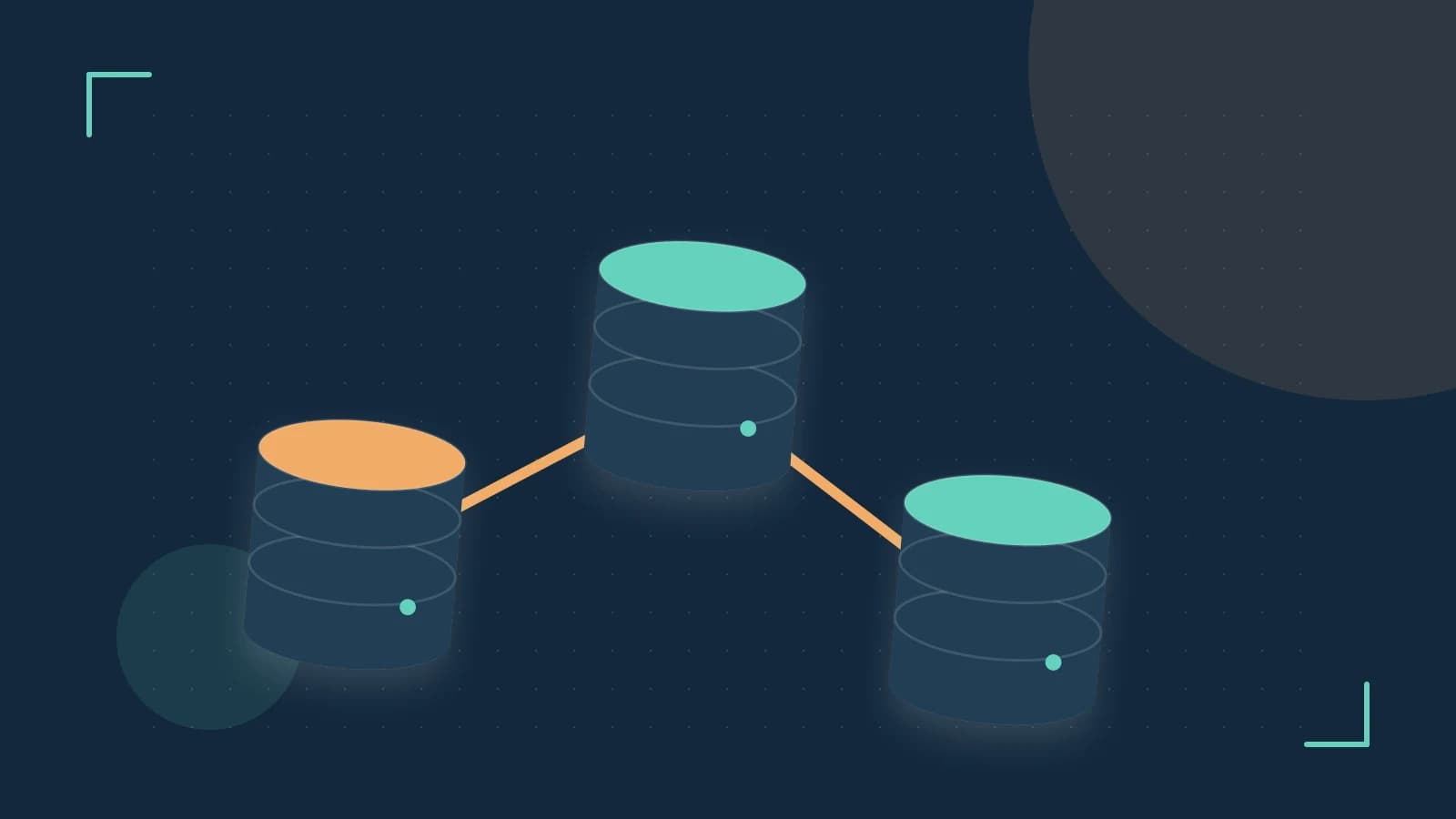
Implementing Cursor‑Based Pagination in FaunaDB with the 'after' Cursor Pattern
Learn how to paginate large FaunaDB result sets using the cursor‑based 'after' pattern, with step‑by‑step code, checks, and recovery guidance.
05 Oct 2026, 16:06 UTC
ReadMeFeed / Community knowledge
Practical guides, fresh perspectives and ideas worth trying.
Learn how to paginate large FaunaDB result sets using the cursor‑based 'after' pattern, with step‑by‑step code, checks, and recovery guidance.
Vault's dynamic secrets engines generate unique, short-lived credentials on demand and revoke them automatically when the lease expires — eliminating shared static passwords and the rotation toil that comes with them.
An architecture note on Vue's Composition API: requirements, a searchable-table composable, ref/computed trust boundaries, DevTools and type-check verification, failure modes, and design-change triggers.
Learn how to architect Dynatrace OneAgent and ActiveGate deployments to achieve full-stack observability while maintaining security boundaries and resource stability.
Learn how Solidity 0.8+ handles integer overflows, when to use unchecked blocks for gas savings, and where protection fails.
A practical workflow for moving a Moodle course from an older release to a newer one using built-in backup/restore, with plugin audits, staging tests, and post-restore checks that actually work.
Explore TheAlgorithms’ engineering choices: polyglot, zero‑dependency, naive implementations that prioritize learning over performance.
A diagnostic guide for troubleshooting Okta SAML 2.0 SSO failures, focusing on certificate mismatches, clock skew, and Entity ID configuration errors.
Learn how to implement the Page Object Model (POM) in Protractor to decouple test logic from UI selectors, reducing maintenance overhead in Angular E2E suites.
When `biome check` exits with errors or skips files, the culprit is usually a mis‑configured ignore file, wrong config discovery, or a parser issue. This guide walks through the recognizable symptoms, ordered checks, and fixes so you can get your project back to passing CI fast.
Learn how to configure SVGO to prevent broken gradients and ID collisions when inlining SVGs into HTML, using prefixIds and preset-default overrides.
Learn how to use JUnit 5 @TestFactory to generate test cases at runtime. This guide covers the architectural shift from static to dynamic testing for external data sources, including lifecycle constraints and operational verification.
Learn how Clang’s Sema resolves dependent names in templates, why it matters for diagnostics and compile time, and how to use -Wtemplate-debug to see the process.
Learn why Rider debugger breakpoints stay hollow, how to verify symbol loading, process attachment, and Just My Code settings, and apply targeted fixes.
Learn how Xcode Test Plans let you lock down test configurations—language, locale, sanitizers, parallelism—so your CI runs behave the same on every machine.
Guidance on requirements, minimal design, trust boundaries, operational checks, failure modes, and redesign triggers for SpiceDB's Watch API.
Learn how to detect ghost dependencies and version mismatches in Yarn Berry’s Plug'n'Play setup and apply targeted fixes using why, resolutions, and patch.
An analysis of Atom's multi-process architecture and TextBuffer, exploring how its decoupled package system enabled deep extensibility for users.
Railway services in the same project can talk over a private network using internal DNS names. Here's how to wire an app-plus-database setup, why you should disable the database's public proxy, and how to verify it all works.
Learn how to encapsulate a VPC definition as a Pulumi Component Resource, instantiate it multiple times, and verify unique URNs and outputs without duplicating code.
StackBlitz runs Hot Module Replacement entirely in the browser, letting you edit React, Vue, Angular, or Svelte code without losing component state. Here's how it works, where it breaks, and how to verify it.
Build reusable Pug components with mixins: capture caller attributes with the attributes object, accept variable input with rest arguments, and wrap content with blocks — plus the class-merging and indentation traps to avoid.
Vue Storefront's server middleware abstracts commerce backends enabling a unified API client and backend-agnostic UI with SSR.
Subversion’s peg revisions let you reliably fetch files even after renames or deletions. Learn the two‑step addressing model, see a concrete example, and pick a pattern that keeps your scripts reproducible.
Explore how Neorg uses document-level metadata blocks to store structured project data and file attributes without cluttering the main content.
Learn how KDE Neon combines a stable Ubuntu LTS base with a rolling Plasma release, including the correct update commands and how to avoid common PPA conflicts.
Nano’s block‑lattice gives each account its own chain, uses a two‑block send/receive pattern, and relies on Open Representative Voting for feeless, sub‑second payments.
Learn how ProcessWire’s selector API lets you build readable, decoupled content queries, see a paginated blog‑archive example, and understand the trade‑offs to keep your code maintainable.
Learn how to use Bootstrap’s responsive grid and offset utilities to build a three‑column layout that stacks on medium screens and shifts left on large viewports, with a ready‑to‑copy example and verification tips.
An architecture note on wrapping Erlang libraries from Gleam: private @external declarations, validating wrappers, tagged-tuple error contracts, and when to switch to OTP actors instead.
Capacitor's Camera plugin lets one web codebase launch the real native camera UI on iOS and Android. Here's the setup, a working capture example, and the permission and testing trade-offs to price in.
When a Dart async exception never reaches your try/catch, the cause is usually an unawaited Future. A diagnostic table, ordered checks, and fixes from await to runZonedGuarded.
Spyder's Variable Explorer turns data debugging into direct inspection: watch live NumPy arrays and pandas DataFrames update as you execute cells, drill into nested objects, and skip the print-statement clutter.
Mongoose Population simplifies relational queries in MongoDB, but uncontrolled use can trigger the N+1 query problem. This post shows concrete configuration, verification steps, and when to denormalize instead.
Chart.js's built-in decimation plugin renders 100k+ point line charts interactively using min-max or LTTB sampling — but only if the axis type, data format, and sorting preconditions are met.
Diagnose and fix email verification failures in Ory Kratos. Learn how to troubleshoot SMTP misconfigurations, schema errors, and network blocks to ensure users receive registration emails.
Add a system tray icon with a context menu to a Tauri v1.2+ app so users can show the window, open settings, or quit without restoring the main UI.
Learn how MODX caches parsed resources, when to mark them uncacheable, and how to verify cache hits to improve performance without serving stale content.
Learn how to centralize dependency versions in a parent POM with <dependencyManagement>, see a concrete example, and understand its limits.
An architecture note outlining the minimal RocksDB configuration for write‑heavy workloads, covering requirements, design, trust boundaries, operational checks, failure modes, and triggers for redesign.
Learn how to define a GitHub Actions reusable workflow, call it with inputs and secrets, and avoid common pitfalls such as missing triggers, wrong version references, and double checkout.
Talos Linux has no SSH and no editable /etc — every node setting lives in one declarative machine config. Here's how to set static networking and kernel arguments through it, and verify the result.
Microsoft Graph 429 throttling gets worse with naive retries. Learn the Retry-After-aware backoff pattern, why you shouldn't double-wrap SDK retries, and how to cut request volume instead.
Use Haxe's #if directives to keep platform-specific code out of the wrong target's build — with a worked Storage example and the pitfalls to watch.
Choosing between file-level and variable-level Ansible Vault encryption, wiring vault IDs into CI/CD without leaking secrets, and the precedence and logging traps that bite in production.
A decision guide for SPSS missing data handling: when listwise deletion is fine, when pairwise deletion helps, when EM imputation is worth it, and how to validate the result with reproducible syntax.
Learn how to use Sourcetree's Git Flow integration to automate feature, release, and hotfix branches, reducing merge errors and maintaining a clean production history.
Compare Git-based CD, Netlify CLI, and manual uploads to determine the best deployment strategy for your static site based on build control and review needs.
Enable Kafka log compaction with cleanup.policy=compact, write keyed records and tombstones correctly, tune the dirty ratio and segment roll, and verify the cleaner kept only the latest value per key.
Stop relying on simple triggers. Learn how to use IFTTT Filter Code to implement JavaScript-based conditional logic and data transformation for smarter automations.