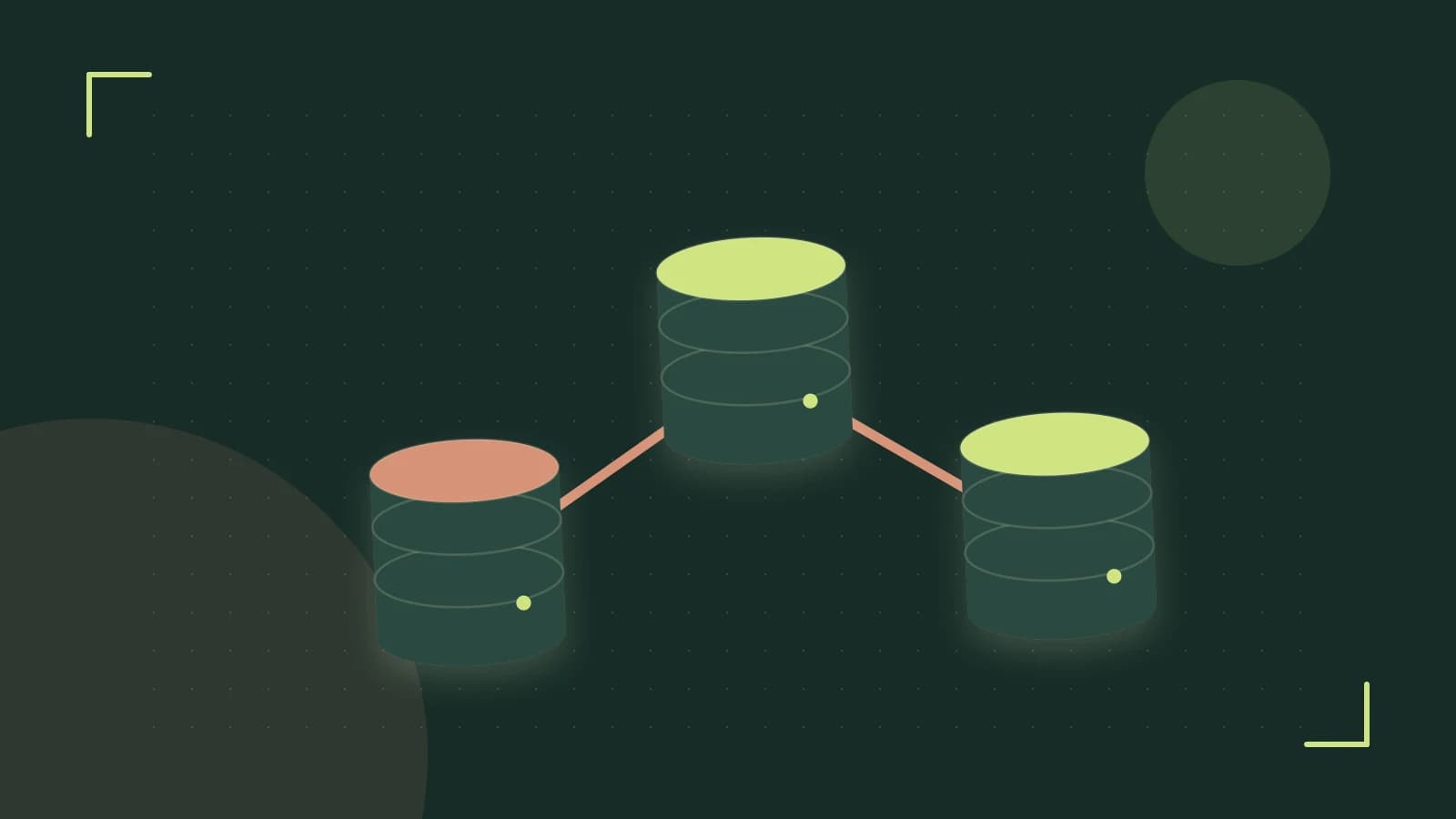
Decide between SuperServer, Classic, and SuperClassic in Firebird 3+ by evaluating connection load, memory, fault isolation, and scaling. A concise decision table, trade‑offs, and a step‑by‑step validation guide help you pick the right mode for your deployment.
Pass styling-only flags into styled-components without leaking invalid attributes onto the DOM by using $-prefixed transient props, and verify the fix in DevTools and tests.
Most Gazebo integrations only need a standalone gz-transport subscriber, not a custom plugin. This note covers the minimal design, trust boundaries, verification commands, and the failure modes that justify a bigger architecture.
Glitch Rewind offers a visual, automatic timeline for project recovery, but it isn't a replacement for Git. Learn when to rely on automatic snapshots and when to graduate your project to GitHub.
Hardcoded constants and Custom Settings both fail as Apex configuration. Custom Metadata Types deploy like code, query for free against governor limits, and let admins change behavior without a release.
An architecture note on designing Rexx automation scripts around its string-everything typing and flexible variable scoping — where the model fits, the smallest safe structure, and the failure modes that should change your design.
Learn how Maya’s Parallel Evaluation speeds up playback of heavy rigs by distributing dependency‑graph work across CPU cores, with steps to enable, measure, and verify safety.
Learn how Fedora Silverblue’s OSTree‑based updates let you upgrade atomically and roll back instantly, with a concrete upgrade‑verify‑rollback example and notes on layered packages and driver limitations.
Gulp 4's stream pipeline and gulp.lastRun make incremental asset builds fast and readable — as long as you target Gulp 4 explicitly and don't ask it to bundle JavaScript.
Step‑by‑step guide to building a PBR material in 3ds Max using the Slate Material Editor, including map connections, normal‑map green‑channel handling, viewport checks, and recovery actions.
Learn how to add the Capacitor Camera plugin to an Ionic Angular project, configure native permissions, call the API, and display the image with a PWA fallback.
Stop tying your alerts to dashboard panels. Learn how Grafana Unified Alerting decouples detection from notification using labels, routing policies, and provisioning.
Stop guessing which library versions your teammates need. Learn how DataSpell's notebook execution and environment metadata capture solve the reproducibility crisis in data science.
Talos has no SSH and a read-only root filesystem, so every node change goes through one YAML machine config over a gRPC API. This guide covers the safe apply-and-verify cycle, plus recovery when a change locks you out.
Searchable Snapshots let you query cold Elasticsearch indices straight from S3 or other object storage without restoring them to local disk. Here's how mounting works, a worked example, and the read-only and latency trade-offs to plan for.
RDS read replica lag has four common causes — big primary transactions, an undersized replica, competing reads, or network latency. Here's how to tell them apart and fix each.
An architecture note on using Clojure's core.spec to validate data at service boundaries, instrument functions in CI, and generate tests — with the smallest design that works and the failure modes to watch.
Expo Router replaces hand-wired React Navigation stacks with file-based routing. Here's a concrete three-screen migration, what typed routes catch, and where the convention fights back.
Travis CI build stages let you gate deploys behind tests with a simple stages/jobs.include syntax. Here's a worked three-stage config, plus the artifact-persistence trap most teams hit.
Learn how to route SPSS regression output directly into data files using the Output Management System (OMS). This article shows a step‑by‑step example, explains the underlying mechanism, and lists common pitfalls to avoid.
Livewire 3's #[Lazy] attribute defers expensive component rendering to a follow-up request. Here's how it works, when it helps, and why lazy-loading everything backfires.
Deciding between TYPO3 Content Blocks and classic FLUIDTEMPLATE with data processors for custom content elements: constraints, a comparison table, trade-offs, and a validated card-element implementation.
Commit composer.lock, run composer install (never update) in production, and pin config.platform.php — the workflow, a worked composer.json, and the mistakes that cause drift.
Deploying a Polygon PoS validator demands careful attention to validator set size, slashing logic, and block‑time monitoring. This guide walks through the minimal design, trust boundaries, and operational checks, plus when a redesign is warranted.
A new HttpClient per request exhausts sockets; a static one ignores DNS changes. Here's how IHttpClientFactory's pooled, rotating handlers fix both — with a typed-client example and the singleton trap to avoid.
Slow pages, high CPU, or stale code after deploys often trace back to OPcache. A diagnostic guide with a cause table, ordered checks, targeted fixes, and verification steps.
A decision guide for choosing PostgreSQL GIN indexes on JSONB columns: compare operator classes, see when partial indexes shrink storage, and learn how to validate index usage with EXPLAIN and pg_stat_user_indexes.
AlmaLinux 8 to 9 migration using dnf system-upgrade: disk-space checks, the upgrade command, and post-upgrade verification steps you can run immediately.
When Packer stalls at the communicator stage, the build log freezes at "Waiting for SSH to become available…". This guide maps symptoms to causes, walks through ordered checks, and links fixes to findings so you can pinpoint network, authentication, or timing problems in cloud builders.
Learn how to paginate large result sets using Doctrine ORM's QueryBuilder, tune hydration, avoid N+1 queries, and verify performance with simple tests.
Stop fighting with slashes and backslashes. Learn how C++17 std::filesystem provides a type-safe, portable way to handle paths and recursive directory traversal.
Stop erasing pixels in GIMP. Layer masks hide parts of a layer reversibly using grayscale values — here's how they work, a two-exposure blend walkthrough, and the file-size and export trade-offs.
When a DOS program refuses to start with “Insufficient memory” or “Program too big to fit in memory”, the culprit is often conventional memory exhaustion. This guide walks through MEM diagnostics, CONFIG.SYS ordering, and UMB/extended‑memory tricks to reclaim the 640 KB of usable RAM.
Learn how to override Biome’s linting rules with environment variables, a step‑by‑step example, trade‑offs, and actionable steps to streamline your JavaScript/TypeScript workflow.
Arch Linux’s rolling‑release design mandates full‑system upgrades with pacman -Syu. Partial upgrades break library dependencies, so regular, complete updates and snapshot hooks are the only reliable way to stay stable. Here’s how to do it safely.
Implement Babylon.js GPU instancing for thousands of identical meshes: requirements, minimal design, data validation, operational checks, failure modes, and when to switch back to regular meshes. Includes code, diagnostics, and a fallback strategy.
Learn how to design a secure, read‑only backend that fetches Behance project metadata, caches results, and enforces API limits while keeping the API key hidden.
SVGO's default preset won't strip editor-specific junk like Inkscape's namespaced attributes. A small custom plugin — using the v3 visitor API — turns SVGO into an SVG hygiene enforcer, not just a minifier.
Rider can show the SQL your EF Core Take/Skip pagination generates before you run it. Here's how to use that preview to catch full-table scans, N+1 queries, and deep-offset problems early.
Diagnose and fix issues where newly pushed versions fail to appear in the Read the Docs version selector using build logs, configuration checks, and API verification.
Learn how to add asynchronous validation to VeeValidate forms in Vue 3, with a practical username‑availability example and tips to avoid race conditions.
Learn how COBOL’s XML PARSE statement converts well‑formed XML into native data items, reducing external dependencies while understanding its performance trade‑offs.
Learn how CSS container queries let components react to their parent’s size, with a practical product‑card example, setup steps, limitations, and verification tips.
A diagnostic guide to Racket contract blame errors: reading positive/negative blame parties, ordered checks to find the faulting module, fixes per finding, and when to escalate.
On microcontrollers without a hardware FPU, float math is emulated in software and costs dearly. This guide shows how Q-format fixed-point arithmetic works, with a complete Q15 sensor-filter example, overflow analysis, and on-target verification steps.