An architecture note on Nuxt 3 hybrid rendering: classifying routes by staleness and personalization, the smallest routeRules map, the cached-HTML trust boundary, and checks that prove it works.
A slow Gazebo world usually means physics is eating your CPU. Here's how to treat the physics engine as a real engineering decision — and benchmark it properly.
Learn how to implement weighted shortest paths in NetworkX using Dijkstra and Bellman-Ford algorithms, including how to handle negative weights and avoid common attribute pitfalls.
Use cPanel’s MultiPHP Manager to run different PHP versions per domain—keep legacy sites on old PHP while upgrading the rest of your server. Follow this step‑by‑step guide, see the trade‑offs, and learn how to verify the setup.
Avoid configuration drift in Gardener by moving from repetitive Shoot manifests to a centralized, template-driven deployment pattern using external configuration management.
Generate PNG and PDF assets from committed SVG sources using Inkscape's CLI actions in CI — with a multi-density export example, version-pinning advice, and the font-substitution trap to avoid.
When a Portainer endpoint shows as unreachable, the problem often lies with the agent container, network path, or TLS settings. This guide walks you through a structured diagnostic flow, concrete checks, fixes, and when to seek support.
A decision guide for SQL Server recovery models: when FULL is mandatory, when SIMPLE is honest, how to scope BULK_LOGGED, and how to validate point-in-time restore before you need it.
A diagnostic guide for rootless Podman port publishing: container shows up and mapping looks correct, but host or LAN clients cannot connect. Covers privileged-port limits, container bind addresses, firewall zones, and rootless backend differences with ordered checks and targeted fixes.
Vyper's @nonreentrant decorator gives you a storage-backed mutex with one line of code. This post shows a worked withdraw() example comparing manual checks-effects-interactions vs. the decorator, the gas/composability trade-offs, and a verification checklist to prove the lock actually holds.
Opera's Turbo mode compresses HTTP traffic through Opera's proxy servers to save bandwidth. Here's how to enable it, verify the savings, and know when to turn it off.
Ory Kratos uses one JSON Schema document as the source of truth for identity traits, driving both server-side validation and self-service form rendering. Here's how it works, with a worked example and the migration trap to avoid.
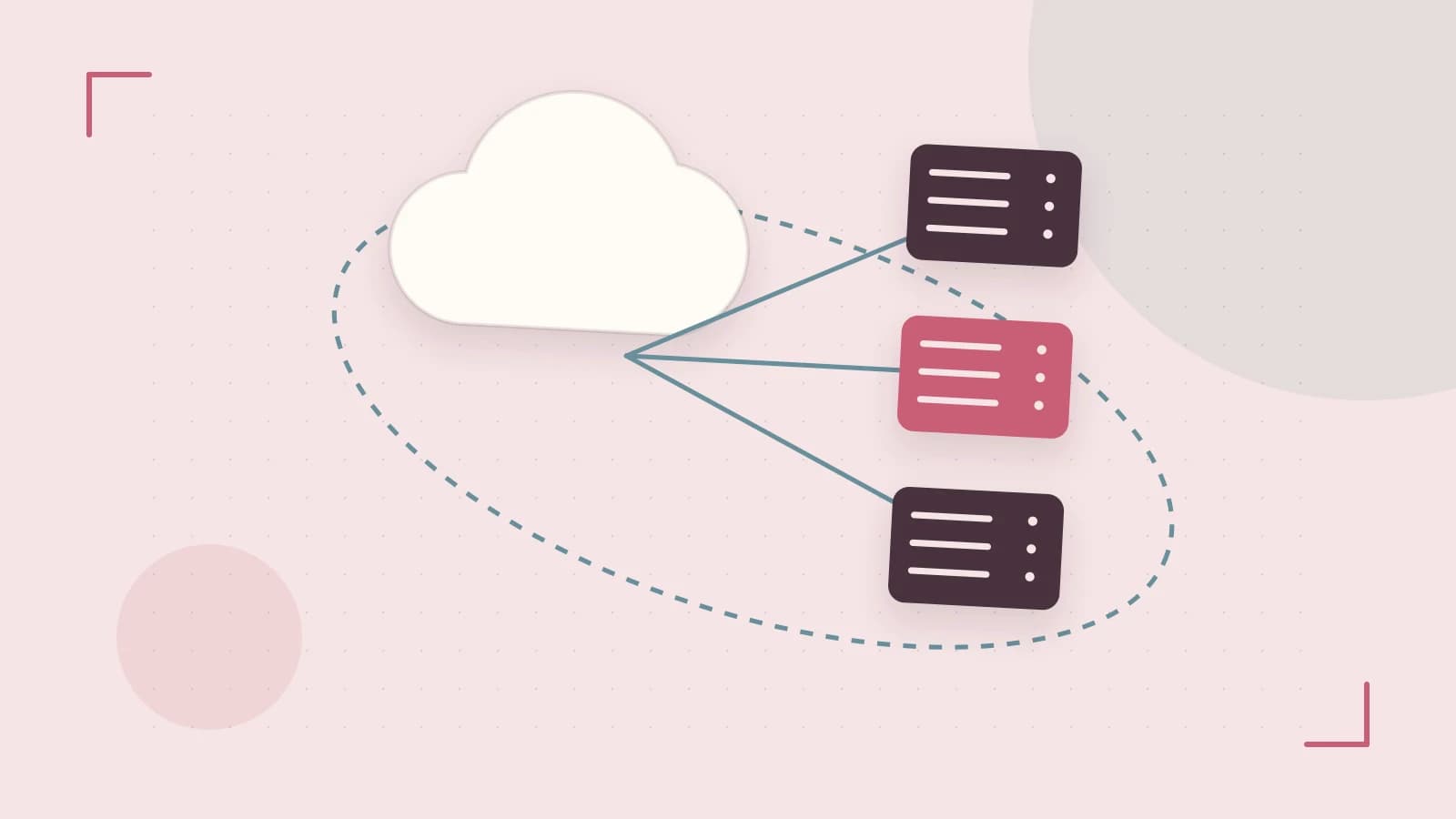
Connect on-premises networks to Azure with a private, BGP-backed link that avoids the public internet, and learn how to design IP space, filter routes, and verify the session.
Learn how Tauri's IPC system securely bridges web frontends with Rust backends using commands, with practical examples for building safe, performant desktop applications.
Explains how Carbon’s checked pointers add runtime bounds and null safety to raw pointers from C++, with a worked example, trade‑offs, and steps to try the feature.
Stop manually managing users in Mattermost. Learn how to implement LDAP/AD synchronization to automate provisioning, map directory attributes, and verify connectivity using CLI tools.
Stop cranking up global samples to fix grainy renders. Learn how to use Arnold's adaptive sampling and denoising in 3ds Max to reduce render times without sacrificing detail.
Learn how to use NHibernate IStatelessSession to handle bulk data operations without memory exhaustion, including configuration for ADO.NET batching and critical architectural trade-offs.
Learn how to implement reliable offset pagination with Quarkus Panache: build a PanacheQuery, apply Page.of(index,size), fetch the page and total count, and expose a clean DTO from a REST endpoint. Covers dev‑services testing, SQL verification, and the performance limits of deep offsets.
Move nodemon's watch, ignore, exec, and delay settings into a committed nodemon.json so every teammate gets identical restart behavior — and learn why ignoring output directories prevents restart loops.
Enable idempotent producers everywhere by default. Reserve Kafka transactions for consume-transform-produce pipelines where cross-partition atomicity matters. Here's the configuration, trade-offs, and verification checklist.
Netlify rollbacks take seconds because deploys are immutable, atomic snapshots — reverting is a pointer flip, not a rebuild. Here's how the model works, with a worked pipeline example and its limits.
Learn how Karate's fuzzy match markers (#string, #number, ##string, #[] ...) let you validate JSON response shape without brittle full‑payload equality, plus a worked example, trade‑offs, and a quick verification checklist.
Reflex state must live on rx.State or rx.ComponentState subclasses — plain Python variables are not reactive. Learn when to use shared state versus component-scoped state, and how to verify the behavior.
A practical guide to PureScript's built-in row polymorphism for type-safe, flexible record handling—covering open rows, Lacks constraints, row merge, and generic JSON encoding.
MySQL composite indexes follow the leftmost-prefix rule: a query must reference a contiguous prefix of index columns starting from the first. This guide explains column ordering, covering indexes, verification with EXPLAIN, and common mistakes that waste write throughput.
Guidance on choosing QoS 0, 1, or 2 in Node-RED MQTT nodes, with trade‑offs, a comparison table, and a function‑node example for per‑message QoS override.
Room can return a PagingSource directly from a DAO, and Paging 3 handles the incremental loading, diffing, and invalidation. Here's the minimal wiring, the cachedIn gotcha, and how to verify it.
Learn when to use Page Bundles versus the global assets directory in Hugo to optimize image processing, reduce duplication, and improve site performance.
Learn how CodeIgniter 4’s Model class and Query Builder give you safe, automatic pagination with just a few lines of code, plus the trade-offs to watch for.
Explore how thealgorithms project uses a standard-library-only approach to provide cross-language algorithm references for engineers migrating logic between stacks.
When you see 'codeac' in documentation or conversation, you need to determine whether it refers to Codecademy, a data‑analysis tool, or another product. This guide shows how to clarify the term and choose the right path.
A concise architecture note on using Laminas ServiceManager as a DI container: requirements, minimal factory‑based design, clear trust boundaries, validation steps, typical failure modes, and signals for redesign.
Learn how adding a small set of structured tags to every pull‑request comment in Sema turns free‑form feedback into measurable data that can guide process improvements.
Railway's zero-config Nixpacks are great for quick starts, but a Dockerfile gives full control. Learn the trade-offs, variable wiring for multi-service apps, and a copy-paste example.
Configure Liquibase changeLogFile with classpath-relative paths to ensure migrations work across environments. Learn the changelog structure, tracking mechanism, and common pitfalls to avoid.
Learn how to lock your main branch, block direct pushes, and require CI checks and a set number of approving reviews before a pull request can merge. Follow the step-by-step guide, verify the rule, and handle emergency merges safely.
Appwrite relationships resolve server-side, but filters don't cross them. How to model related collections, denormalize the right fields, and paginate with cursors instead of offsets.
Pick the right Vagrant synced folder for your project. Compare VirtualBox shared folders, NFS, and rsync, and learn how to set up, test, and troubleshoot each type in a local development environment.
How the Cloudflare Workers Cache API (caches.default) stores responses per datacenter, with a working example covering ctx.waitUntil, body cloning, cache-key normalization, and the mistakes that cause silent misses.
Learn why editing CMakeLists.txt in CLion updates code insight, run configurations, and build variants, and see a minimal example plus common pitfalls.
Our research could not verify any documented feature of Norg. Instead of inventing capabilities, this draft gives a concrete procedure to evaluate the tool yourself before adoption.
Learn how Envoy’s passive outlier detection and connection‑pool circuit breakers work together to isolate failing upstream hosts and prevent overload, with a concrete configuration example and verification steps.
Move your API testing from Postman into your codebase. Learn how to use WebStorm's .http files for version-controlled requests, environment variables, and response chaining.
Learn how to move Handlebars template compilation from the browser to the build step to reduce JavaScript payload size and improve page load performance.