Architecting Linear User Flows with React Navigation Stack
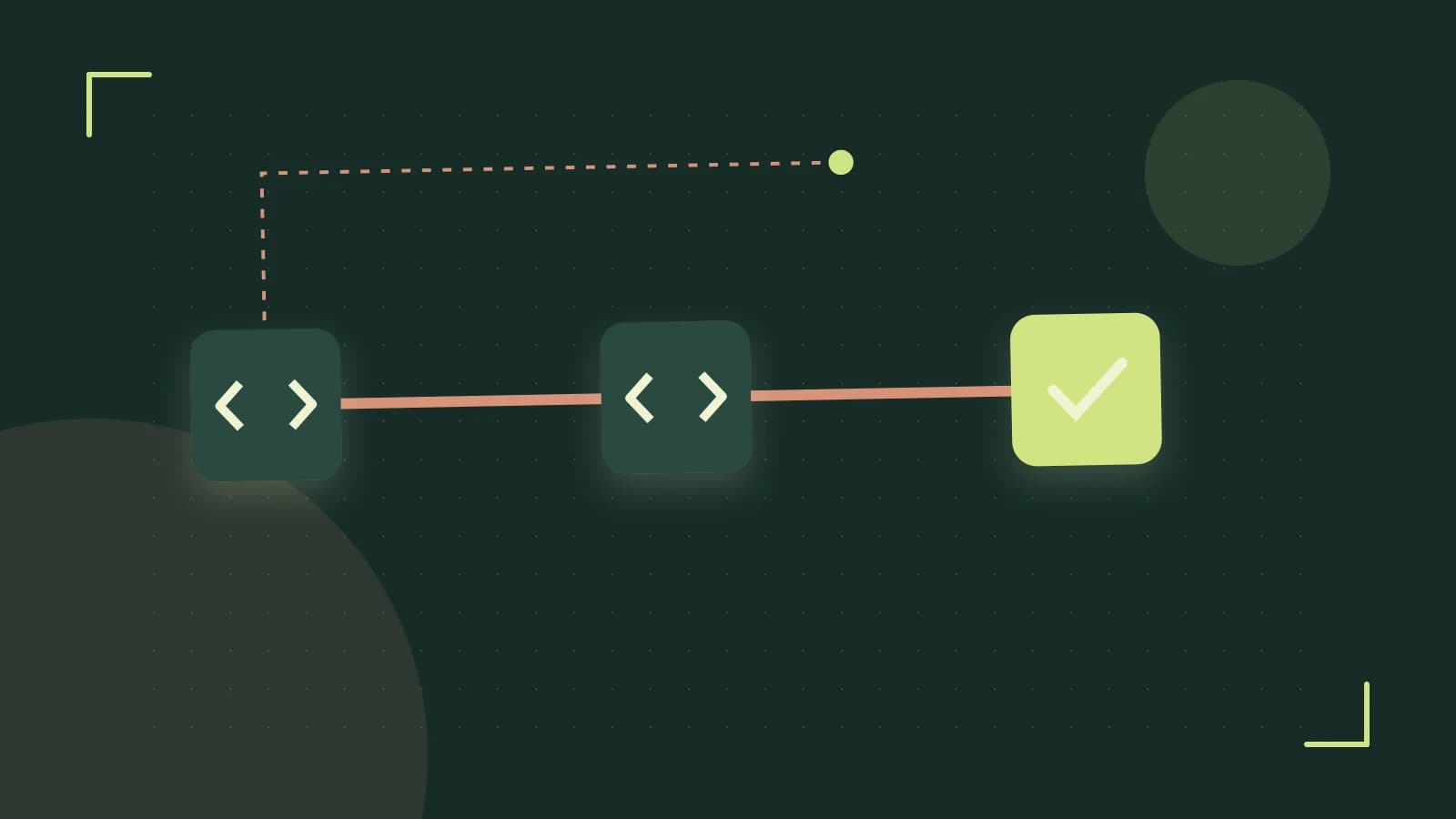
Learn how to implement a LIFO stack architecture using React Navigation to manage linear user flows while maintaining data boundaries and performance.
22 Jul 2025, 09:21 UTC
ReadMeFeed / Community knowledge
Practical guides, fresh perspectives and ideas worth trying.
Learn how to implement a LIFO stack architecture using React Navigation to manage linear user flows while maintaining data boundaries and performance.
Stop battling slow Grafana dashboards. Learn how to use Prometheus recording rules to precompute expensive PromQL expressions and drastically reduce query latency.
Realm's live Results and collection notifications deliver insert, delete and modify indices instead of a generic change signal. Here is the pattern, the thread rules and the lifecycle cost.
Mixing CoffeeScript with Node ES modules fails on output format, not syntax. Compile one file, inspect it, then choose pre-compilation or the register hook.
A stale MobX view usually means the read happened outside a tracked context, not that the mutation failed. Here is the check order and the fix for each finding.
A decision guide for adding LTO to a Clang/LLVM build: compare Full LTO and ThinLTO, check constraints and trade-offs, and validate with concrete commands.
Idempotency is a property of each Ansible task, not the playbook. How creates, changed_when and stat keep command and shell tasks from reporting changes on every run.
Learn how to pick a ClickHouse MergeTree primary key that enables partition pruning and skip indexes, turning slow range scans into fast lookups.
Learn how to add camera capture to a Xamarin.Forms app using DependencyService, handle permissions, and verify the result on Android and iOS.
Learn how to prevent connection leaks and thread saturation in Tomcat by tuning the JDBC pool and Executor settings for high-concurrency environments.
Learn how to use Discloud's manifest‑based validation phase to prevent deployment failures by enforcing resource schema compatibility before allocation.
When generating Matplotlib figures on headless servers, the backend choice silently controls rendering success. This article explains how to set the Agg backend, configure DPI, and avoid common failure modes.
Learn how to declare dev and test dependency groups in pyproject.toml, install them selectively, and keep your lock file in sync.
PKCE binds an OAuth authorization code to the client that requested it, so an intercepted code cannot be exchanged for tokens. Here is the mechanism, a local test exchange, and the trade-offs.
The Overlay File System in Raspberry Pi OS makes the root read-only and layers writes in RAM. Here is how to enable it, verify it, and decide whether your workload can live with it.
A decision guide for picking an agent's action representation: when executable code actions beat typed JSON tool calls, and how to sandbox and validate the choice.
Enabling nodeIntegration in NW.js gives renderers direct Node.js access, but it also removes the sandbox. Here's how to decide and how to replace it with a preload script.
Learn how to spot Hugo build slowdowns, verify the root causes with template metrics and profiling, apply targeted fixes, and know when to escalate for further help.
Zend\Db\TableGateway is a single-table wrapper, not an ORM. Here is a worked SQLite configuration, the point where you should switch to Zend\Db\Sql, and the mistakes that leak data.
Learn how to activate the BBR congestion‑control algorithm on a Linux host, verify its operation, and benchmark its impact on throughput and latency. The guide covers prerequisites, configuration steps, testing with iperf3, and rollback to a loss‑based algorithm.
Generate print‑ready PDFs with Cairo’s PDF surface API. Verify backend support, set sub‑pixel antialiasing, apply transformations, and finish the surface to produce clean vector graphics and embedded fonts.
Automate Slack tasks with Workflow Builder—post messages, set reminders, and trigger webhooks—without coding. This guide shows a step‑by‑step example, explains limits like branching depth and rate limits, and gives a clear path to start automating today.
Smart Objects keep your edits reversible—scale, rotate, or link to external files and never lose pixel quality. This guide shows a step‑by‑step example, performance trade‑offs, and how to keep your PSDs lean.
When Jetstream’s 2FA throws “The code is invalid” or never delivers codes, the root cause often lies in mail, session, or database configuration. This guide walks you through symptoms, causes, ordered checks, fixes, and when to ask for help.
Learn how converting low‑cardinality string columns to pandas categorical dtype can cut memory usage by up to 90 % and boost performance. Follow a quick checklist to decide when the conversion is worth it.
Use test.each to expand a single Vitest assertion into multiple isolated test cases from a data table, with readable names and normal filtering behavior.
Need real‑time data without duplicating logic? tRPC’s experimental WebSocket support lets you share a single router for REST and real‑time APIs. Follow a concrete example, see the trade‑offs, and learn how to deploy it safely.
A concise, secure GitHub Actions pipeline using separate build, test, and deploy workflows, self‑hosted runners, and GitHub Secrets to enforce ordering, isolate secrets, and monitor runner health.
Learn to execute parameterized raw SQL safely in Knex.js using knex.raw(), with transaction integration, error handling, and version-stable patterns from 0.13 through 3.x.
Native-stack moves React Navigation transitions off the JS thread and onto platform primitives. Here's how to decide if it's right for your app, and how to build a typed, maintainable navigation setup around it.
Ruby's &. operator lets you chain methods without worrying about nil receivers, reducing boilerplate and keeping code readable.
Photon Realtime offers two message primitives—RPCs and RaiseEvent—with distinct reliability, routing, and serialization behaviors. This blog walks through choosing the right one for position updates vs game events, includes a worked code example, and highlights the custom-type serialization trap.
A decision guide for enabling Microsoft Clarity session replay in production: compare replay vs. heatmaps, implement consent-gated loading with masking and SPA route tracking, and validate with a concrete checklist.
Learn how to add a responsive slide‑out navigation panel with Materialize CSS’s Sidenav, including setup, nested collapsible menus, customization, and performance considerations.
Learn how MobX actions and transactions group observable changes to prevent extra UI updates and keep devtools readable.
Replace a heavy TableView with Titanium’s ListView to lower memory use and keep scrolling smooth. Follow our step‑by‑step guide, including XML templates, controller binding, performance checks, and recovery steps.
Learn how RStudio Projects combined with the here package eliminate fragile setwd() calls, simplify file paths, and improve reproducibility when sharing analysis with colleagues.
Use Vue 3’s provide/inject to share small reactive state across component hierarchies without a global store. This guide covers the minimal design, data‑boundary rules, operational safeguards, failure modes, and when to rethink the approach.
The Logstash dead-letter queue captures failed events instead of dropping them silently. Configure it with a bounded path, verify permissions, and reprocess deliberately.
Learn how to build a Figma button that resizes its width based on label text using Auto Layout and component variants.
Default parameters cover most Less mixin needs; guards earn their keep for type checks and feature flags. A comparison table, a button example, and how to verify the compiled CSS.
Learn how to use nodemon’s ignore feature to prevent unwanted restarts caused by temporary or log files, with a concrete example, configuration details, and verification steps.
Native mode changes what a Quarkus app may do at runtime. Here is where reflection breaks, how to register it, and how to measure whether the trade pays off.
Hoppscotch replaces {{variables}} at send time using the active environment. Here is the resolution order, a worked setup, and the mistakes that produce stale values.
Haxe's -D flag defines a symbol, not a value, so -D debug=0 still enables #if debug. Here is how to keep conditional compilation small, typed and checkable across targets.
Stop disk I/O bottlenecks in MySQL by optimizing the InnoDB Buffer Pool. Learn how to balance memory allocation, reduce mutex contention, and prevent cache pollution.
CheckPermission answers one question: does this subject have this permission on this resource? A worked schema, tuple writes, the rewrite-tree mechanism, and the mistakes that produce wrong answers.
Troubleshoot and resolve 'Chrome failed to connect to Karma' errors by isolating binary path issues, WebSocket blocks, and CI/CD sandbox restrictions.
Stop using setFirstResult() for deep pagination in Hibernate. Learn why offset-based pagination slows down and how to implement the Keyset (Seek) method for constant-time performance.
Global query filters let you inject a persistent WHERE clause into every EF Core query for an entity, enabling soft-delete, tenant isolation, and row-level security without repetitive coding.