Designing a Minimal YugabyteDB Cluster: Tablets, Raft, and the Decisions That Matter
An architecture note on the smallest YugabyteDB cluster worth running: three nodes, three zones, RF 3, with tablets as Raft groups. Covers placement flags, operational checks, and the failure modes that should trigger a redesign.
27 Jan 2026, 14:09 UTC
The problem this design solves
You need a SQL database that survives a zone outage without manual failover, scales past a single node's storage, and still speaks PostgreSQL. YugabyteDB's answer is to split every table into tablets (shards of roughly a few GB each), replicate each tablet with Raft consensus, and put a PostgreSQL-compatible query layer (YSQL) in front. The useful takeaway: a three-node, three-zone cluster with replication factor 3 is the smallest design that actually delivers the promise, and most of your real decisions are about tablet count, write latency, and where leaders live.
Requirements that justify this architecture
Do not adopt this design for a single-region app with modest traffic; plain PostgreSQL with streaming replication is simpler. The architecture pays off when you need: strong consistency across nodes (Raft gives linearizable writes per tablet), horizontal write scaling (adding nodes rebalances tablets automatically), zone-level fault tolerance without a promoted-replica runbook, and PostgreSQL wire compatibility so existing drivers and ORMs work.
The smallest suitable design
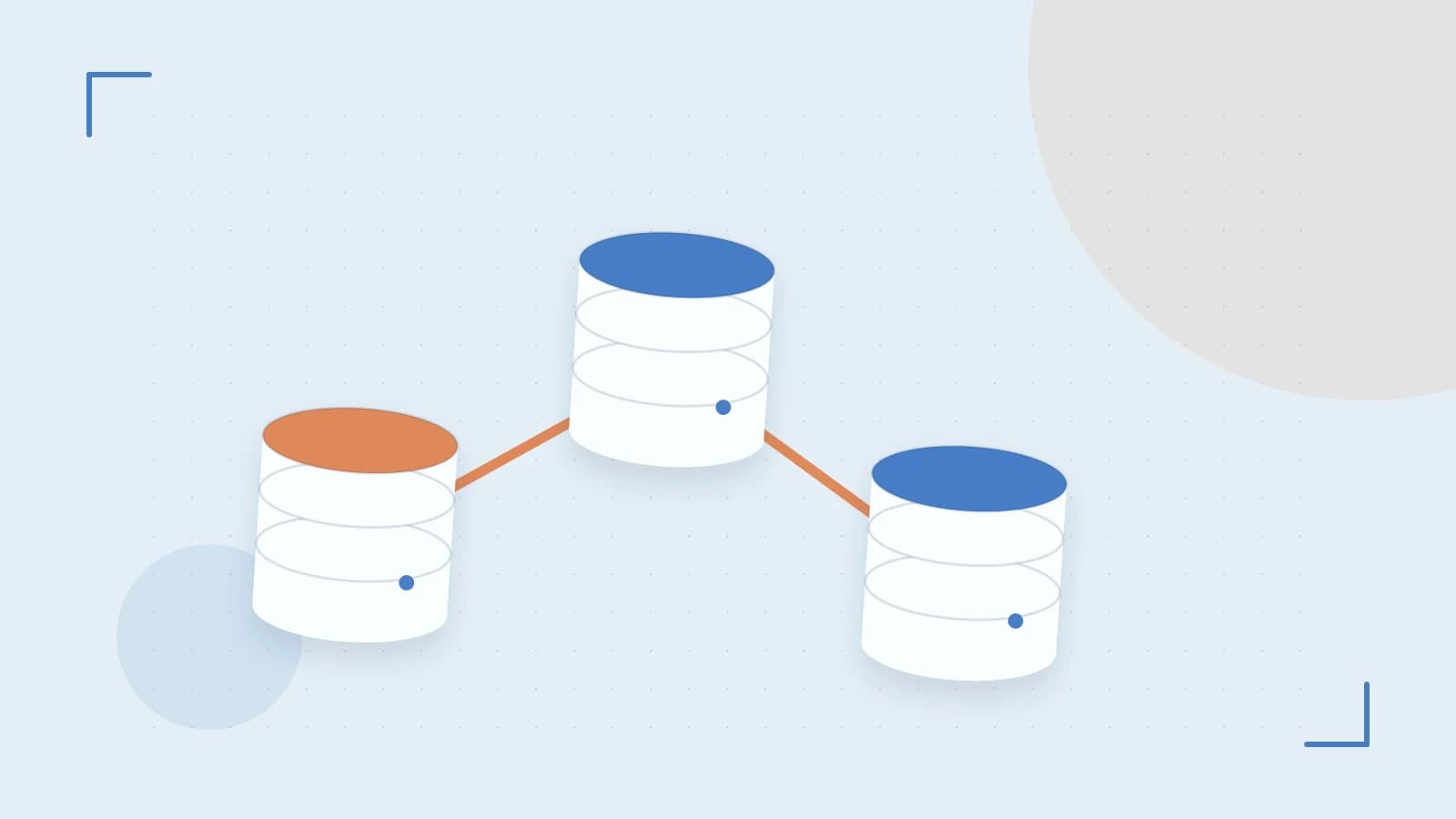
Three nodes, one per availability zone, each running both the YB-Master (metadata and placement) and YB-TServer (storage and query) processes. Every table is hash- or range-sharded into tablets; each tablet is a Raft group with a leader and two followers spread across zones. Writes commit after a majority (two of three replicas) acknowledges. One zone can be lost entirely and every tablet still has a quorum.
A concrete starting point with yb-ctl for local validation (run as an unprivileged user on a Linux host with Python 3 and ports 7000/9000/5433 free):
yb-ctl create --rf 3
yb-ctl status
For production, use the Helm chart or yugabyted with explicit placement flags, for example:
yugabyted start --advertise_address=10.0.1.11 \
  --cloud_location=aws.us-east-1.us-east-1a \
  --join=10.0.1.11,10.0.2.11,10.0.3.11
Run this on each node with its own address and zone. The --cloud_location flag is what lets the master place tablet replicas across zones; omit it and all replicas may land in one failure domain. Verify placement afterward in the Admin UI (port 7000 on any master) under the Tablets view: each tablet should show one replica per zone.
Trust and data boundaries
YSQL enforces authentication and role-based access at the query layer, using PostgreSQL's role model. Below that, the DocDB storage layer only sees tablet-keyed data; it has no concept of SQL users. Cross-tablet transactions are coordinated by a distributed transaction manager using a transaction status tablet, which preserves ACID semantics across shards but adds latency proportional to the number of tablets touched. Practical implication: schema design that keeps hot transactions inside one tablet (via colocated tables or careful primary key choice) is a performance boundary, not just a convenience.
Operational checks
- Tablet distribution: in the Admin UI, confirm each node hosts a roughly equal share of tablet leaders. Skewed leaders mean skewed write load.
- Raft latency: watch the per-tablet consensus round-trip metrics. Cross-zone writes typically cost one network round trip between zones; if p99 write latency suddenly doubles, check whether leaders moved to a distant zone.
- Split events: tablets split automatically when they grow past a threshold (default behavior has changed across versions; check the docs for your release). A burst of splits shows up as a latency bump and metadata growth.
- Backups: schedule cluster-level snapshots with
yb-adminor the platform UI, and actually test a restore into a scratch cluster quarterly.
A quick workload check with ysqlsh (connects like psql on port 5433):
CREATE TABLE orders (id int PRIMARY KEY, total numeric);
INSERT INTO orders SELECT g, g * 1.0 FROM generate_series(1, 100000) g;
EXPLAIN (ANALYZE, DIST) SELECT * FROM orders WHERE id = 42;
The DIST option shows which storage nodes were touched, confirming the query hit a single tablet rather than fanning out.
Failure modes and what triggers a redesign
A single node loss is routine: Raft re-elects tablet leaders within seconds and the cluster keeps serving. The dangerous case is a zone partition combined with another failure, or sustained cross-zone write latency your application cannot tolerate. Conditions that should change the design: write p99 dominated by inter-zone round trips (consider follower reads, preferred leader placement, or geo-partitioning so leaders sit near their writers); tablet count exploding from aggressive splitting (raise split thresholds, but expect larger tablets and slower rebalancing); or needing to survive a full region loss (move to RF 5 across regions or a multi-region setup with explicit trade-offs on commit latency).
Limitations to verify before committing
Defaults for tablet splitting, flags, and Helm chart layout vary by YugabyteDB version; confirm against the documentation for the release you deploy. Cross-zone latency numbers depend entirely on your network, so measure with your own workload rather than trusting any published figure. Nothing here was benchmarked for this article; treat the commands as a validation path, not a tested recipe.
 yugabytedb
0 replies
A thoughtful contribution can make all the difference. Be the first to share one.