Francis Halzen's 2026 Nobel Prize in Physics: IceCube and the Rise of Neutrino Astronomy
Francis Halzen won the 2026 Nobel Prize in Physics for building the IceCube Neutrino Observatory in Antarctic ice. How the detector works, why neutrinos matter, and India's stalled INO project.
13 Oct 2026, 03:31 UTC
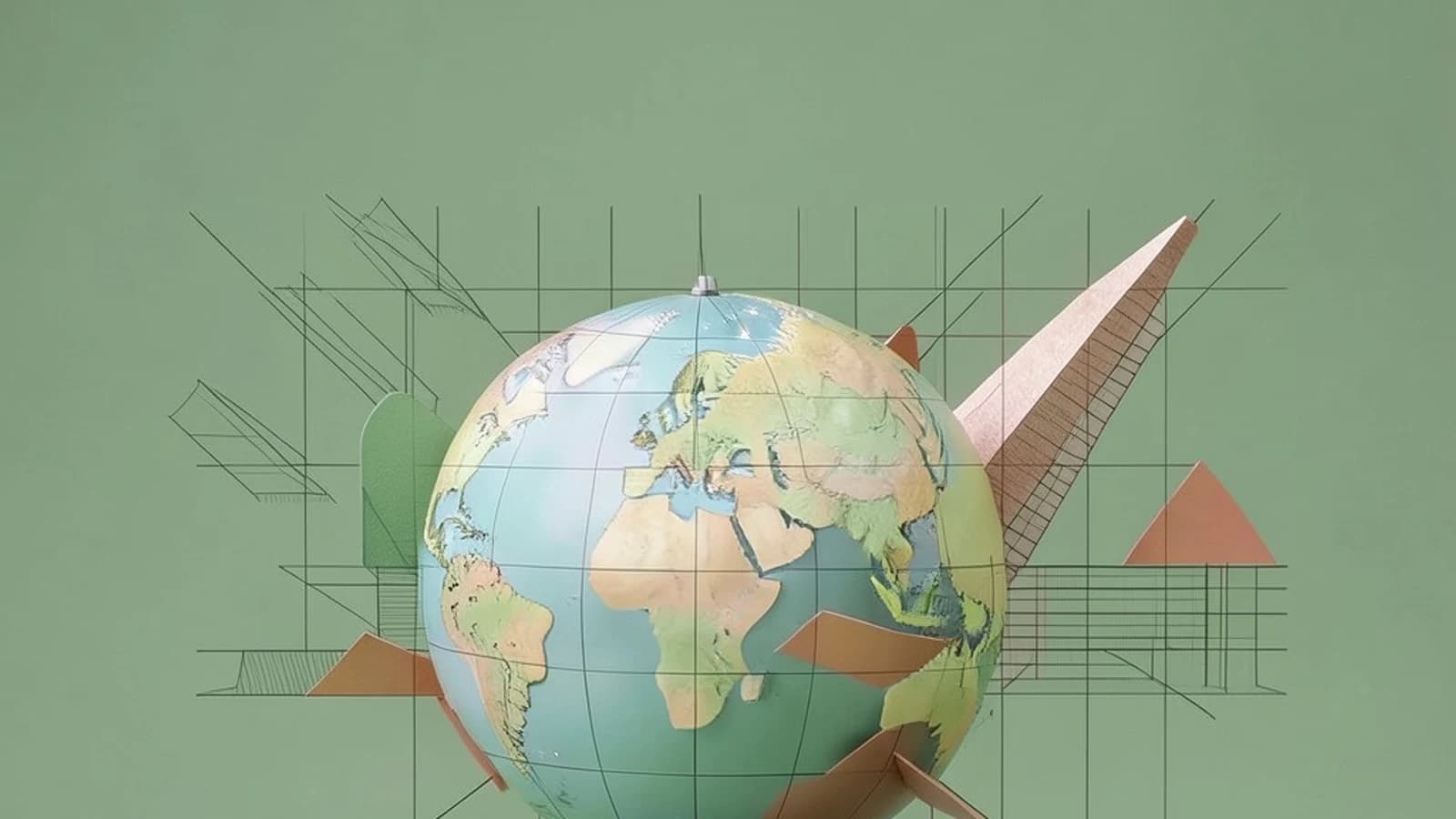
Searches for "francis halzen physics" climbed sharply in India in early October 2026 after the Royal Swedish Academy of Sciences named Francis Halzen — a Belgian-American professor at the University of Wisconsin–Madison — as the sole winner of the Nobel Prize in Physics 2026. The award recognises his central role in dreaming up and building the IceCube Neutrino Observatory at the South Pole, and in the discovery of high-energy neutrinos arriving from deep space, as detailed in Drishti IAS's explainer published on 7 October 2026. The Hindu's editorial of 8 October 2026 describes the prize as honouring a clever idea: turning the Antarctic landmass itself into an instrument for catching one of the universe's most elusive particles.
How IceCube turns Antarctic ice into a telescope
Halzen floated the idea of using the deep polar ice sheet as a neutrino target back in 1988. A smaller predecessor, AMANDA (Antarctic Muon And Neutrino Detector Array), showed the approach could work, and the full IceCube array was finished in December 2010 at the Amundsen-Scott South Pole Station. The finished observatory spreads 5,160 light sensors through roughly a cubic kilometre of exceptionally pure glacial ice — the biggest particle detector ever built. The site was chosen because polar ice is transparent, stable, dark and shielded from most background noise.
The detection method is indirect but elegant. Very occasionally, a passing neutrino smacks into an atomic nucleus in the ice, and the wreckage includes charged particles that give off a faint blue glow. The buried sensors pick up that flash, and physicists work backwards from its pattern and timing to estimate the neutrino's energy and the direction it came from — in effect, pointing a finger back at its cosmic birthplace.
Why neutrinos opened a new kind of astronomy
For centuries, astronomy meant collecting light — visible, radio, X-ray or gamma. Each has drawbacks: charged cosmic-ray protons get bent off course by interstellar magnetic fields, and gamma rays are soaked up by dust. Neutrinos carry no electric charge and feel only the weak nuclear force and gravity, so they cross billions of light-years in straight lines, arriving with their information intact. Since IceCube switched on in 2011, its detections have let researchers peer into supermassive black holes, active galactic nuclei such as galaxy NGC 1068, exploding stars, and the natural accelerators thought to produce ultra-high-energy cosmic rays — turning neutrino astronomy into a genuine new window on the universe.
The collaboration debate around the 2026 prize
The Hindu's editorial also questions the decision to honour Halzen alone. IceCube is run by a team of more than 400 specialists from 14 countries, spanning astrophysics, engineering and software. Nobel rules forbid splitting a prize among more than three people, yet the same statutes do allow awards to organisations — an option the Foundation has repeatedly declined to use. The editorial compares the case to the 2017 physics prize for gravitational-wave detection, which also rested on hundreds of researchers. Halzen's leadership was indispensable, the argument runs, but an achievement of IceCube's scale cannot honestly be credited to one person.
What it means for India: the stalled INO project
India has its own neutrino pedigree — instruments placed about 2.3 km underground in the Kolar Gold Fields registered atmospheric neutrinos in 1965, among the earliest such measurements anywhere — and its own stalled ambition. The proposed India-based Neutrino Observatory (INO) at Bodi West Hills in Theni district, Tamil Nadu, would use a 50,000-tonne magnetised iron calorimeter (ICAL) to study atmospheric neutrinos and tell them apart from antineutrinos. As of October 2026 the project remains blocked by environmental objections, its location inside a tiger corridor and pending wildlife clearance, even though neutrino research involves no radioactivity. Halzen's Nobel is a reminder of what patient mega-science can deliver — and of what India risks missing while INO waits.
Sources & further reading
0 replies
A thoughtful contribution can make all the difference. Be the first to share one.