Tower's Cmd+Z undo doesn't add safety Git lacks — it surfaces reflog-based recovery as a keystroke. Here's what that buys a team, where it stops working, and how to verify coverage yourself.
Learn how to build type-safe JSON decoders in Elm 0.19 using elm/json and the decode-pipeline package to handle nullable fields and large API responses without runtime crashes.
Add a unique operationId to every OpenAPI operation to keep generated client and server method names stable across regenerations and toolchain upgrades.
Decide whether to use Confluence’s REST API for page restrictions. Compare manual UI, add‑ons, and API automation, weigh trade‑offs, and follow a concrete example to apply and verify access control.
DynamoDB transactions let you atomically update or read across tables, but they double capacity usage and add latency. This guide explains the mechanics, shows a Node.js example, and weighs the trade‑offs so you can decide when to use them.
Learn how Remix route loaders deliver data at render time, improve SEO, and enable granular code splitting, with a concrete example and checks you can run today.
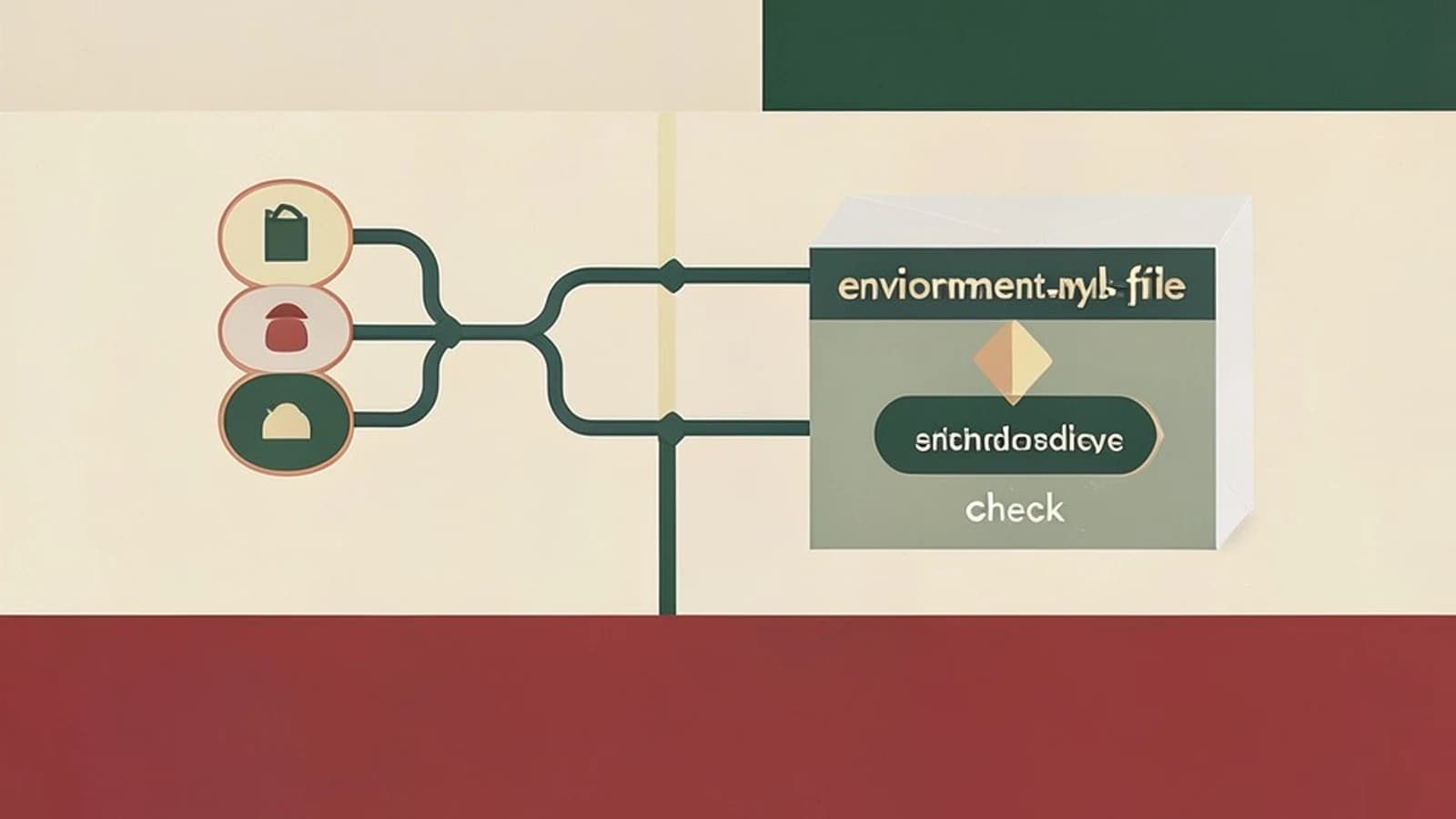
Learn how to write an environment.yml file that pins exact package versions and channels, then create, export, and reproduce Anaconda environments across machines.
A technical guide to diagnosing SIGSEGV in C. Learn how to use GDB and Valgrind to identify NULL pointers, buffer overflows, and use-after-free errors.
Learn how to move authorization from the application layer into SurrealDB using declarative PERMISSIONS to prevent IDOR vulnerabilities and ensure data isolation.
Artix Linux lets you choose an init system. This guide compares OpenRC, runit, and s6 on boot speed, community support, and migration effort, then walks through a safe runit installation and verification process.
Learn how to spot, diagnose, and fix V8 isolate memory fragmentation caused by persistent handle leaks. This guide walks through crash symptoms, GC tracing, heap snapshots, and concrete code fixes for C++ embedding scenarios.
Stop accidental console statements in production by configuring ESLint’s no-console rule per environment. This guide shows how to set up overrides, run lint checks in CI, and balance convenience with safety.
When a NestJS service grows to support many tenants, configuration drift can explode. Dynamic modules let you generate per‑tenant providers at bootstrap, keeping core logic untouched and tests simple.
Learn how Swagger UI and OpenAPI 3.0 annotations turn your code into a living API contract, eliminate documentation drift, and enable safe in‑browser testing.
Learn how to create a fault‑tolerant two‑way mirror storage pool in Windows 8 using PowerShell, verify its health, and understand the capacity and performance trade‑offs.
IntelliJ IDEA’s Database Tools let you run SQL, page large result sets, and edit rows inline—all inside the IDE. Follow this guide to set up a JDBC connection, use pagination, and commit edits safely.
Enable Electron’s context isolation to protect your app from injection attacks. Learn how to configure BrowserWindow, expose safe APIs via preload scripts, verify isolation, and handle trade‑offs with a practical example.
Build a minimal yet secure authentication architecture for a Blazor Server app, tying ASP.NET Core Identity, cookie auth, and SignalR together. The guide covers trust boundaries, operational checks, and failure handling.
Learn how to enable Dovecot’s Lucene‑based full‑text search to cut IMAP search latency from seconds to sub‑second, with configuration steps, verification commands, and resource trade‑offs.
Learn how to implement Vercel Edge Functions to eliminate cold starts and reduce TTFB using the V8 runtime, including configuration examples and critical Node.js compatibility limits.
Learn how JHipster‑generated Spring Boot apps use Pageable to push pagination into Hibernate, verify the SQL, and manage the extra COUNT query trade‑off.
Learn how to use Ubuntu Netplan to manage network configurations declaratively, avoiding remote lockouts with the 'try' mechanism and understanding the renderer architecture.
Stop using optional fields for state management. Learn how to use TypeScript discriminated unions and the 'never' type to make illegal states unrepresentable and ensure exhaustive logic.
An architectural analysis of Moodle's enrollment system, exploring how the plugin-based design separates enrollment logic from course context to manage user access at scale.
Learn how Harbor’s built‑in replication keeps container images, signatures and scan results in sync across sites, with a step‑by‑step policy setup and practical tips for monitoring and troubleshooting.
Learn how to pair Vaadin Flow’s @Route navigation with a callback‑based DataProvider so that only the visible rows of a large Grid are fetched, keeping memory and network usage low.
Learn how Sass’s @use module system prevents duplicate CSS, avoids name clashes via namespaces, and how to migrate from @import with a practical example.
Stop performing expensive client-side joins in Firestore. Learn how to use the Fan-out pattern and Cloud Functions to optimize read performance through strategic denormalization.
Railway's Git-driven deployment auto-builds on push, but three misconfigurations cause most failures: missing start command, unbounded memory, and env var drift. This guide shows a working Node.js + Postgres setup, the exact CLI steps to deploy, and how to verify each layer.
C structs include invisible padding for alignment. Learn how alignas and offsetof let you measure and control layout to avoid memory waste and false sharing.
Stop paying for idle background workers. Learn how to use Scalingo's queue-based autoscaling to dynamically adjust worker dynos based on real-time job volume.
Integrate a secure 2FA flow using the Twilio Verify API to send and validate one-time passcodes via SMS, including error handling and security best practices.
Static database credentials become security liabilities. HashiCorp Vault’s dynamic credentials feature generates time-limited tokens on demand, automatically revoking them after a configurable TTL.
A practical guide to enabling Azure SQL Database Query Store, querying execution metrics via DMVs, detecting plan regressions, and managing retention and overhead.
How ClickHouse Materialized Views pre‑aggregate data at ingest time with AggregatingMergeTree, and the operational trade‑offs engineers must weigh before adopting them for real‑time dashboards.
A step-by-step guide to migrating a React component library to Storybook CSF 3 with Args and Controls, covering meta configuration, story exports, complex prop handling, verification checks, and rollback strategies.
Artix Linux supports OpenRC, runit and s6 via init-specific repositories and split service subpackages built from a single upstream PKGBUILD, keeping the package base shared while service files stay init-appropriate.
A diagnostic guide for NPSS Newton-Raphson solver failures in thermodynamic cycle models, with a cause table, ordered checks, fixes tied to findings, and escalation criteria for steady-state and transient simulations.