Guide to enabling the High Memory Area in MS‑DOS 6.22, covering requirements, minimal config, trust boundaries, checks, failure modes, and when the design must change.
Step-by-step diagnostic guide for Packer builds that stall at 'Waiting for machine to become communicable', covering communicator checks, instance IP verification, network testing, fixes, and escalation.
Learn how to use CMake generator expressions to add MYAPP_DEBUG for Debug and MYAPP_OPTIMIZED for Release builds on a single target, with verification steps and recovery tips.
A concise architecture note that outlines requirements, minimal design, trust boundaries, operational checks, and failure modes for using the checks‑effects‑interactions pattern to prevent reentrancy in Solidity contracts.
High-traffic frontend services hit Sentry quota limits because every transaction is captured. Using tracesSampleRate and tracesSampler lets you sample 100% of checkout flows, 5% of health checks, and 0% of noisy endpoints, keeping quotas low while preserving trace context where it matters.
Learn how adjusting the evaluation_interval of Grafana alert rules balances detection latency against query load, with a concrete example and practical verification steps.
Learn how to use LibGDX’s SpriteBatch and TextureAtlas to cut draw calls, save VRAM, and keep your 2‑D game running smoothly. Practical code, pitfalls, and a quick checklist for production-ready batching.
Safari’s service‑worker support is solid but quirky. This guide shows the exact requirements, a lean design that works across Safari 15+, how to respect data boundaries, what to check in devtools, and how to handle common failure modes.
Docker Compose named volumes let you keep data alive across container restarts with a simple, portable syntax. This guide walks through the setup, shows a real‑world example, discusses trade‑offs, and gives you clear next steps.
Learn how Composer powers Contao extensions—install, version‑control, and verify custom modules reliably across environments. A step‑by‑step guide with real commands, trade‑offs, and practical checks.
When a field disappears from a ProcessWire page, the culprit is often inheritance or assignment. This guide walks you through the most common causes, how to verify each, and how to fix them so your templates render as expected.
Learn how to enable smooth scrolling in GNU nano to prevent jarring viewport jumps when editing long files, including .nanorc configuration and performance trade-offs.
Protractor's automatic synchronization with Angular's digest cycle eliminated manual sleeps from E2E tests. Here's how it works, where it breaks, and how to plan your migration off the deprecated framework.
An architecture note for running Postman Monitors in production: the smallest viable design, secret-handling boundaries, operational checks, and the failure modes that should each trigger a distinct alert.
Yarn Plug’n’Play replaces the bulky node_modules folder with a single .pnp.js file, cutting install time and disk usage. Learn how to enable it, test compatibility, and decide if it’s right for your project.
Learn how to replace a standard for-loop with parfor for parallel execution, verify worker usage, and troubleshoot common pitfalls. This guide walks you through prerequisites, step‑by‑step configuration, and recovery options.
Domain partitioning lets you run multiple isolated applications in a single WebLogic JVM. This guide walks through creating a partition, deploying an app, and tuning resources—plus the trade‑offs you’ll face.
Stop wasting onboarding time on local setup. Learn how to use devcontainer.json in GitHub Codespaces to standardize runtimes, tools, and editor extensions for your entire team.
Choosing between a monolithic update loop and a state‑machine pattern in LÖVE (Love2D) depends on project size, maintenance, and overlay needs. This guide compares the two approaches, shows a concrete implementation, and explains trade‑offs.
Learn how to implement k6 Thresholds to automate performance regression testing, enforce SLIs, and integrate performance gates into your CI/CD pipeline.
Stop manually updating Jira filters. Learn how to use dynamic JQL, relative date functions, and historical operators to build self-updating reports and audit trails.
Learn how to use SonarQube Quality Gates to implement a 'Clean as You Go' strategy, preventing new technical debt without being overwhelmed by legacy code issues.
Learn how to build a Kali Linux persistent live USB that keeps APT‑installed tools, wireless firmware, and personal files across reboots, with steps for creation, package installation, and kernel‑module handling.
Learn how to build and run a custom database query with MODX Revolution’s xPDO ORM. This guide covers prerequisites, building the query, verification steps, and recovery options so you can safely fetch data without raw SQL.
Bevy’s Query type lets systems declare precise, parallel‑friendly data access. Learn how With/Without/Changed filters work, see a full example that moves entities, and understand the trade‑offs of mutable access and API instability.
Learn how to configure and monitor Moleculer’s built‑in Circuit Breaker, the minimal architecture that protects your services from cascading failures, and when to rethink the design.
Axios interceptors let you inject auth tokens, handle errors, and normalize payloads globally. This blog walks through a practical example of token refresh, discusses pitfalls, and offers a checklist to keep your interceptor chain clean and predictable.
Deciding between @threads and pmap in Julia depends on data volume and hardware. This guide compares shared-memory threading versus distributed processing for parallel loops.
Replace blind generate-and-test loops with SWI-Prolog's CLP(FD): state integer constraints declaratively, let propagation prune the search, and tune labeling strategies separately from your model.
An architecture note on JetBrains Gateway: requirements, minimal design, trust boundaries, operational checks, failure modes, and when a redesign is warranted.
Learn how Consul Connect brings mTLS, sidecar injection, and policy control to microservices, unifying discovery and security. Follow a step‑by‑step example and understand the trade‑offs before adopting Connect.
Learn how to structure Express.js microservices using Express.Router to isolate concerns, enforce middleware boundaries, and keep the main app file maintainable.
Learn how to set up BrowserStack Local, run a Selenium test against a locally hosted staging page, and evaluate latency, bandwidth, and firewall trade‑offs.
Learn how Deno’s default sandbox blocks file access and how to use explicit, path‑specific permission flags to safely read and write files in scripts and compiled binaries.
th:include and th:replace look interchangeable but produce different HTML. Learn why th:replace should be your default for blog headers, footers, and post cards, with a worked Spring Boot example.
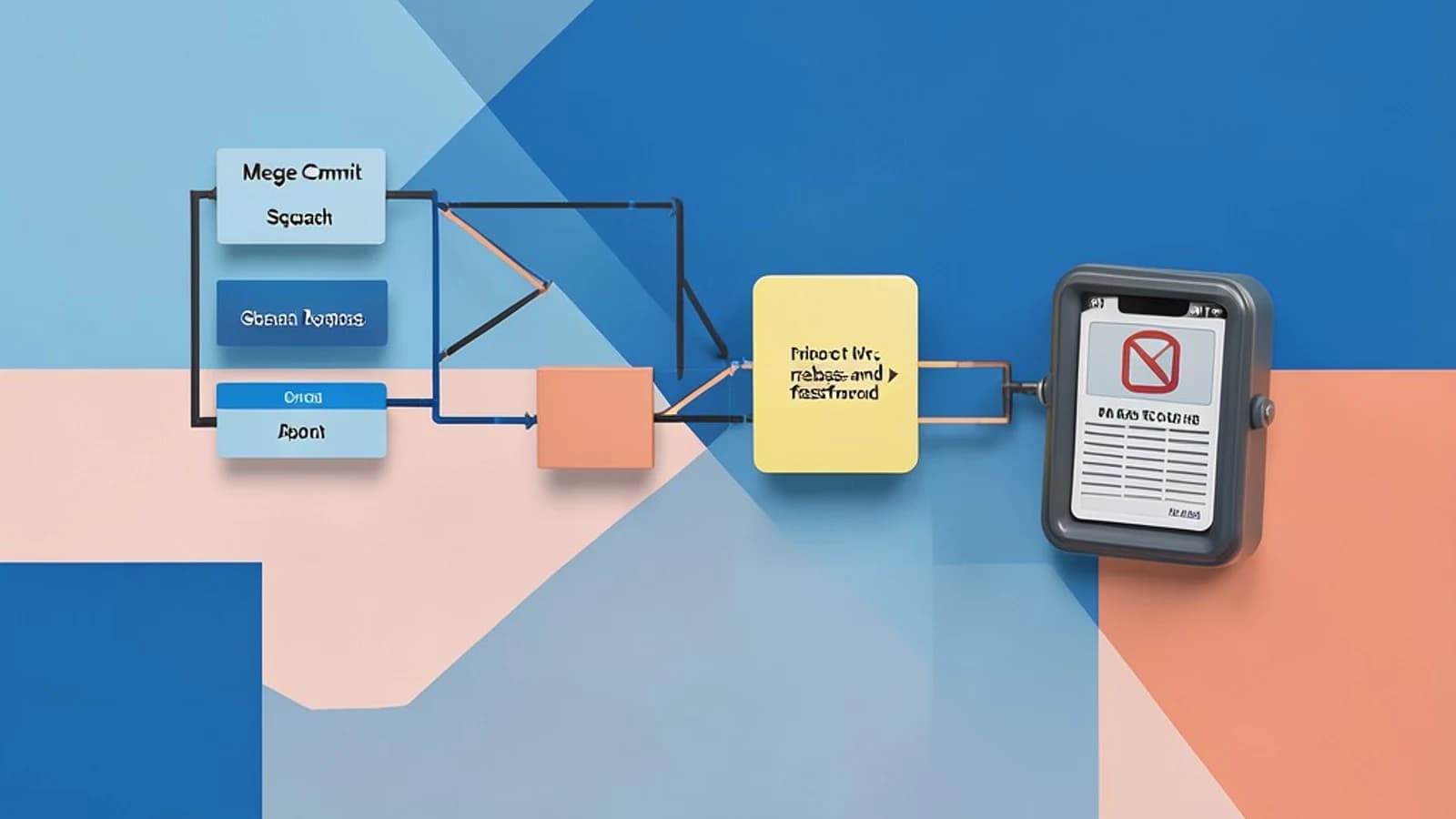
Merge commit, squash, or rebase-and-fast-forward? A decision guide comparing Git's three supported branch integration modes, with constraints, trade-offs, and validation commands.
Firebird selectable stored procedures act like parameterized views: encapsulate report logic, grant curated access, but watch the optimizer black-box trade-off.
Stop fighting with VPCs and connection strings. Learn how Deta Space's Micro architecture simplifies inter-app communication and data persistence for small-scale projects.
Learn how to implement a stack-based Game State Manager in LÖVE to handle transitions between menus and gameplay without relying on messy global if/else blocks.
A diagnostic guide to Groovy’s @CompileStatic: recognize compile-time and runtime failure patterns, trace them to metaprogramming, build config, or scope issues, and apply targeted fixes.
Learn how React-Bootstrap’s Container, Row, and Col components let you build responsive layouts with pure JSX, avoiding custom CSS while retaining Bootstrap’s flexbox grid.
A Gitpod workspace stuck in the "building" phase is almost always one of five causes. Match the log signature, run ordered checks, and apply the fix tied to your finding.