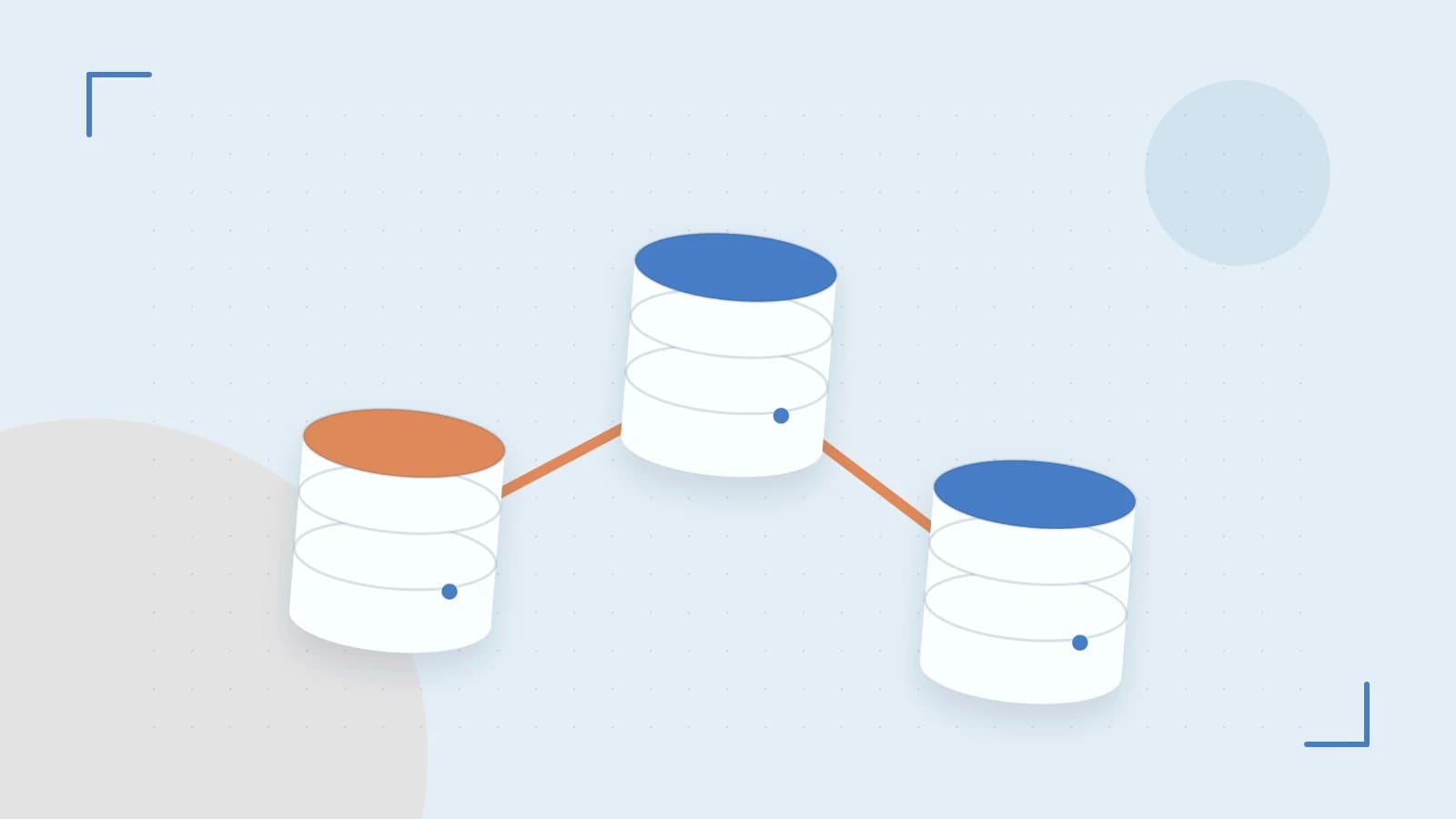
Learn how to use Apache Phoenix Materialized Views to shift heavy aggregation costs from read-time to write-time, reducing HBase scan latency for analytical queries.
When DBeaver can’t connect to a database, the issue is often a timeout, wrong credentials, or driver mismatch. Follow this step‑by‑step diagnostic guide to pinpoint the root cause and apply the right fix.
Avoid rendering inconsistencies by choosing the correct Markdown syntax for headings, code blocks, and tables across different parsers like CommonMark and GFM.
Learn how CoffeeScript’s existential operator (? ) provides shallow null‑safe property access, see its compiled JavaScript, and apply it safely in your code.
A diagnostic guide to Sign In with LinkedIn via OpenID Connect: map each error (unauthorized_scope_error, invalid_redirect_uri, token 401) to its cause and fix.
Learn how to pair PrimeNG’s lazy‑loading p‑table with virtual scroll to keep UI responsive, reduce DOM size, and enable server‑side paging on massive datasets.
Learn how to use Mercurial’s phases (draft, secret, public) to prevent accidental pushes of unfinished work and choose the right state for each changeset in a collaborative workflow.
Learn how to pick the right htmx swap mode—innerHTML, outerHTML, afterbegin, beforeend, delete, or none—for updating lists or forms without a full page reload.
An architecture note on using Eleventy's data cascade (global data, directory data, front matter, computed data) as the minimal design for page data assembly, covering trust boundaries, failure modes, and operational verification steps.
puts debugging makes you guess which variable matters before the run. RubyMine's graphical debugger—breakpoints, Evaluate Expression, conditional stops, and remote attach for Docker—lets you inspect everything after the pause. Here is when it is worth the switch, and when it is not.
Compare externs files, cljs-oops, and shadow-cljs npm integration for safe ClojureScript interop under :advanced compilation. Includes a validation checklist that catches renaming bugs before they reach production.
Offset pagination collapses under scale because databases must scan and discard rows. Prisma's cursor-based pagination uses a unique bookmark to seek directly, giving flat page-fetch costs. This post shows the mechanics, a worked feed endpoint with composite cursors, and the trade-offs you accept.
When Chakra UI pages flash or show hydration mismatches, the culprit is often the missing <code>ColorModeScript</code>, an incorrect theme config, or hard‑coded colors. This guide walks through symptoms, diagnostics, fixes, and escalation steps so you can get your dark‑mode toggle working reliably.
Global Edit finds every object that visually matches your selection and replays your edits on all of them live — no symbol conversion. How it works, where it silently skips near-misses, and how to verify the match set before you commit.
Alpine.js renders lists with x-for on <template> tags. Using a stable :key preserves DOM node identity—focus, transitions, input values—when arrays reorder. A worked example shows why index keys break and how to choose Alpine over a SPA for server-rendered pages with interactive pockets.
Julia compiles a specialized machine-code version of a method for each concrete argument-type combination. Here's how dispatch, specialization, and type stability interact — and how to verify them.
Learn how to eliminate 'Include Hell' in CMake by moving from global directory settings to target-based dependency management using PUBLIC, PRIVATE, and INTERFACE keywords.
Reduce TTFB by moving routing and authentication logic to the Vercel Edge Runtime. Learn the constraints of the Web API subset and how to implement geo-routing middleware.
Stop writing repetitive glue code. Learn how Swift Macros in Xcode 15 move code generation to compile-time, providing type-safe expansions and eliminating boilerplate.
Vuetify 3's grid replaces hand-rolled flexbox and media queries with a 12-unit, breakpoint-prop system. Learn the gutter mechanics, the nesting rule, and a stack-to-side layout pattern you can verify in devtools.
Learn how to implement client-side point clustering in Mapbox GL JS to handle high-density datasets using GeoJSON sources, data-driven styling, and interactive zoom-to-expand functionality.
A diagnostic guide to Flutter's RenderFlex overflow errors: read the axis and pixel count, identify the missing constraint, and apply Expanded, Flexible, or scrolling based on the finding.
Learn how BabylonJS InstancedMesh cuts draw calls from thousands to one, boosting FPS for large numbers of identical objects, with a concrete example and trade‑offs.
Behance separates lightweight metadata from heavy image files, uses lazy‑loading and CDN‑edge format switching to keep portfolios fast and high‑fidelity.
Learn how to query Shopware entities safely using the Data Abstraction Layer’s Criteria API, with a worked example, trade‑offs, and verification steps.
A decision guide for Cairo 1 StarkNet contracts: when to use the declarative #[storage] struct versus manual StoragePointer access, with trade-offs, example code, and validation steps.
Relationship properties in Neo4j are compact until the fact needs its own relationships. Here's the heuristic for when to reify an edge into a node, with Cypher for both models and the planner implications.
How CLion builds a semantic model from CMakeLists.txt to power navigation and refactoring while keeping build execution separate, and what changes would force a redesign.
Matplotlib plot calls that run without errors but produce blank windows, empty PNGs, or missing lines — a diagnostic table, ordered checks, and fixes tied to each finding.
Read the Docs can build a rendered preview of your documentation for every pull request. Here's how the feature works, how to enable it, and the trade-offs to know before you rely on it.
Algolia's faceted search replaces slow SQL filtering with instant refinement — if you design the index deliberately and respect the real costs of facets, query rules, and sync freshness.
Move service-to-service calls off the public internet in Railway using .railway.internal DNS and reference variables, with environment-scoped isolation and a private Postgres example.
Use one master changelog with contexts for environment gating and preconditions for state assumptions. Keep DATABASECHANGELOG as the source of truth and plan for locks, partial DDL, and precondition masking.
Choose Workers KV for fast, read-heavy session storage with eventual consistency. Use Durable Objects when you need linearizable reads/writes and can accept higher latency and cost.
Eliminate password friction by implementing Supabase Magic Links. Learn how to set up passwordless OTP authentication, handle redirects, and secure your flow against phishing.
Architecture note on Fortran coarrays: minimal viable design, trust boundaries, operational checks, failure modes, and when to switch to MPI+OpenMP or GPU offload.
Capacitor replaces Cordova's string-based exec() bridge with typed Swift/Kotlin plugins, auto-generated permission handling, and web fallbacks — moving native failures from runtime to compile time.
Envoy's xDS APIs enable dynamic config without restarts, but defaults don't scale automatically. Practical guidance on when ADS beats individual streams, the Delta xDS threshold, resource warming for zero-downtime rolls, and SDS trust boundaries.
A diagnostic guide for N+1 queries in AdonisJS Lucid. Recognize repeating SELECTs, check .load() usage and version, and verify batch eager loading with query logs and $relations.
Learn how to enable ARM MTE on AArch64 Linux to detect heap buffer overflows, including hardware checks, kernel config, userspace opt‑in, and validation steps.
Learn how to use Rollup’s output.plugins hook to generate deterministic, readable filenames for code‑split chunks while avoiding collisions and preserving cache‑busting benefits.
Learn when and how to use Wolfram Language's ParallelMap to spread CPU-bound notebook work across local kernels, with a worked example, limitations, and a verification checklist.
Learn how to split your StencilJS bundle at runtime using @Load, see a working parent‑child example, and verify the impact on initial load size and network behavior.
Learn how NetBox Custom Fields let you add structured metadata such as warranty dates or asset tags to devices without altering the core schema, with a step‑by‑step example and performance considerations.
Pick a WebGPU color-attachment format the supported way: use getPreferredCanvasFormat(), understand what the -srgb variants actually do, and verify with a known-color read-back test.
A diagnostic guide for resolving GObject Introspection missing symbol errors during Vala compilation and runtime execution, including cause tables, ordered checks, and fixes.