Structuring the ASP.NET Core Middleware Pipeline for Cross-Cutting Concerns
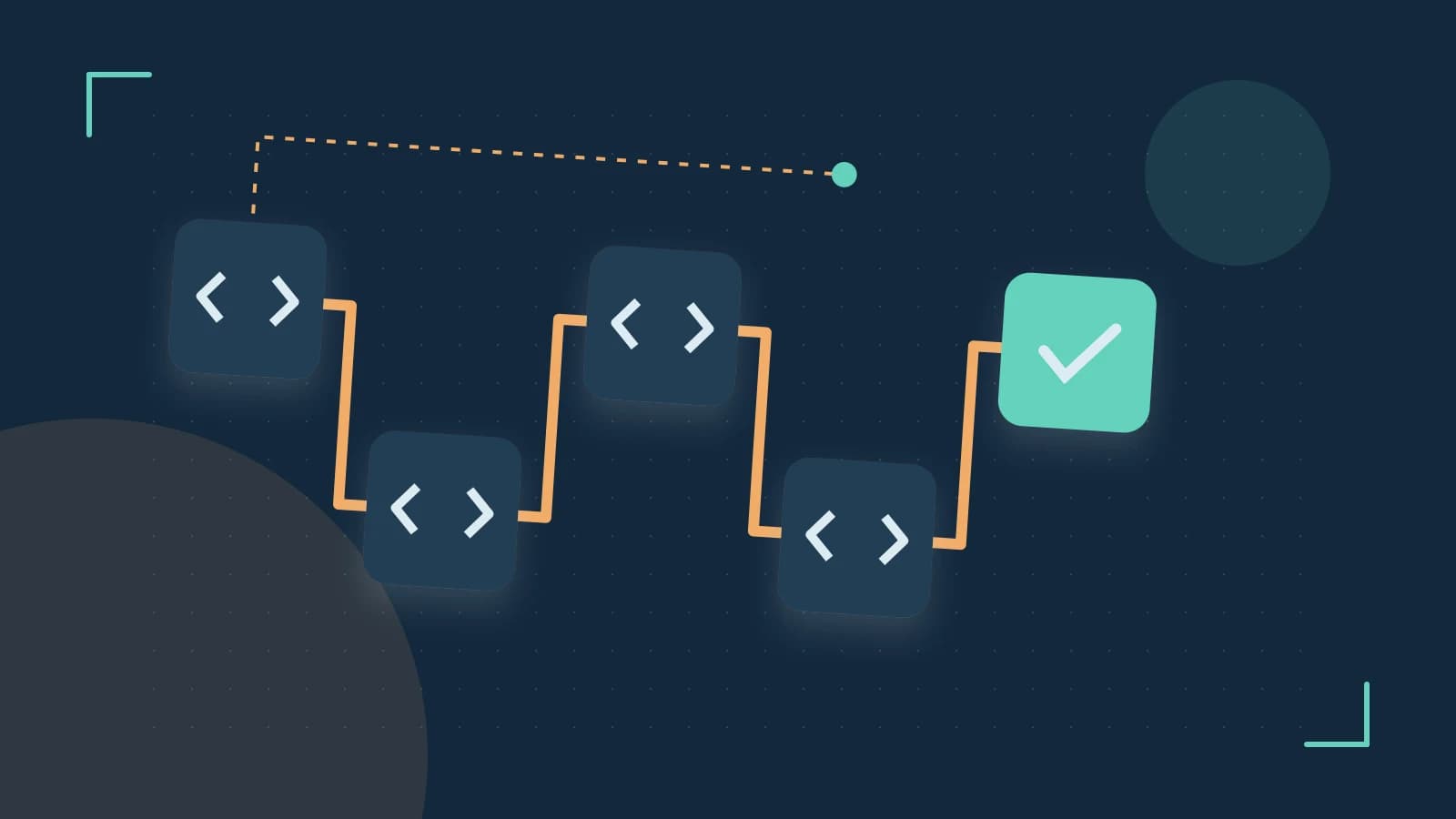
An architectural guide to ordering and securing the ASP.NET Core middleware pipeline to ensure reliable authentication, logging, and error handling.
09 May 2026, 01:35 UTC
ReadMeFeed / Community knowledge
Practical guides, fresh perspectives and ideas worth trying.
An architectural guide to ordering and securing the ASP.NET Core middleware pipeline to ensure reliable authentication, logging, and error handling.
VS Code’s Multi‑Root Workspaces let you keep unrelated repositories open in one window, overriding global settings per session and keeping terminal context per folder.
Learn how to eliminate hard-coded API requests in Insomnia using Environment Variables for configuration and Template Tags for dynamic request chaining.
Learn how VSCodium’s built‑in Open VSX Registry support lets you install and publish VS Code extensions without Microsoft accounts or telemetry, with a concrete install/publish example and verification steps.
A concise architecture note for deploying a minimal, secure self‑hosted GitHub Actions runner, covering requirements, design, trust boundaries, ops checks, failure modes, and when to redesign.
When you need attributes on the link between two Ember Data models, model the join explicitly with a join record, keep relationships async, and let the store keep both sides in sync.
Step‑by‑step guide to diagnose and fix LDAP login problems in a self‑hosted Forgejo instance.
Learn how to lock down Electron renderer processes by enabling contextIsolation, disabling nodeIntegration, and exposing a minimal API via a preload script. This guide covers requirements, design, trust boundaries, operational checks, failure modes, and when the design must change.
Stop duplicating environment settings in your YAML files. Learn how to use anchors, aliases, and merge keys to create maintainable, DRY configuration manifests.
Learn how to implement process isolation using Linux Network and PID namespaces. This architecture note covers the smallest suitable design for isolating workloads without the overhead of VMs.
Learn how to spot, diagnose, and fix space leaks caused by lazy I/O in Haskell programs using RTS stats, heap profiling, and strict I/O replacements.
Learn how KrakenJS’s `build --bundle` command turns a set of ES6 modules into a single, minified bundle, preserves debuggability with source maps, and lets you plug in custom transforms. A step‑by‑step example shows how to verify the output and understand the trade‑offs.
Resolve 'Task not found' errors in Grunt.js by diagnosing plugin loading failures, verifying local installations, and correcting task naming mismatches.
Stop your database from choking on N+1 queries. Learn when to use joinedload vs. selectinload in SQLAlchemy to optimize relationship loading and reduce latency.
A guide to diagnosing and fixing the White Screen of Death (WSOD) in Contao CMS, covering cache corruption, PHP version mismatches, and permission errors.
Dynamic Link lets Premiere Pro use After Effects compositions in real time, cutting out the need for separate renders. Learn how to set it up, tweak performance, and apply PP effects directly to AE layers.
Learn how to build a secure, testable KrakenJS middleware stack that validates input, authenticates users, and safely calls your controller. The article covers requirements, trust boundaries, logging, error handling, and when to refactor for scale.
Stop bloating your Symfony managers with endless dependencies. Learn how to use Service Tags and TaggedIterators to create pluggable, decoupled architectures.
When Babel skips class property syntax, the runtime crashes. This guide walks through the most common configuration gaps, step‑by‑step checks, fixes, and escalation criteria to get your build back on track.
Definite Clause Grammars (DCGs) let you write declarative parsers in Prolog, but left‑recursion and complex semantic actions can hurt performance. Learn how to design clean DCGs, avoid pitfalls, use tabling, and integrate with modern Prolog tools.
Learn how to implement persistent state in Cairo using the Storage trait and StorageMap. This guide covers the implementation of a counter contract and the verification process using Scarb and Starkli.
Learn how to use Qt's Signal and Slot mechanism to safely communicate between worker threads and the GUI thread using Queued Connections to prevent crashes.
Learn how to diagnose and fix GitHub Actions jobs that stay in the 'Queued' state, focusing on runner label mismatches, concurrency bottlenecks, and offline self-hosted agents.
Stop paying the 300% storage tax. Learn how to use HDFS Erasure Coding to reduce storage overhead while maintaining data durability for cold datasets.
Learn how to configure Karma to switch between headed Chrome for local debugging and ChromeHeadless for CI pipelines using dynamic environment variables.
Stop wasting milliseconds on network shuffles. Learn how YugabyteDB Colocated Tables keep related data on the same node to accelerate joins in multi‑tenant apps.
Learn how to implement custom HealthChecks in Dropwizard to monitor critical dependencies and prevent silent failures in distributed systems.
Learn how to use Devicon's plain and colored modifier classes to switch between official brand colors and custom CSS styling for developer icons.
Learn how to use GoLand's integration with Delve to visualize goroutine stacks, set conditional breakpoints, and resolve complex deadlocks in Go applications.
Decide between CodePen Pens and Projects based on your architectural needs. Learn when to use flat structures for components versus full directory trees for complex apps.
Learn how to apply JSON Schema for declarative API request validation, see a concrete user-registration example, and understand the trade-offs before adding it to your service.
A guide to balancing strong and eventual consistency in distributed social graphs, comparing trade-offs for identity data versus social connections.
Learn how to cache Thymeleaf fragments with Spring Cache, improve rendering speed, manage cache keys, and avoid security pitfalls. Step‑by‑step example and trade‑off discussion included.
A step‑by‑step guide to creating Jira Cloud automation rules that move issues between statuses automatically, with checks for permissions, audit logs, and rollback options.
Jeet’s <code>column()</code> mixin turns manual width calculations into a single Sass call, automatically handling gutters and nested grids. Learn how to import Jeet, set a gutter, and use <code>column()</code> for clean, fluid layouts.
Learn how to use htmx Out-of-Band (OOB) swaps to update multiple disconnected DOM elements in a single server response, reducing round-trips and simplifying UI state.
Learn how to enable CircleCI's Docker Layer Caching to reuse image layers, cut build times, and verify the feature is working.
Deploy a minimal HDFS cluster that uses rack‑aware replication to guarantee data durability and fault tolerance. The article covers required configuration, trust boundaries, operational checks, failure modes, and when to scale or add security features.
Stop prop-drilling design constants. Learn how to use styled-components ThemeProvider to implement dynamic theming and maintain a consistent design system across your React app.
Guide to choosing between AWS VPC CNI and Calico for Gardener Shoot clusters, focusing on the trade-off between network performance and VPC IP address consumption.
Stop your Gazebo robots from jittering or flying away. Learn how to optimize ODE physics by balancing mass ratios, using collision primitives, and tuning step sizes.
Learn how to manage network traffic in CentOS using Firewalld zones, including the critical difference between runtime and permanent rules to prevent configuration loss.
Learn how Vyper's default overflow protection and strict bounds checking eliminate common smart contract vulnerabilities by moving safety from the library level to the compiler level.
Explore the architecture behind Git graph visualization, focusing on the separation of local indexing and UI rendering to handle large repositories without performance degradation.
Scattered loading spinners clutter the UI and add boilerplate. React Suspense declares a single loading boundary; with React Query you can drop per‑component flags. This guide covers the problem, solution, example, trade‑offs, and a checklist.
Learn how to link Gitter chat rooms to GitHub and GitLab repositories to synchronize community discussions with your codebase and verify contributor identities via OAuth.
Learn how Ory Kratos decouples identity management from application logic using a headless architecture, state-machine flows, and JSON schemas.
Explains how to replace thread pools with virtual threads for I/O‑bound Java services, covering pinning risks, ThreadLocal limits, and verification steps.
Learn how to drive Azure App Service autoscale with a custom Application Insights latency metric, including a ready‑to‑use JSON template, CLI steps, and verification tips.
Learn how to load an entity and its associations with a single SQL query using Doctrine's JOIN FETCH, and understand its limits and common pitfalls.