Discover how DuckDB lets you query remote Parquet files directly, reducing data egress and speeding up analytics with zero‑copy, predicate pushdown, and an in‑process columnar engine.
When a Svelte component’s <code>$:</code> block runs too often, performance suffers. Derived stores offer memoized, source‑driven recomputation. This blog contrasts reactive statements and derived stores, shows a counter example, and gives a clear checklist for choosing the right tool.
Sequelize transactions let you bundle database operations into an atomic unit. Learn how to start, commit, rollback, and use nested transactions with async/await, including pitfalls and best‑practice patterns.
Enable TypeScript’s strictNullChecks to catch null dereferences at compile time. Learn how it changes type inference, see a concrete React component refactor, and weigh trade‑offs for large codebases.
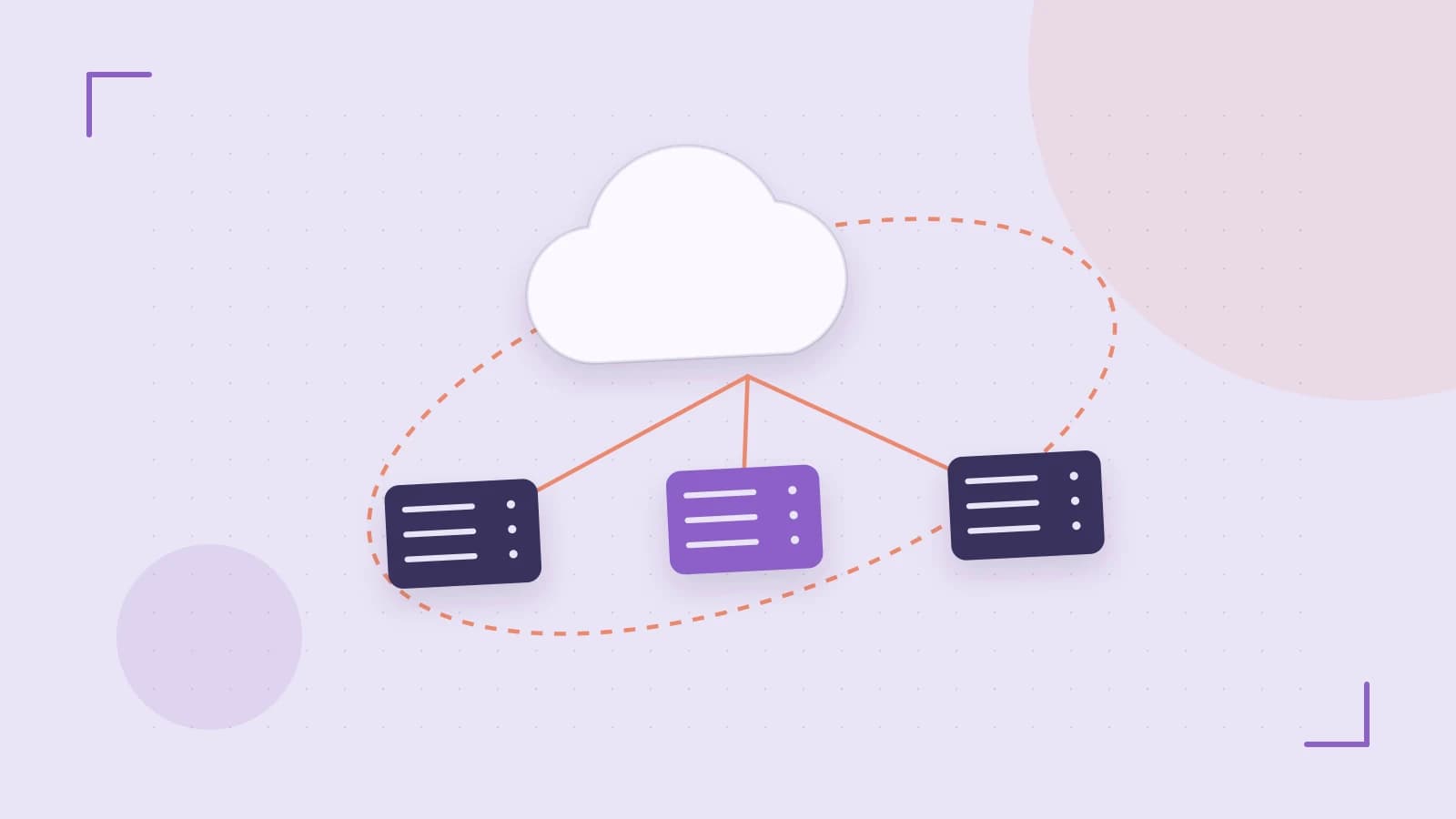
Design a distributed semaphore using Redis and Lua scripts to enforce a global concurrency limit across microservices. The article covers requirements, minimal design, trust boundaries, operational checks, failure modes, and when to adjust the architecture.
Learn how Codecov diff coverage isolates the impact of new code in pull requests, how to enforce a patch threshold via .codecov.yml, and the trade-offs to watch for.
Discover how Vaadin’s @Push annotation turns a classic request‑response web app into a real‑time experience, the setup steps, a working example, and the trade‑offs you need to consider.
Create a lightweight SDL renderer that automatically selects GPU acceleration, validates capabilities, and falls back to software rendering when necessary. The article covers design, checks, failure modes, and when to redesign.
Stop the lag in your React Native apps. Learn how to use FlatList virtualization, getItemLayout, and windowSize to render thousands of items without crashing your app.
Avoid data leakage and manage runtime while hyper‑parameter tuning in scikit‑learn by embedding GridSearchCV inside a Pipeline. Follow a concrete Iris example, validate results, and learn recovery strategies.
Learn how to use Bower’s overrides object to lock transitive dependencies to a specific version, with a concrete example, verification steps, and a discussion of trade‑offs.
A step‑by‑step diagnostic guide for Scalingo apps that crash after deployment, covering Procfile, buildpack, env vars, container size, and add‑on health.
Stop paying for documents you don't display. Learn how to implement cursor-based pagination in Firestore using startAfter() to reduce read costs and improve latency.
Decide between scala.concurrent.Future and functional effect systems like ZIO or Cats Effect based on your needs for resource safety, cancellation, and concurrency scale.
Learn how to replace static CSS variables with a scalable design token system using Sass maps, functions, and mixins to reduce redundancy and simplify theme management.
Eliminate Django N+1 queries by mastering select_related for FK/OneToOne and prefetch_related for M2M. See a concrete example, trade‑offs, and how to profile before deploying.
Perl’s built‑in ‘say’ function automatically appends a newline, simplifying output and reducing bugs. Learn how to enable it, use it in real scripts, and understand its trade‑offs and limitations.
Deciding between Salesforce Flow and Apex Triggers depends on data volume and logic complexity. This guide compares both, highlighting performance trade‑offs and the "One Trigger Per Object" pattern.
Learn how to use Safari's Responsive Design Mode to verify CSS media queries, simulate Apple device viewports, and debug layout breakpoints without physical hardware.
Astro’s islands model lets you hydrate only the components that need interactivity, keeping the rest of the page static and minimizing bundle size. This guide walks through the problem, the solution, a concrete example, and the trade‑offs to consider.
Learn why Elm guarantees that code written in the language cannot throw unexpected runtime errors, and see a concrete example of the Elm Architecture in action.
Learn how to decide which test framework to run inside RubyMine, compare RSpec and Minitest options, and validate the configuration with a quick terminal check.
Using the 1.1 V internal reference on an Arduino boosts ADC resolution from ~4.9 mV to ~1.1 mV per count. Pair it with a 5:1 voltage divider, add a 0.1 µF capacitor, and you can read a 0‑5 V sensor with roughly 4.5× more precision—perfect for temperature probes and precision analog work.
Learn how to diagnose and resolve Errno::EMFILE (Too many open files) in Ruby by identifying file descriptor leaks using lsof and implementing safe file/socket handling to prevent crashes.
Stop manually updating index tables. Learn how to use Page Properties and Page Properties Report macros to turn Confluence into a dynamic, label-driven project database.
Explore the architectural decoupling of rserver and rsession in RStudio Server, ensuring IDE stability during R kernel crashes and maintaining OS-level security boundaries.
Speed up your C memory copy by using the C99 <code>restrict</code> keyword. Learn how it works, see a concrete example, understand trade‑offs, and validate the performance gains in a few steps.
Learn how to use RSpec shared examples to eliminate redundant tests across similar classes, using it_behaves_like and include_examples for DRYer Ruby test suites.
Learn how Scalingo's PostgreSQL add-on handles automatic DATABASE_URL injection, why application-level connection pooling is required for production stability.
Learn how to implement and manage Logical Volume Management (LVM) on Rocky Linux 8 and 9 to avoid static partition limits and enable online storage expansion.
Gleam’s process API brings typed message passing and OTP supervision to the BEAM. Learn how to spawn safe processes, link them, and build a counter service that restarts on failure—all while catching message mismatches at compile time.
Learn how to configure RocksDB column families to give different workloads their own memtable, write buffer, and compaction settings while sharing a single DB instance.
Stop duplicating HTML across your templates. Learn how to use Thymeleaf Fragments and dynamic expressions to create reusable UI components that simplify maintenance.
Rider isolates its .NET debugger backend in a separate process, communicating via a local TCP socket to ensure IDE stability and protect against untrusted debuggee code.
Learn how to use SPSS’s MATCH FILES command to merge datasets correctly—sort, type‑match, keep specific variables, diagnose with MATCHED, and avoid common pitfalls like unsorted files or case mismatches.
Replit’s Repl DB uses a lightweight SQLite file per repl to deliver fast, isolated key‑value storage. This guide details requirements, minimal design, trust boundaries, operational checks, failure modes, and when the design might need to change.
Learn how data.table’s keying and in‑place operations can cut group‑by and join times from seconds to milliseconds on large datasets. A step‑by‑step example and trade‑off discussion included.
When a screen in a Ren'Py visual novel fails to appear or renders incorrectly, pinpointing the root cause can be tricky. This guide walks through common symptoms, diagnostic checks, fixes, and when to seek help—so you can get your UI back on track quickly.
Learn how SolidJS eliminates the Virtual DOM using fine-grained reactivity. Explore the practical use of Signals and Memos to build high-performance UIs without unnecessary re-renders.
Deciding between Remix loaders and client-side fetching is a balance of TTFB and user experience. Learn when to use server-side loading, client-side requests, and the defer utility for streaming data.