App Service cannot read a Key Vault secret: a diagnostic path that preserves least privilege
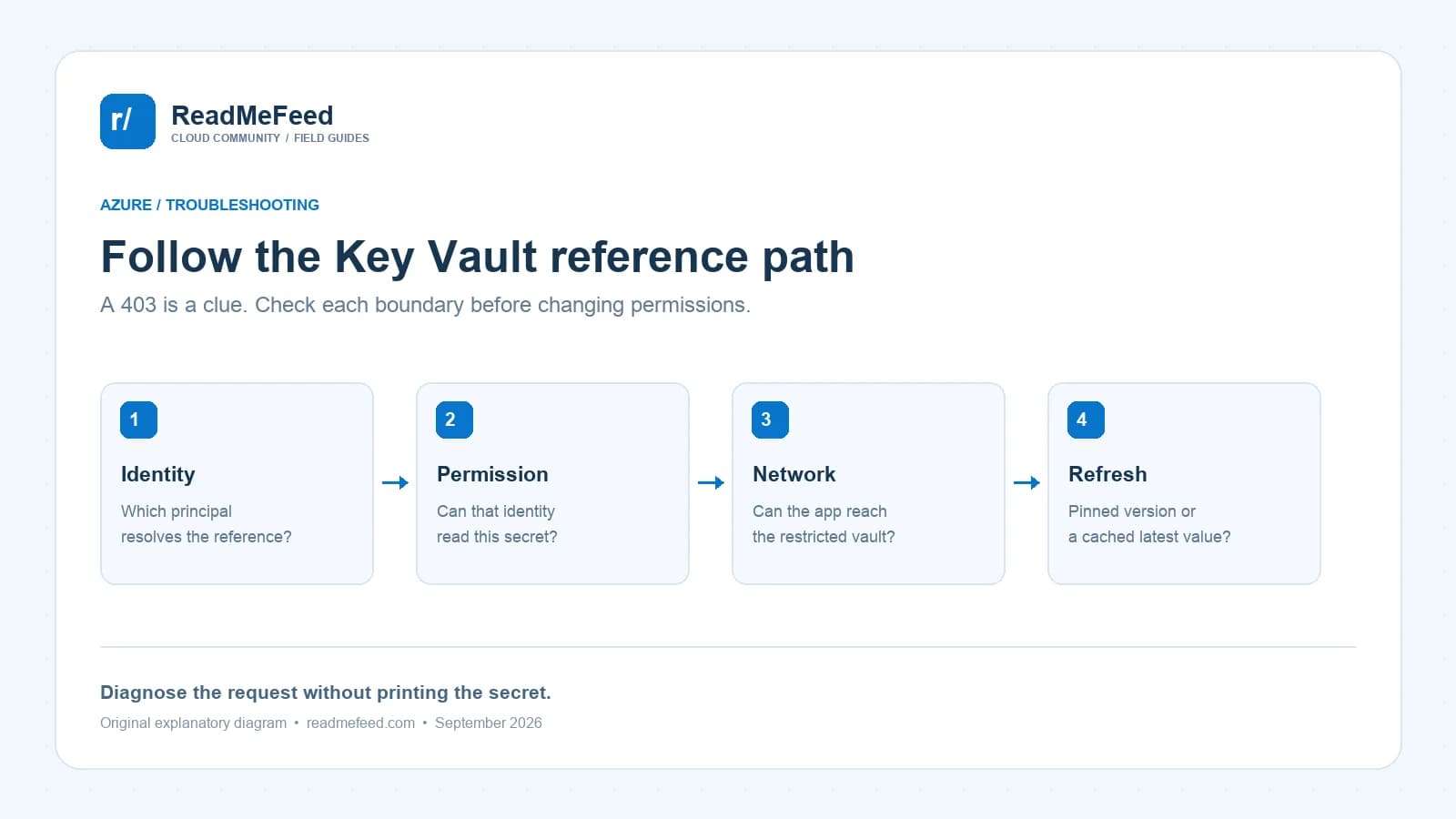
Separate the application identity, vault permissions, network route and reference cache before changing access to a production secret.
ReadMeFeed1h ago
ReadMeFeed / Community knowledge
Practical guides, fresh perspectives and ideas worth trying.
Separate the application identity, vault permissions, network route and reference cache before changing access to a production secret.
A restored database server is the beginning of recovery. Plan the target time, network access, validation and application switch as one exercise.
Use a small test document and the affected text to distinguish proofing configuration, language availability and application behavior.
Environment variables and mounted secret files behave differently. Match the method to your application and test the failure path.
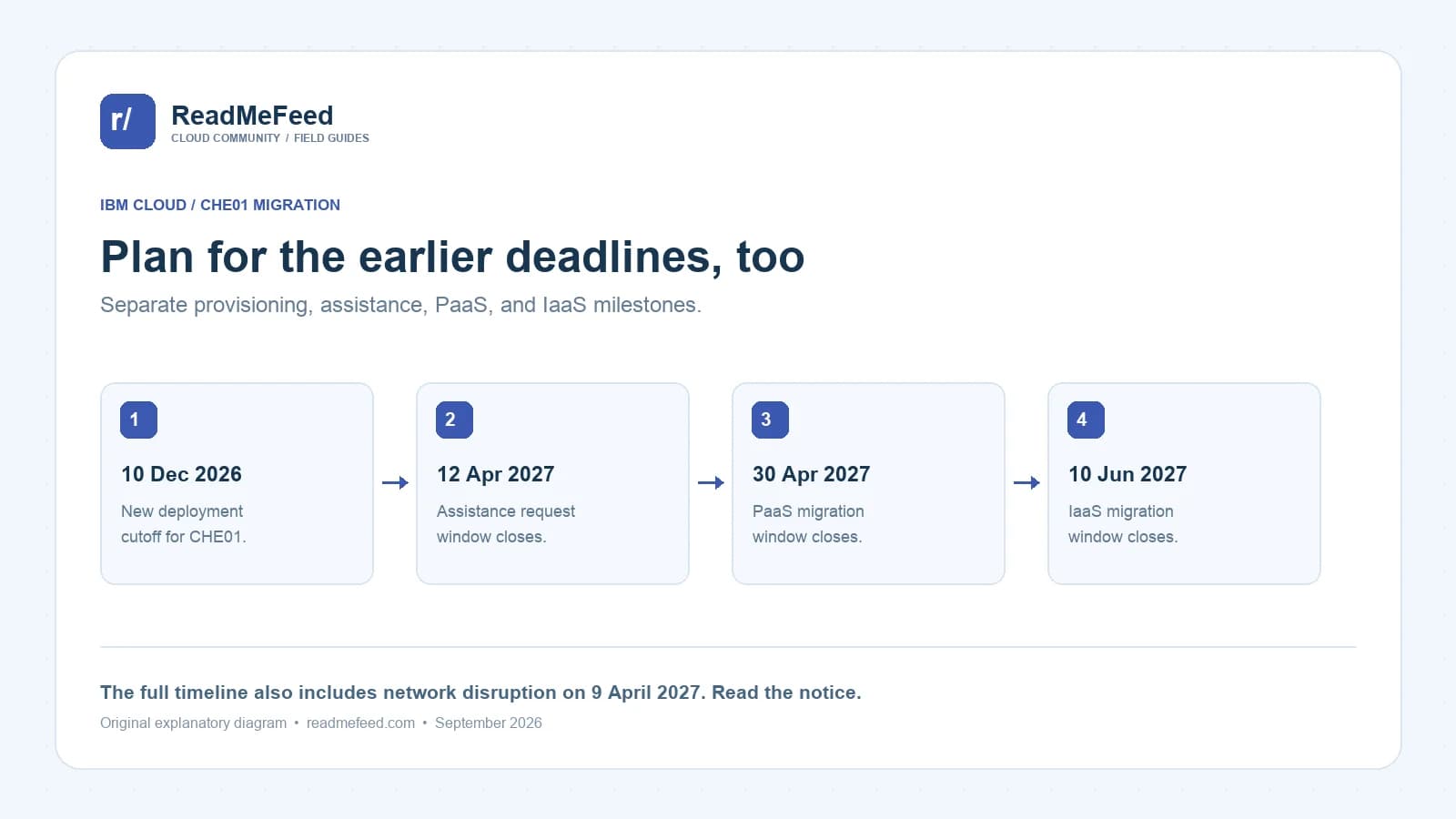
IBM has published separate provisioning, PaaS, and IaaS deadlines for Chennai 01. Build a dependency inventory and rehearse migration before the relevant cutoff.
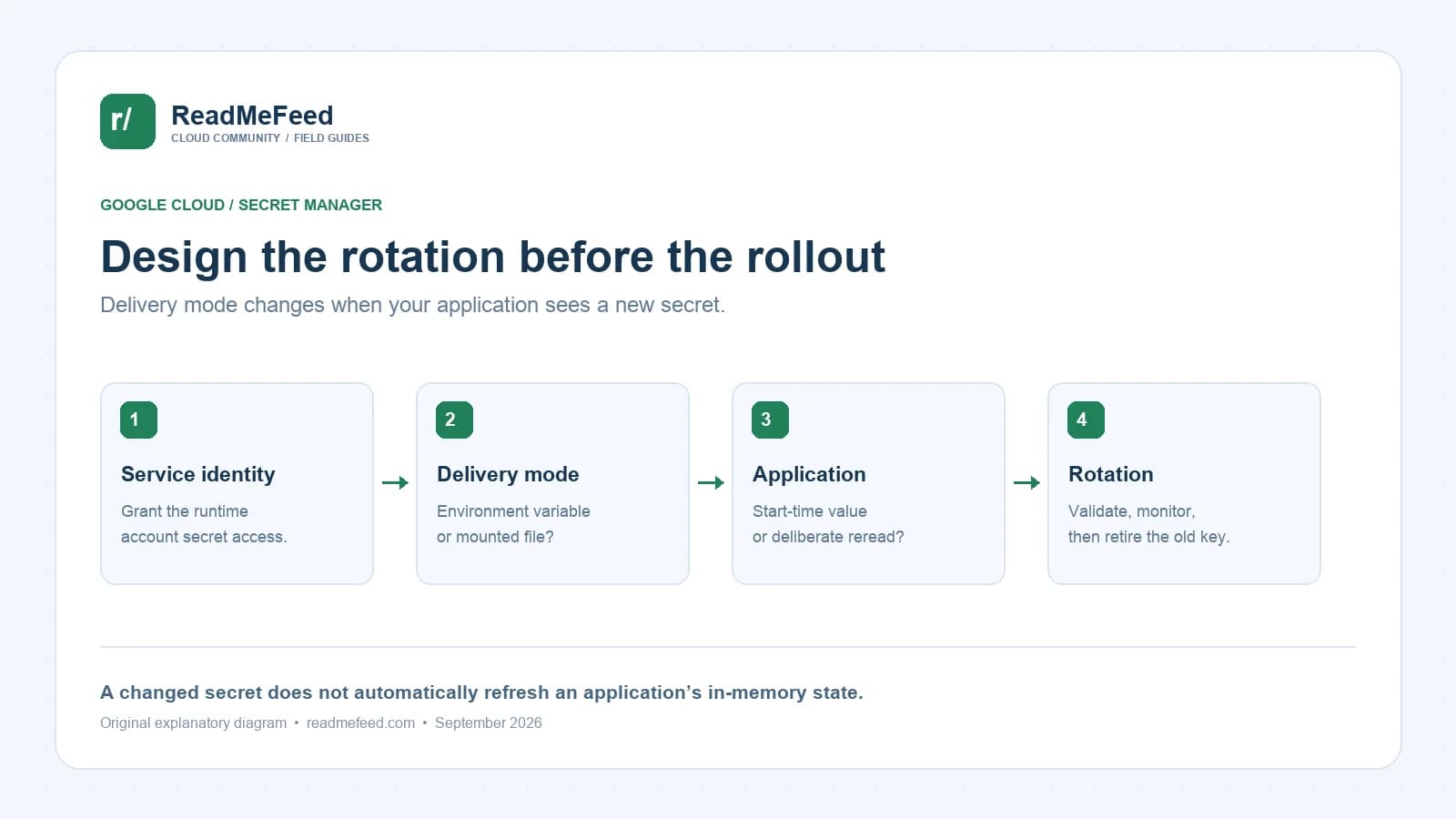
Choose how Cloud Run receives secrets, grant access to the runtime service account, and build a rotation and rollback plan around the documented refresh behavior.
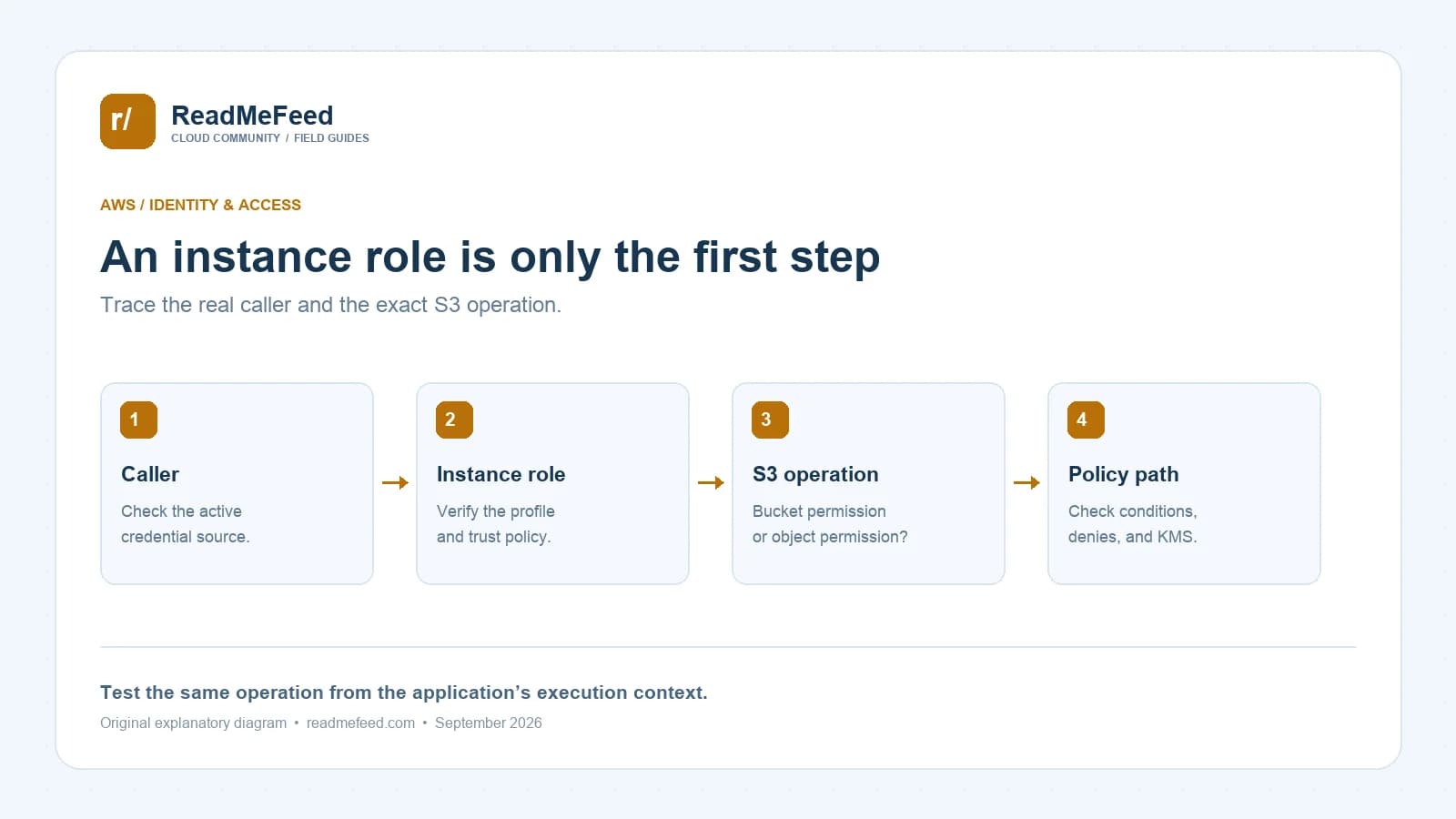
An EC2 instance role is only part of the S3 authorization path. Identify the real caller, distinguish bucket and object permissions, and trace explicit denies.
Trace a failed Key Vault reference through identity, secret permissions, network access, and refresh behavior without printing the secret.
Azure Blob Storage is frequently mischaracterized as a mere ‘bit bucket’ for unstructured data. In reality, it is a sophisticated, multi-tiered storage solution that requires…
In the contemporary landscape of cloud-native development, the persistence of hard-coded credentials remains a staggering architectural failure. Azure Key Vault serves as the definitive mitigation…
The cloud computing landscape is no longer a nascent frontier but a mature, complex ecosystem where providers vie for dominance through an ever-expanding array of…
In the landscape of enterprise integration, Azure Logic Apps (Standard) represents a significant architectural shift from its multi-tenant Consumption predecessor. By moving to a single-tenant…