Vala async/await compiled to GLib GTask: practical patterns and limits
How Vala rewrites async/await into GTask‑based C, with a file‑read example, cancellation, and limits to watch for.
18 Mar 2026, 07:05 UTC
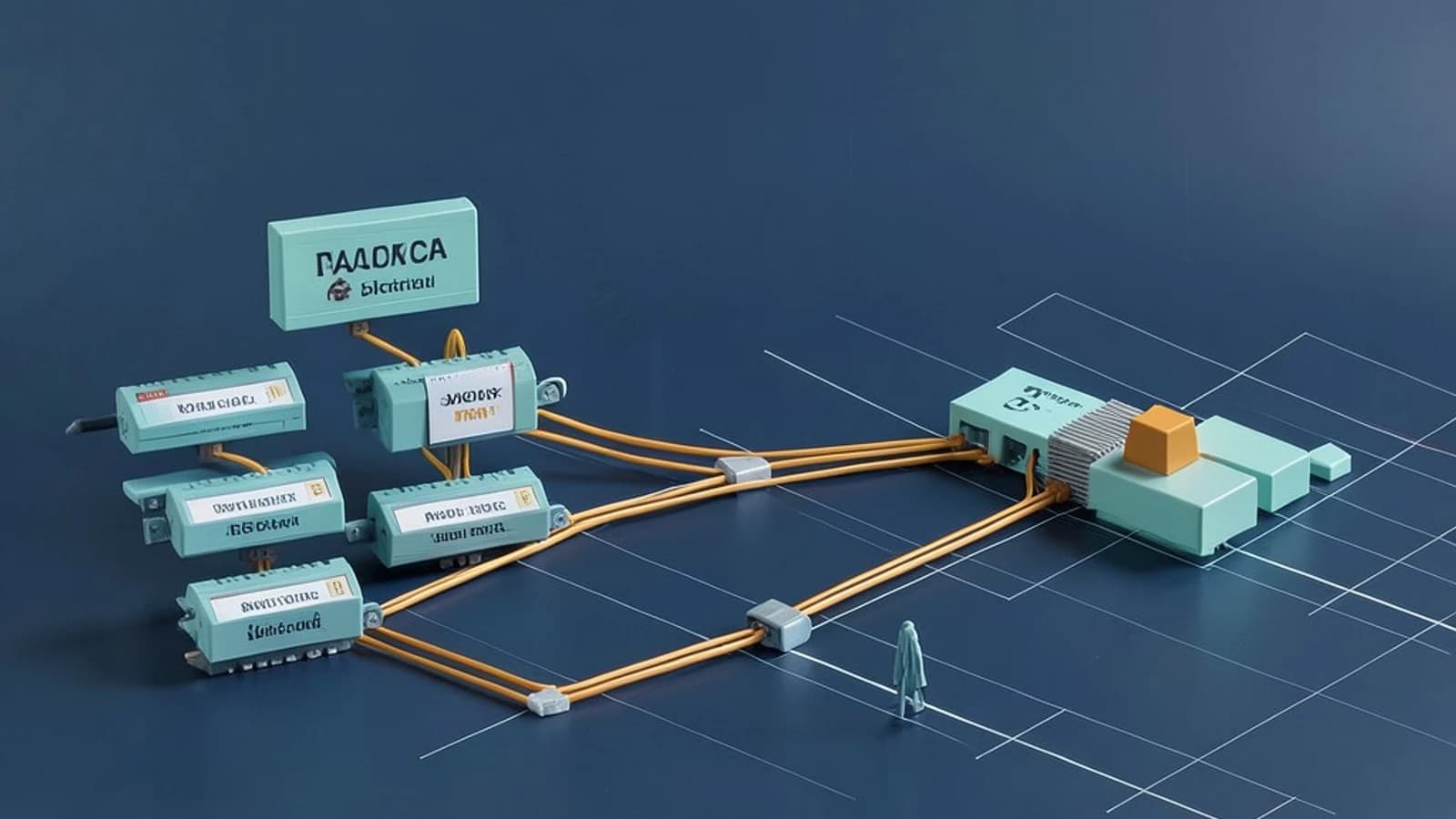
Problem: blocking I/O freezes the GTK main loop. In a typical GUI application, a synchronous file read or network request blocks the main thread, making the interface unresponsive. The useful takeaway is that Vala’s async/await syntax is not runtime magic – the compiler rewrites it into plain C using GLib’s GTask and the main context, giving you readable non‑blocking code that interoperates everywhere GObject Introspection is supported.
What the compiler actually emits
When you mark a method as async in Vala, valac generates a C function that returns a GTask*. The function uses g_task_run_in_thread() for work that should leave the main loop, and schedules the continuation back on the GLib main context via g_main_context_invoke_full(). This is the same pattern you would write by hand for GLib async APIs, but the boilerplate is produced automatically.
The yield keyword is the suspension point. At each yield the compiler saves local variables and the current state into a heap‑allocated closure struct. The struct is referenced by the GTask so the continuation can resume later without corrupting the stack. This avoids manual state machines and keeps Vala code compact.
Cancellation and error propagation are built‑in
Any async method can accept a GCancellable parameter. The generated code checks g_cancellable_is_cancelled() at each yield point and propagates G_IO_ERROR_CANCELLED automatically. Errors cross the async boundary via GError** out‑parameters, which Vala maps to throws in source. Because the output is standard C with GObject Introspection annotations, async Vala APIs are callable from Python, JavaScript, Rust or C via GIR without hand‑written bindings.
Worked example: async file read without blocking the UI
The following idiom wraps a blocking call into an async method:
public async string read_all_async (string path, Cancellable? cancellable = null) throws IOError {
    return yield FileUtils.read_all_async (path, cancellable);
}
Call it from an async context with:
var data = yield read_all_async (\"/tmp/note.txt\");
To inspect what valac produces, compile with C code emission in a terminal where the Vala compiler is installed:
valac --ccode async-demo.vala
Open the generated async-demo.c and look for a GTask‑based function and a compiler‑generated closure struct that holds locals across yields. First check the compiler version:
valac --version
Generic async support requires Vala ≥ 0.56 (released 2023). Generate introspection to test cross‑language use:
valac --gir=AsyncDemo.gir async-demo.vala
Import the resulting GIR from Python, for example:
from gi.repository import AsyncDemo
result = AsyncDemo.read_all_async("/tmp/note.txt")
Trade‑offs and limits to plan for
Async methods cannot be virtual in Vala. The compiler generates a non‑virtual C function, so polymorphism requires interface default methods or manual delegation.
Each yield allocates a heap closure struct. In high‑concurrency scenarios with thousands of simultaneous operations, memory pressure grows. Batching requests or using a dedicated thread pool is preferable to spawning unlimited async calls.
Debugging is harder than synchronous code. GDB shows C trampoline frames rather than Vala source lines. Compile with valac --gdb and run with G_DEBUG=fatal-criticals for clearer diagnostics. Unchecked exceptions such as null‑pointer dereference will crash the process unless wrapped in a try/catch at the top‑level callback.
Verify behavior by compiling a minimal async example and inspecting the generated .c for g_task_run_in_thread and closure‑struct definitions. Consult the Vala Reference Manual section “Asynchronous Methods” for the formal semantics.
Verification steps in practice
- Run
valac --versionand ensure you have Vala 0.56+ if you use generic async methods. - Compile a minimal example with
valac --ccodeand inspect the emitted C forg_task_run_in_threadand the closure struct. - Run the example under GDB with
G_DEBUG=fatal-warningsto observe cancellation and error propagation. - Generate a GIR file with
valac --girand import it from Python to confirm cross‑language interoperability.
Use async/await when you need readable non‑blocking GLib code that must stay interoperable. Keep async methods small, avoid virtual async APIs, and audit closure allocation when concurrency is high.
 vala
vala0 replies
A thoughtful contribution can make all the difference. Be the first to share one.