Managing Multidimensional Data with APL Rank and Shape
Learn how APL's Rank and Shape operators eliminate nested loop boilerplate for multidimensional data processing, using a concise array-oriented approach.
18 Jul 2025, 18:40 UTC
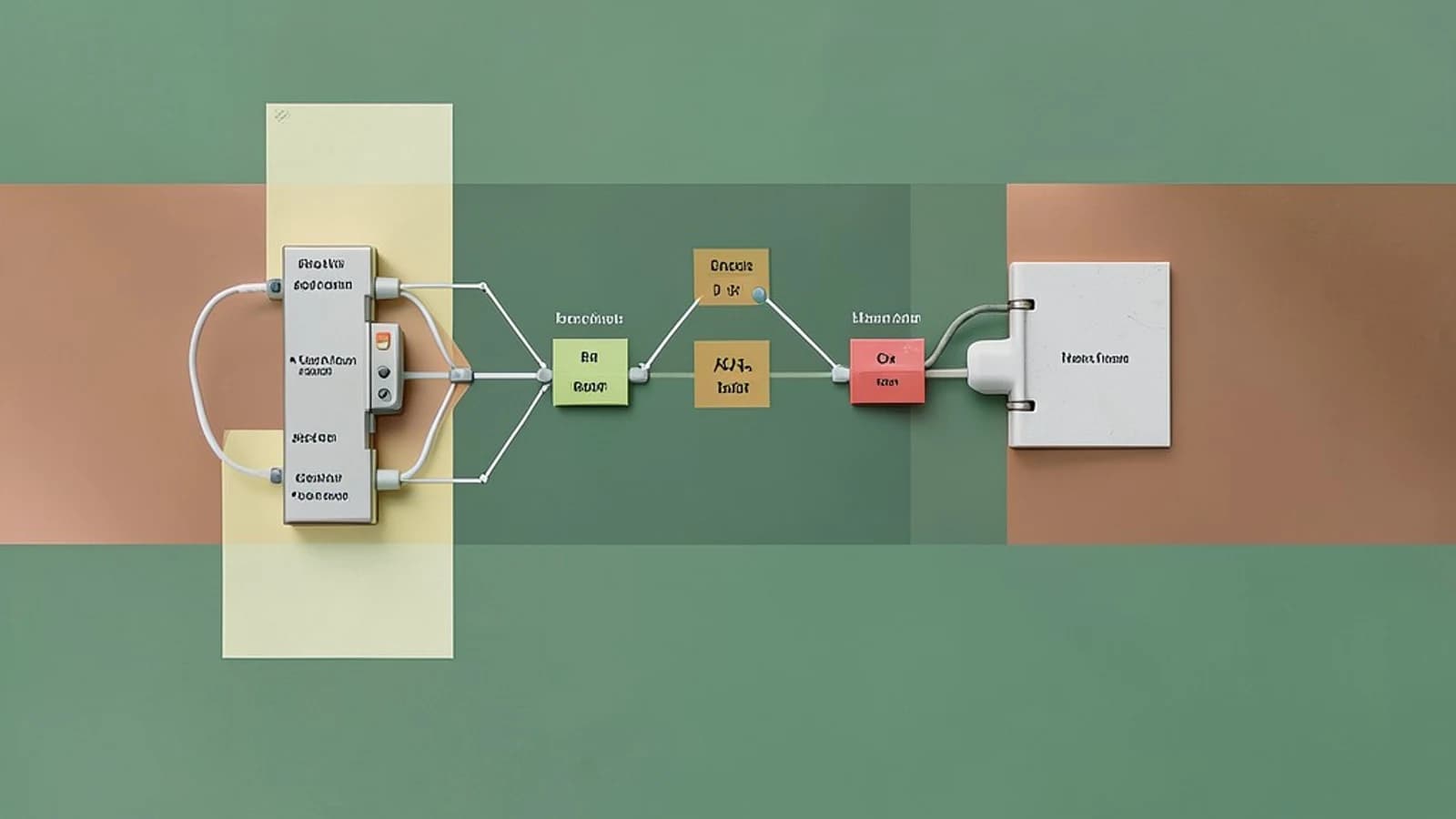
The Loop Boilerplate Problem
Processing multidimensional data in most languages requires nested loops. If you have a 3D array (like a time series of images), you typically write three levels of indentation to apply a simple operation to every pixel across every frame. This creates a "boilerplate gap" where the actual logic—a single mathematical operation—is buried under the mechanics of array traversal.
APL (A Programming Language) solves this by treating arrays as first-class citizens. Instead of iterating through indices, you define the Rank of the operation. This allows you to tell the interpreter: "Apply this function to every 1D vector within this 3D block," effectively collapsing the loop structure into a single operator.Understanding Shape and Rank
In APL, Shape refers to the dimensions of an array (e.g., a 3x4 matrix has a shape of 3 4). Rank is the number of dimensions; a scalar has rank 0, a vector rank 1, and a matrix rank 2. By understanding the rank, you can apply functions to arrays of any dimension without rewriting the core logic.
The Shape operator (⍴) provides a way to restructure data without explicit nested loops. Implicit broadcasting, or "mixing," allows operations between arrays of different shapes if they follow specific compatibility rules, further reducing the manual indexing required.
Practical Example: Normalizing a Matrix
Suppose you have a matrix of sensor readings and want to subtract the mean of each row from that row. In a loop-based language, this involves calculating the sum, dividing by the count, and iterating. In APL, it is done in a single line:
// Define a 3x3 matrix
data := 3 3 10 20 30 40 50 60 70 80 90

// Calculate mean of each row (axis 1 reduction)
row_means := ++/1data

// Subtract means from rows (broadcasting)
normalized := data - row_means
In the example above, +/+/1 reduces the matrix along the first axis to find the means. The subtraction operator then handles the "mixing" of the 1D mean vector with the 2D data matrix.
Trade-offs and Limitations
The highly concise notation (glyphs) creates a steep learning curve and can hinder readability for developers unfamiliar with the language. Additionally, performance can degrade if the programmer fails to leverage array-oriented primitives and instead relies on explicit loops. While different APL dialects (like Dyalog vs. GNU APL) may have subtle variations, the core logic of rank remains consistent.
To verify the result, you can check the shape of the output using the ⍴ operator to ensure the dimensions match your expected output after the transformation.
Actionable Conclusion
When building data pipelines, stop thinking in terms of for-loops. Start by mapping your data's Shape and identifying the Rank at which your primary logic operates. This shift allows for more maintainable and performant code in complex multidimensional contexts.
 apl
apl0 replies
A thoughtful contribution can make all the difference. Be the first to share one.