Flask Application Factory: Decouple, Test, Scale
The Flask application factory pattern decouples configuration, simplifies testing, and scales deployments. Learn how to structure a minimal project, register blueprints, and deploy with Gunicorn.
05 Jul 2025, 16:32 UTC
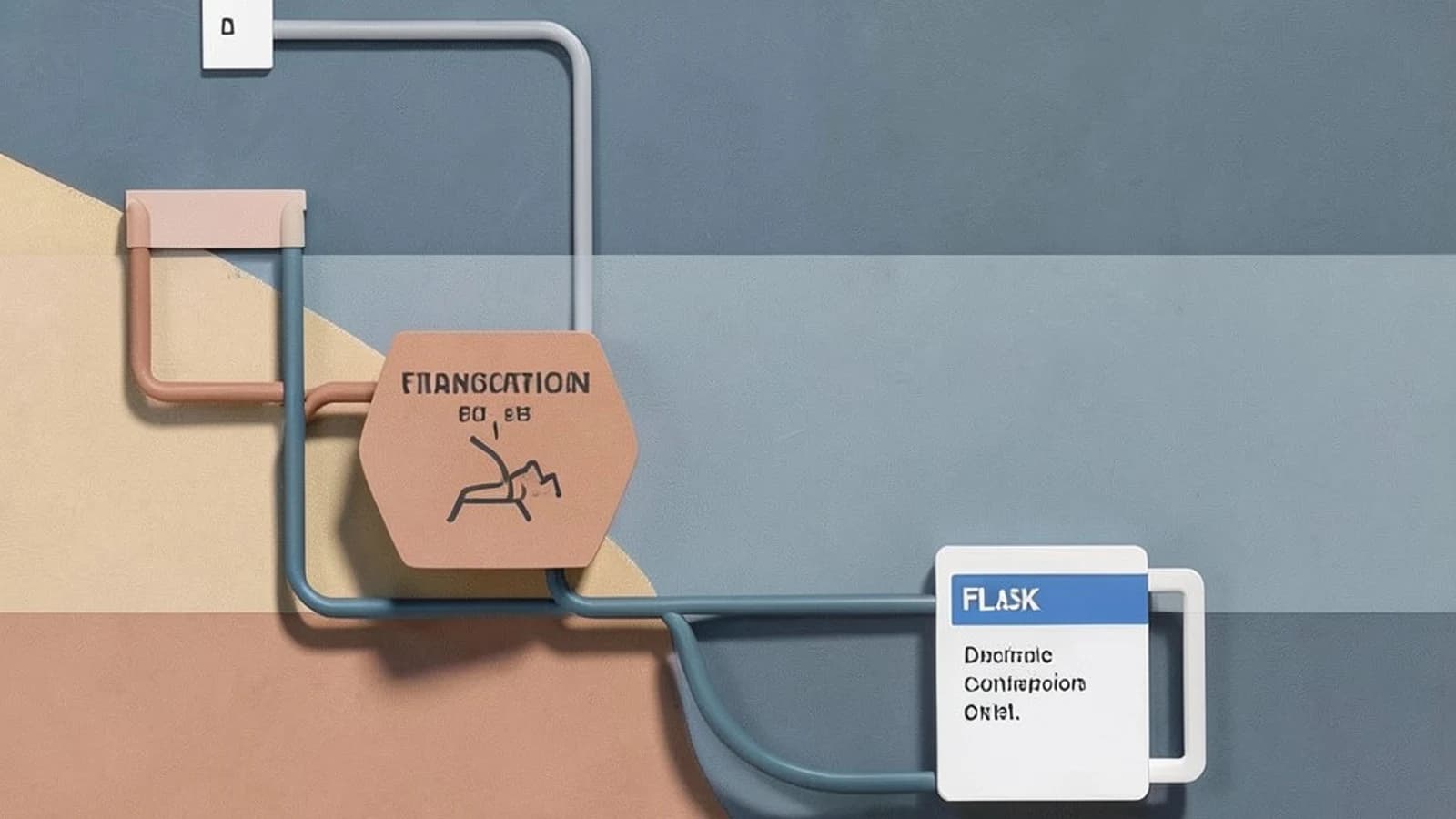
Why the Factory Matters
When a Flask project grows, a single app = Flask(__name__) instance becomes a bottleneck. Global state clutters configuration, makes testing brittle, and hinders modularity. The application factory pattern removes these constraints by moving app creation into a function that accepts a configuration object.
Problem: Hard‑to‑Test, Hard‑to‑Scale Apps
Typical Flask apps look like this:
from flask import Flask
app = Flask(__name__)
app.config.from_object('config.Development')
# ...register blueprints, init extensions
Because the app object is created at import time, any test that imports the module pulls in the dev configuration. Switching to a test config or running multiple instances (e.g., one for staging, one for production) is awkward. Moreover, extensions that are instantiated globally (e.g., db = SQLAlchemy()) keep state alive across imports, causing hidden dependencies.
Solution: The Factory Pattern
Instead of a global instance, define a function that builds a fresh app each time:
def create_app(config_object):
    app = Flask(__name__)
    app.config.from_object(config_object)
    # Initialize extensions inside the factory
    db.init_app(app)
    migrate.init_app(app, db)
    # Register blueprints
    from .main import main as main_bp
    app.register_blueprint(main_bp)
    return app
Now every call to create_app returns a clean, isolated application. Tests can pass a test configuration, and the production WSGI server can point to the factory directly.
Concrete Example
Below is a minimal project layout:
- myapp/
- __init__.py (contains
create_app) - main.py (blueprint)
- extensions.py (SQLAlchemy, Migrate)
- config.py (config classes)
- __init__.py (contains
- tests/
- test_main.py
- wsgi.py (entry point for Gunicorn)
**myapp/__init__.py**
from flask import Flask
from .extensions import db, migrate

from .main import main as main_bp


def create_app(config_object):
    app = Flask(__name__)
    app.config.from_object(config_object)
    db.init_app(app)
    migrate.init_app(app, db)
    app.register_blueprint(main_bp)
    return app
**myapp/main.py**
from flask import Blueprint, jsonify

main = Blueprint('main', __name__)

@main.route('/')
def index():
    return jsonify(message='Hello, factory!')
**tests/test_main.py**
import pytest
from myapp import create_app
from myapp.config import Testing

@pytest.fixture
def client():
    app = create_app(Testing)
    with app.test_client() as client:
        yield client

def test_index(client):
    response = client.get('/')
    assert response.status_code == 200
    assert response.json['message'] == 'Hello, factory!'
Run the test with pytest tests/test_main.py. The factory guarantees that the test uses the Testing config, not the default dev config.
**Deploy with Gunicorn**
gunicorn 'myapp:create_app(myapp.config.Production)'
Gunicorn imports the module, calls create_app with the production config, and serves the resulting app. Environment variables can override configuration values inside the config classes.
Trade‑Offs & Limitations
- Learning Curve: New developers may be confused by the absence of a global
app. The context stack (e.g.,current_app) is still accessible inside request handlers, but accessing it outside a request requires pushing an app context. - Global Extensions: If an extension is instantiated globally (e.g.,
db = SQLAlchemy()) but not initialized inside the factory, the extension will hold a reference to the first app created. This defeats the purpose of isolation. Always callinit_appinside the factory. - Blueprint Registration Timing: Registering blueprints inside the factory ensures they are attached to the correct app instance, but if a blueprint imports the global
app, circular imports may occur. Keep imports local to the factory or useimportlibtricks.
Actionable Takeaway
Adopt the factory pattern early: it separates configuration, promotes modular blueprints, and makes unit tests deterministic. The cost is a slight increase in boilerplate, but the benefits—scalability, testability, and clearer deployment—outweigh the effort. When you start a new Flask project, create a create_app function, move extension initialization inside it, and register blueprints lazily. Your future self—and your CI pipeline—will thank you.
 flask
flask0 replies
A thoughtful contribution can make all the difference. Be the first to share one.