Choosing Between MirroredStrategy and MultiWorkerMirroredStrategy for TensorFlow Scaling
Learn how to choose between TensorFlow's MirroredStrategy and MultiWorkerMirroredStrategy based on hardware constraints, network topology, and batch scaling requirements.
11 Jan 2026, 20:43 UTC
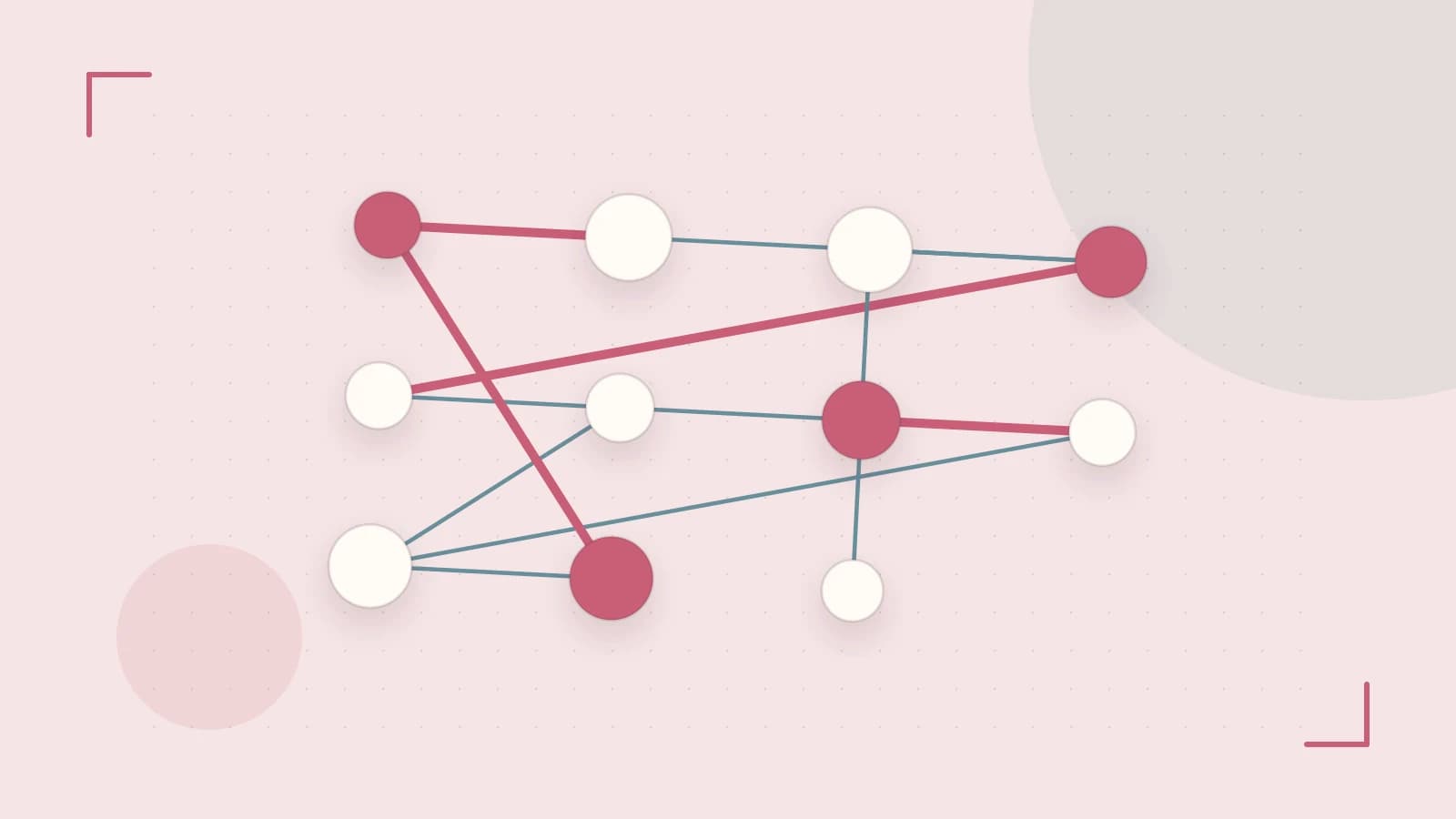
The Scaling Decision: Single-Node vs. Cluster
When training large-scale deep learning models, a single GPU often becomes a bottleneck for both memory and training time. TensorFlow provides distribution strategies to parallelize the workload, but the choice between MirroredStrategy and MultiWorkerMirroredStrategy depends entirely on your hardware boundaries and network topology.
The primary goal is to implement synchronous training, where every GPU (replica) processes a portion of the batch and synchronizes its gradients before updating the model weights. Choosing the wrong strategy leads to either underutilized hardware or complex configuration failures related to network orchestration.
Comparing Distribution Strategies
| Feature | MirroredStrategy | MultiWorkerMirroredStrategy |
|---|---|---|
| Hardware Scope | Single machine, multiple GPUs | Multiple machines, multiple GPUs |
| Communication | NVLink / PCIe (Local) | gRPC / TCP (Network) |
| Setup Complexity | Low (Automatic detection) | High (Requires TF_CONFIG) |
| Sync Mechanism | All-Reduce (Local) | Collective Ops (Distributed) |
Engineering Trade-offs
The Straggler Effect: Both strategies are synchronous. This means the training step only completes when the slowest GPU finishes its computation. In a MultiWorkerMirroredStrategy setup, a single slow network link or a thermal-throttled GPU on one node will slow down the entire cluster.
Memory and Batch Scaling: When moving from one GPU to $N$ GPUs, you must scale your global batch size. If your per-replica batch size is 32 and you have 4 GPUs, your global batch size is 128. Failure to scale the batch size often results in underutilizing GPU memory or causing instability in the optimizer's learning rate.
Coordination Overhead: MultiWorkerMirroredStrategy introduces the need for a coordination layer. Each worker must know its role (chief vs. worker) and the IP addresses of all other participants, which adds operational overhead to container orchestration (like Kubernetes).
Implementation: Single-Node Multi-GPU
For most users with a single workstation or a single cloud VM with multiple GPUs, MirroredStrategy is the correct choice. The following implementation assumes TensorFlow 2.x and CUDA-enabled GPUs.
import tensorflow as tf

# 1. Initialize the strategy
# This automatically detects all available GPUs on the local machine
strategy = tf.distribute.MirroredStrategy()
print(f'Number of devices: {strategy.num_replicas_in_sync}')

# 2. Define the global batch size
# Scale the batch size by the number of replicas
PER_REPLICA_BATCH_SIZE = 64
GLOBAL_BATCH_SIZE = PER_REPLICA_BATCH_SIZE * strategy.num_replicas_in_sync

# 3. Wrap model creation in the strategy scope
# Variables created inside this block are mirrored across all GPUs
with strategy.scope():
    model = tf.keras.Sequential([
        tf.keras.layers.Dense(128, activation='relu', input_shape=(784,)),
        tf.keras.layers.Dense(10, activation='softmax')
    ])
    model.compile(
        loss=tf.keras.losses.SparseCategoricalCrossentropy(from_logits=True),
        optimizer=tf.keras.optimizers.Adam(),
        metrics=['accuracy']
    )

# 4. Distribute the dataset
# Use tf.data.Dataset for efficient pipelining
train_dataset = tf.data.Dataset.from_tensor_slices((x_train, y_train)).batch(GLOBAL_BATCH_SIZE)
distributed_dataset = strategy.experimental_distribute_dataset(train_dataset)

# Train as usual
model.fit(train_dataset, epochs=5)
Validation and Diagnostics
To verify that the distribution is functioning correctly, perform these three checks:
- Replica Count: Ensure
strategy.num_replicas_in_syncmatches the number of GPUs visible to the system. - Hardware Utilization: Run
nvidia-smiin a separate terminal during training. You should see roughly equal memory allocation and volatile GPU utilization across all cards. If one GPU is at 100% and others are at 0%, the model was likely created outside thestrategy.scope(). - Throughput Check: Compare the steps-per-second of a single-GPU run versus the multi-GPU run. While you won't get a linear $N imes$ speedup due to communication overhead, you should see a significant increase in samples processed per second.
Limitations
Synchronous mirroring is not suitable for extremely large models that cannot fit into the memory of a single GPU (Model Parallelism). MirroredStrategy replicates the entire model on every GPU; it does not split the model layers across GPUs. For models that exceed single-card VRAM, look into Mesh TensorFlow or specialized sharding techniques.
 tensorflow
0 replies
A thoughtful contribution can make all the difference. Be the first to share one.