Architecting the NPSS Packet Classification Plane for Deterministic Latency
An architectural guide to the Network Processing Subsystem (NPSS), focusing on using Match-Action Tables (MAT) and TCAM to achieve deterministic latency and strict data plane isolation.
26 Aug 2025, 05:05 UTC
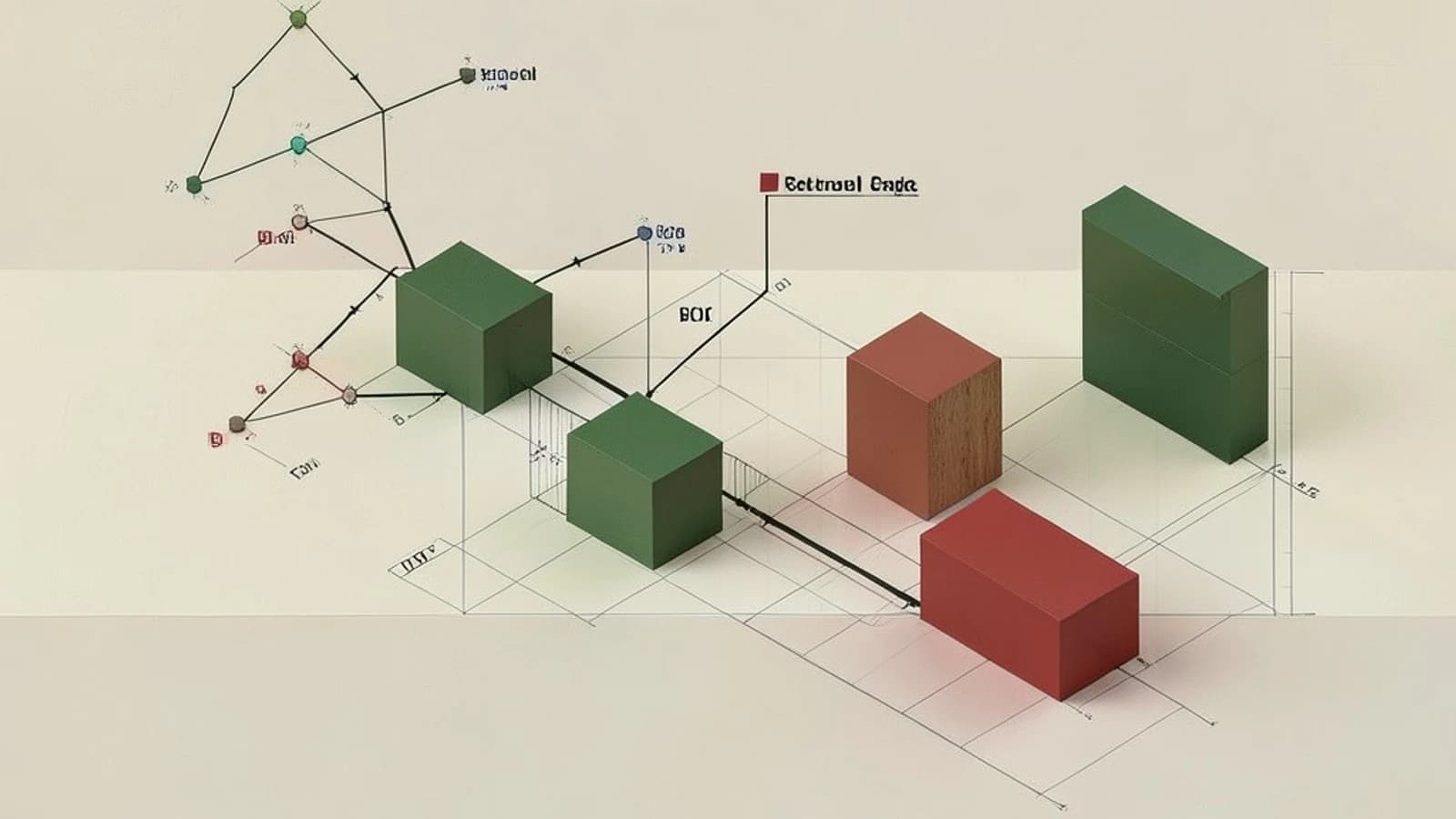
The Challenge: Balancing Throughput with Deterministic Latency
In high-performance networking, the primary technical hurdle is avoiding "jitter"—the variation in packet processing time. When a Network Processing Subsystem (NPSS) handles mixed traffic, inconsistent lookup times can lead to buffer bloat and degraded application performance. The goal is to ensure that every packet, regardless of its destination or complexity, traverses the forwarding plane in a predictable number of clock cycles.
The Minimalist Design: Match-Action Tables (MAT)
To achieve determinism, the smallest suitable design replaces complex conditional branching with a pipeline of Match-Action Tables (MAT). In this architecture, packet parsing is decoupled from the forwarding logic. The parser extracts specific fields (headers) and converts them into a lookup key, which is then passed through a sequence of tables.
Each table consists of a Ternary Content Addressable Memory (TCAM)—hardware that allows for "don't care" bits in a search—and an associated action memory. This ensures that a lookup takes a constant amount of time, regardless of whether the table contains ten rules or ten thousand.
Trust and Data Boundaries
Security in an NPSS depends on strict isolation between the data plane (where packets flow) and the control plane (where routing tables are managed).
- Ingress Trust Boundary: All external headers are treated as untrusted. Validation occurs at the physical ingress port. Packets with malformed headers or invalid checksums are dropped before they enter the internal switching fabric to prevent resource exhaustion attacks.
- Control/Data Isolation: The control plane communicates with the NPSS via a dedicated PCIe bus or internal management interface. This physical or logical separation ensures that a flood of data-plane traffic cannot starve the management CPU of resources, and conversely, that a compromised management interface cannot directly inject raw packets into the high-speed pipeline without passing through the standard validation logic.
Operational Checks and Diagnostics
Because the data plane operates at line rate, traditional logging is impossible. Instead, the system relies on hardware-level telemetry.
| Metric | Diagnostic Purpose | Detection Method |
|---|---|---|
| CRC Error Counters | Identify physical layer noise or cable failure. | Per-port hardware registers. |
| Pipeline Stall Timers | Detect logic deadlocks or synchronization lags. | Watchdog timers on the MAT pipeline. |
| Drop Counters | Identify buffer overflows or rule mismatches. | Accumulators at the egress stage. |
Failure Modes and Constraints
The MAT-based design introduces specific hardware constraints that can lead to system failure if not monitored:
- TCAM Exhaustion: Unlike RAM, TCAM is expensive and limited in size. If the routing table exceeds the TCAM capacity, the system may either drop packets or fall back to a slower software-based lookup, destroying the deterministic latency guarantee.
- Buffer Overflow: During traffic bursts, if the egress port cannot clear packets as fast as the ingress port receives them, the internal buffers will fill. Once the "high-water mark" is reached, the NPSS must implement tail-drop or Weighted Random Early Detection (WRED) to prevent total system collapse.
- Synchronization Lag: If the control plane attempts to update the TCAM rules faster than the hardware can synchronize, the pipeline may stall, leading to temporary packet loss.
Verification and Validation
To verify that the design meets the deterministic latency requirement, run the following checks using a hardware traffic generator (e.g., Spirent or Ixia):
- Latency Variance Test: Send a stream of packets with varying header lengths and destinations. Measure the delta between the minimum and maximum transit time. The result should be near zero.
- Boundary Penetration Test: Attempt to send a packet crafted to look like a control-plane command through a standard data-plane ingress port. The NPSS should drop these packets at the ingress trust boundary.
- Saturation Test: Increase traffic beyond the line rate of the egress port to verify that buffer overflow mechanisms trigger correctly without crashing the management interface.
Conditions for Design Evolution
The current MAT architecture is optimized for fixed-length or well-defined packet headers. A shift in requirements would necessitate a redesign if the system must support fully programmable parsing (such as P4-style flexibility). In that scenario, the fixed pipeline would be replaced by a programmable parser and a reconfigurable match-action engine, which increases flexibility but introduces higher complexity in maintaining deterministic timing.
 npss
npss