Architecting the Express.js Middleware Pipeline for Request Lifecycle Management
Learn how to architect an Express.js middleware pipeline to separate cross-cutting concerns from business logic, establish trust boundaries, and avoid common pitfalls like hanging requests.
12 Jun 2026, 15:34 UTC
The Problem: Managing Cross-Cutting Concerns
In a growing Express.js application, business logic often becomes cluttered with repetitive tasks: verifying JWTs, logging request latency, validating input schemas, and handling errors. If these concerns are embedded directly within route handlers, the codebase becomes difficult to test and prone to inconsistent security enforcement.
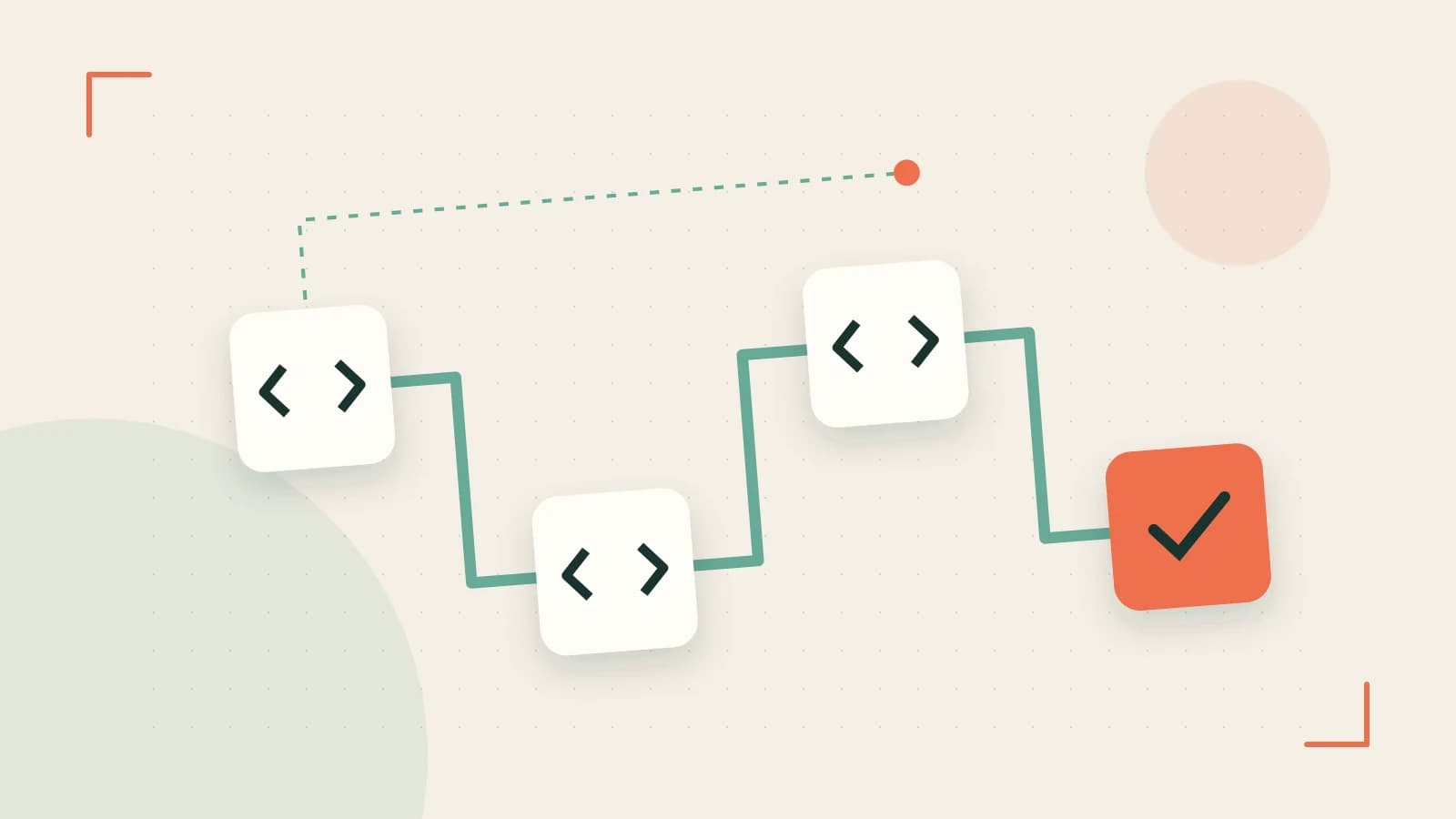
The solution is a structured middleware pipeline. By treating the request-response lifecycle as a sequence of discrete stages, you can isolate infrastructure concerns from domain logic, ensuring that by the time a request reaches a controller, it is already authenticated, validated, and sanitized.
The Smallest Suitable Design
Express uses a implementation of the Chain of Responsibility pattern. Each middleware function has access to the req (request), res (response), and next callback. The next() function is the trigger that passes control to the subsequent handler in the stack.
A minimal, robust pipeline follows this sequence:
- Global Interceptors: Logging, CORS, and request ID assignment.
- Security Guards: Authentication and rate limiting.
- Data Validation: Schema checks (e.g., using Joi or Zod) to ensure the payload is correct.
- Domain Controllers: The final business logic that generates the response.
- Centralized Error Handler: A specialized function to catch all upstream failures.
Trust and Data Boundaries
To maintain data integrity, establish a strict trust boundary between the Untrusted Input (the raw request) and the Trusted Context (the request object passed to the controller).
Avoid mutating the req object haphazardly. Instead, use a dedicated namespace (e.g., req.locals or req.context) to pass data between middleware. This prevents collisions with built-in Express properties.
Example: Validation and Context Boundary
// Run this on your Node.js server with Express v4.x
const express = require('express');
const app = express();
app.use(express.json());

// 1. Validation Middleware (The Boundary)
const validateUserUpdate = (req, res, next) => {
  const { email } = req.body;
  if (!email || !email.includes('@')) {
    // Passing an error to next() skips all remaining non-error middleware
    return next(new Error('Invalid email format'));
  }
  // Attach validated data to a specific namespace
  req.validatedData = { email };
  next();
};

// 2. Controller (The Trusted Zone)
app.patch('/user', validateUserUpdate, (req, res) => {
  // The controller only uses req.validatedData, not req.body
  const { email } = req.validatedData;
  res.send(`User updated to ${email}`);
});

// 3. Centralized Error Handler (Must be defined LAST)
app.use((err, req, res, next) => {
  console.error(`[Error]: ${err.message}`);
  res.status(400).json({ error: err.message });
});

app.listen(3000);
Operational Checks and Failure Modes
Middleware introduces specific failure modes that can degrade system performance or cause outages if not monitored.
The Hanging Request
If a middleware function neither calls next() nor sends a response (res.send(), res.json(), etc.), the request will remain pending until the client or the load balancer times out. This consumes a socket and memory on the server.
Event Loop Blocking
Because Express middleware executes sequentially on a single thread, any synchronous, CPU-intensive operation (like fs.readFileSync or heavy JSON parsing) in an early middleware blocks all other concurrent requests. Always use asynchronous patterns for I/O operations.
Error Handler Placement
Express identifies error-handling middleware by its signature: it must take four arguments (err, req, res, next). If this middleware is placed before the routes that throw errors, it will be ignored, and Express will fall back to its default HTML error page, potentially leaking stack traces to the client.
Design Evolution: When to Change
The sequential pipeline is sufficient for most REST APIs, but certain conditions require a shift in architecture:
- Complex Dependency Graphs: If middleware B requires data from middleware A and C, but A and C are conditionally executed, move the logic into a Service Layer called by the controller.
- High-Throughput Telemetry: If logging middleware becomes a bottleneck, move telemetry to an external sidecar or an asynchronous queue (like RabbitMQ) rather than processing it within the request lifecycle.
- Dynamic Routing: If the middleware chain needs to change based on the request body (rather than the URL), implement a Dispatcher middleware that dynamically calls other functions.
Verification Checklist
To verify the pipeline is functioning correctly, perform these checks:
- Sequence Check: Add a
console.logto each middleware; verify they execute in the order defined in the code. - Error Propagation: Trigger a validation error and confirm that the domain controller is skipped and the 4-argument error handler is reached.
- Timeout Test: Create a middleware that does not call
next()and verify the request hangs, confirming you have a timeout policy configured at your proxy/gateway level.
 express
 nodejs
0 replies
A thoughtful contribution can make all the difference. Be the first to share one.