Architecting Distributed Stream Processing with Jeet Workers
Learn how Jeet's distributed worker model manages JavaScript-based stream transformations, handles state partitioning, and recovers from node failures in real-time pipelines.
29 Sept 2025, 10:13 UTC
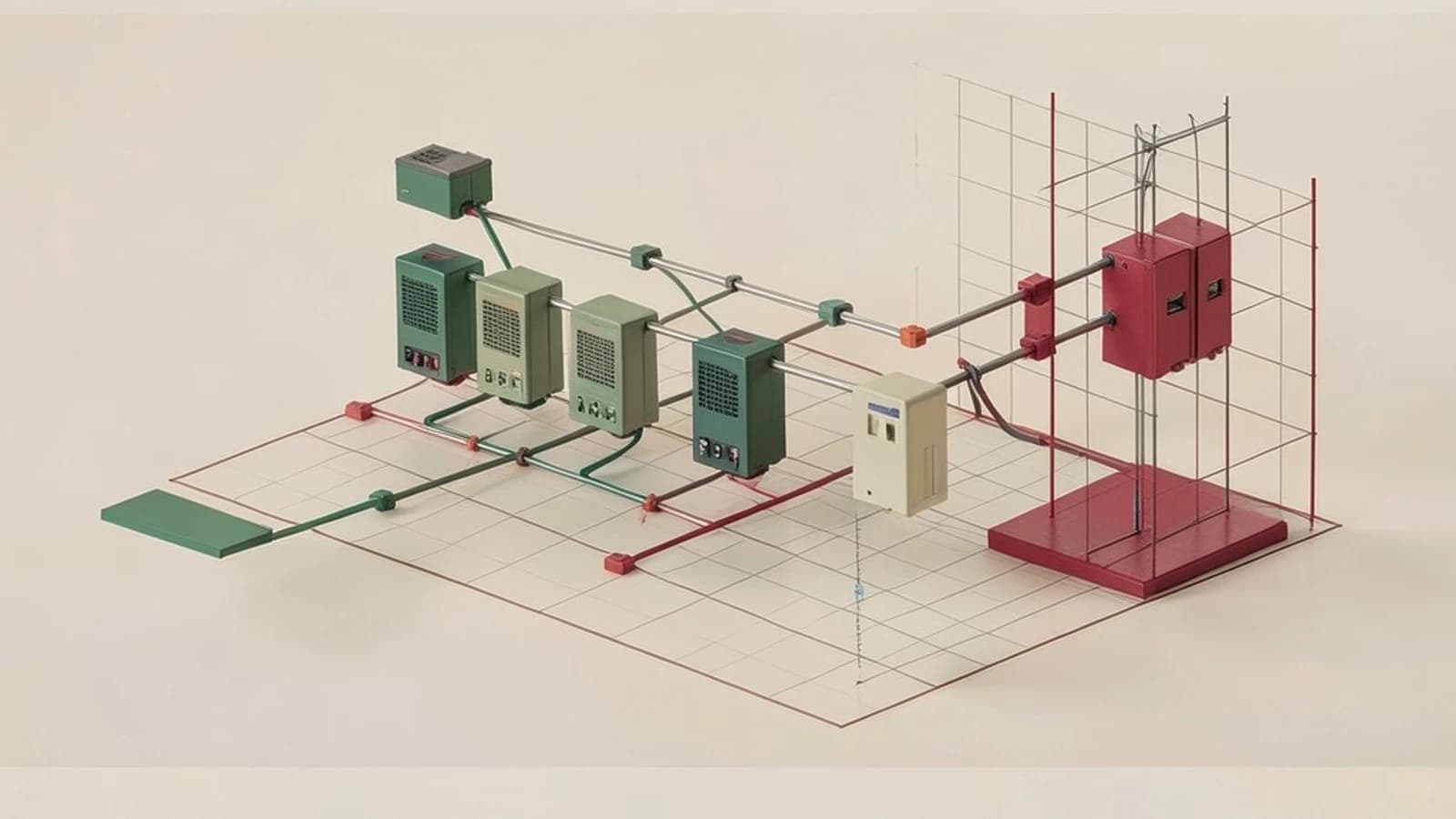
The Challenge of Distributed State in JS Streams
Building a real-time data pipeline often leads to a bottleneck: the trade-off between the ease of writing transformation logic in JavaScript and the performance requirements of distributed state management. When processing high-velocity streams, a single node cannot handle the load, but distributing the load introduces the risk of state fragmentation and inconsistent processing across workers.
The primary takeaway for engineers is that Jeet solves this by decoupling the stream's logical data-flow graph from the physical worker deployment. By utilizing a partitioned worker model, you can scale horizontally while ensuring that specific keys of your data stream always land on the same worker instance, maintaining local state consistency without a global lock.
The Smallest Suitable Design
To implement a scalable stream transformation, the architecture requires three core components: a coordinator, a set of worker nodes, and a partitioning strategy.
- The Coordinator: Manages the distribution of the data-flow graph. It does not process data but assigns specific stream partitions to available workers.
- Worker Nodes: These are the execution environments that run the JavaScript-based transformation logic. Each worker consumes a subset of the stream.
- Partitioning Logic: A hashing mechanism (usually based on a key in the data packet) that ensures all data for a specific entity (e.g., a User ID) is routed to the same worker.
Example Configuration: Simple Transformation Pipeline
In a typical Jeet deployment, you define your stream logic in JavaScript. Consider a scenario where you need to calculate a running total of events per user. The logic is deployed to the cluster, and the coordinator distributes it.
// Example Jeet transformation logic
stream.map(event => {
  const userId = event.userId;
  const value = event.amount;
  // The worker maintains local state for this partition
  state.totals[userId] = (state.totals[userId] || 0) + value;
  return { userId, currentTotal: state.totals[userId] };
});
Trust and Data Boundaries
Data boundaries in Jeet are defined at the input and output interfaces of the worker. The worker acts as a transformation boundary: it trusts the coordinator for the assignment of partitions but treats the incoming stream data as untrusted input that must be validated before updating the internal state.
Because the logic is executed in JavaScript, the boundary between the host system and the stream logic is critical. To prevent a single malformed packet from crashing a worker, the execution environment should be isolated, ensuring that an exception in the transformation logic does not kill the worker process itself.
Operational Checks and Health
Monitoring a distributed stream requires looking beyond CPU and RAM. The most critical metric is backpressure—a condition where the worker cannot process data as fast as the source is providing it.
Diagnostic Decision Matrix
| Observation | Likely Cause | Action |
|---|---|---|
| High latency on specific partitions | Data Skew (one key has too much data) | Review partitioning key selection |
| Increasing memory usage per worker | Unbounded state growth | Implement a TTL (Time-to-Live) for state keys |
| Worker heartbeat timeouts | Event loop blockage (heavy JS computation) | Optimize JS logic or increase worker count |
Failure Modes and Recovery
The primary failure mode in this architecture is the Worker Crash. When a worker node fails, the coordinator detects the loss of heartbeat and must redistribute that worker's assigned partitions to the remaining healthy nodes.
Recovery Process:
- Coordinator identifies the missing partitions.
- Partitions are reassigned to available workers.
- The new workers recover the state from the last checkpoint or rebuild it from the stream source.
Risk: If the state is stored purely in-memory without a persistent backing store, a worker crash results in the loss of the current window's accumulated state. To mitigate this, ensure your state management utilizes a distributed store or frequent checkpoints.
Design Evolution: When to Pivot
This worker-based distributed model is optimized for near-real-time streaming. You should reconsider this design if your requirements shift in the following ways:
- Shift to Batch Processing: If you need to process terabytes of historical data rather than a live stream, the overhead of the coordinator and real-time partitioning becomes a hindrance. A MapReduce or Spark-style batch architecture would be more efficient.
- Strict Global Consistency: If your application requires a global view of the state (rather than partitioned state) for every single event, the communication overhead between workers will create a performance ceiling, necessitating a centralized state database.
Verification Step
To verify the resilience of your deployment, run the following command on a worker node to simulate a failure (requires sudo/root permissions):
# Run on a specific worker node to simulate a crash
kill -9 $(pgrep jeet-worker)
Expected Result: The coordinator should log a worker disconnection and the stream processing for those partitions should resume on a different node within a defined timeout period. Check the coordinator logs for "Partition Redistribution Successful".
 jeet
jeet javascript